Northwest Blooms · Bulbs
Narcissus pseudonarcissus 'Tete-a-Tete'
Tete-a-Tete Daffodil
- Family
- Amaryllidaceae
- Height
- 6 to 12 in
- Flower color
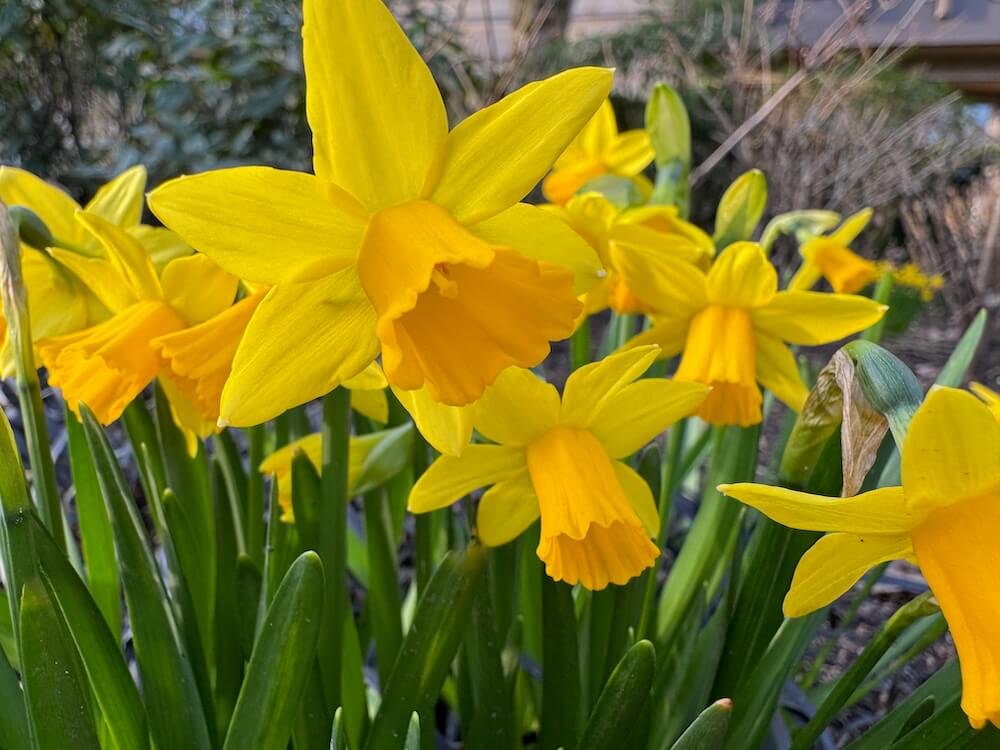
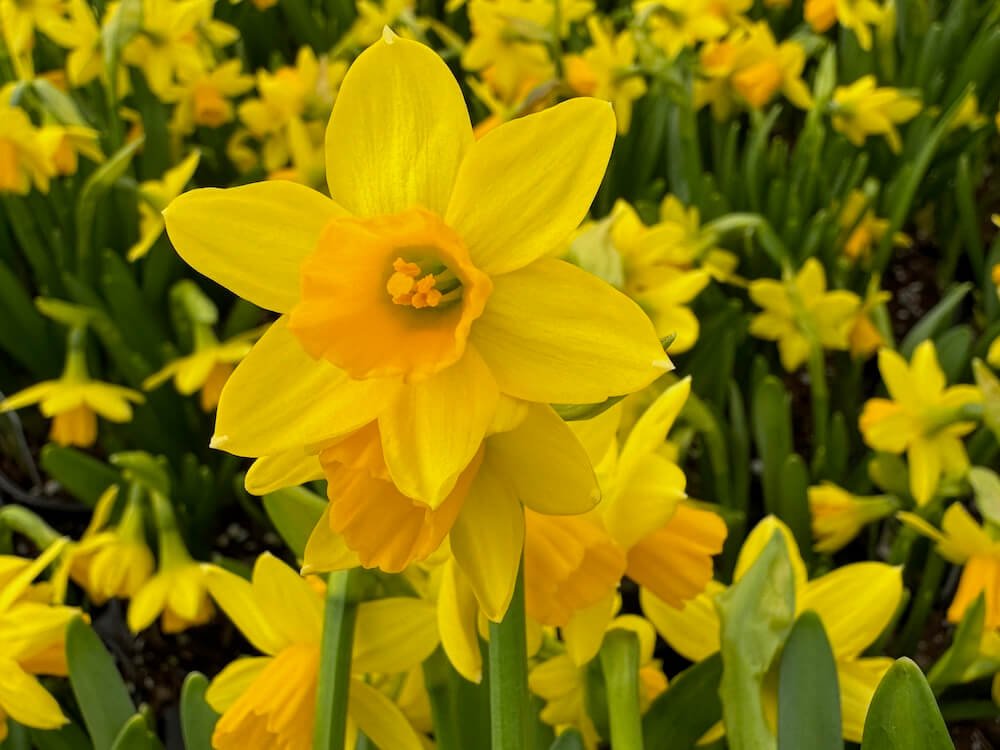
- Buttercup-yellow petals with a deeper yellow trumpet
- Foliage color
- Blue-green to medium green, narrow strap-shaped leaves
- Bloom time
- Early spring
- Light
- Full sun to partial shade
- Water
- Moderate
- Maintenance
- Low, remove spent flowers to prevent seed formation, allow foliage die back naturally before removal
- Growing zone
- USDA zones 3 to 8
- Wildlife
- Occasional visits from bees and other spring pollinators
About this plant
Narcissus pseudonarcissus 'Tete-a-Tete' produces cheerful golden-yellow flowers with gently swept-back petals framing a short, flared trumpet in matching warm tones. Fine, blue-green foliage rises in narrow, upright clumps that give the plant a tidy, fresh appearance as the blooms open. The overall habit is compact and lively, with multiple flowers often appearing together on short stems that create a bright, early-season presence in spring plantings.
This cyclamineus-form daffodil blooms in late winter to early spring. Introduced through twentieth-century breeding programs, it is widely used in borders, containers, rock gardens, and naturalized areas where early color enhances seasonal displays.
Works well in
Borders · Cottage Gardens · Under Trees · Woodland Gardens · Rock Gardens
Companion plants
Heucheras · Lady's mantle · Hellebores · Tulips · Astilbes · Foxgloves
Design tip
Spring bloom is its headline moment, and it reads best in a group rather than as a single plant. Plant in generous groups rather than single spots, and set them among perennials whose new growth covers the fading foliage.