Northwest Blooms · Bulbs
Tulipa saxatilis
Candia Tulip
- Family
- Liliaceae
- Height
- 6 to 10 in
- Width
- 6 to 9 in
- Flower color
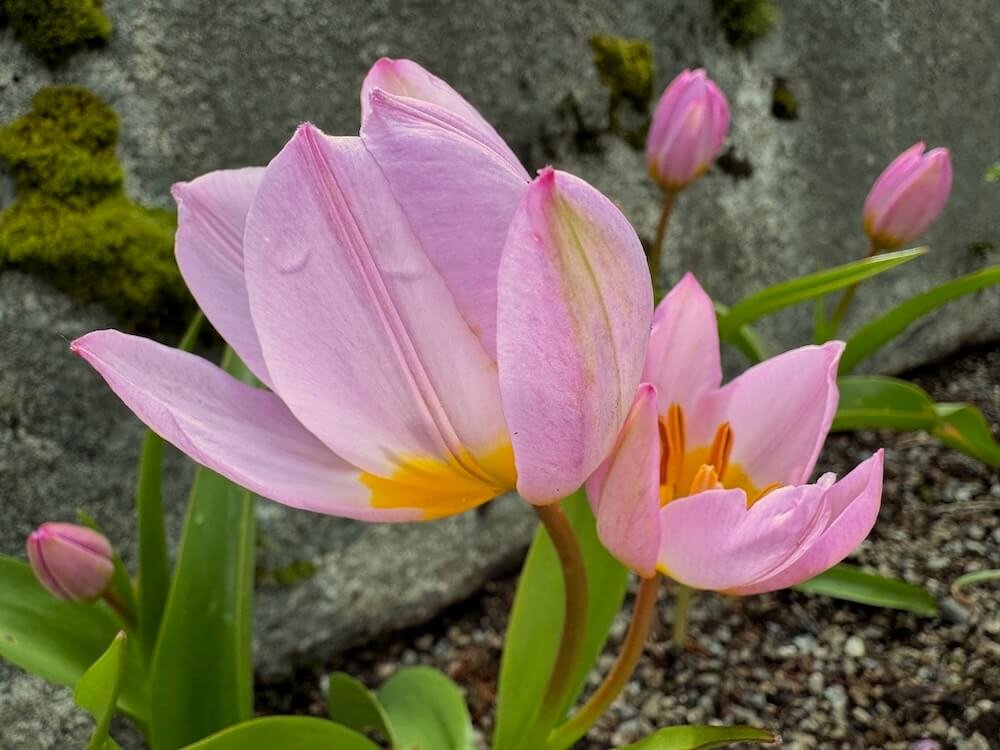
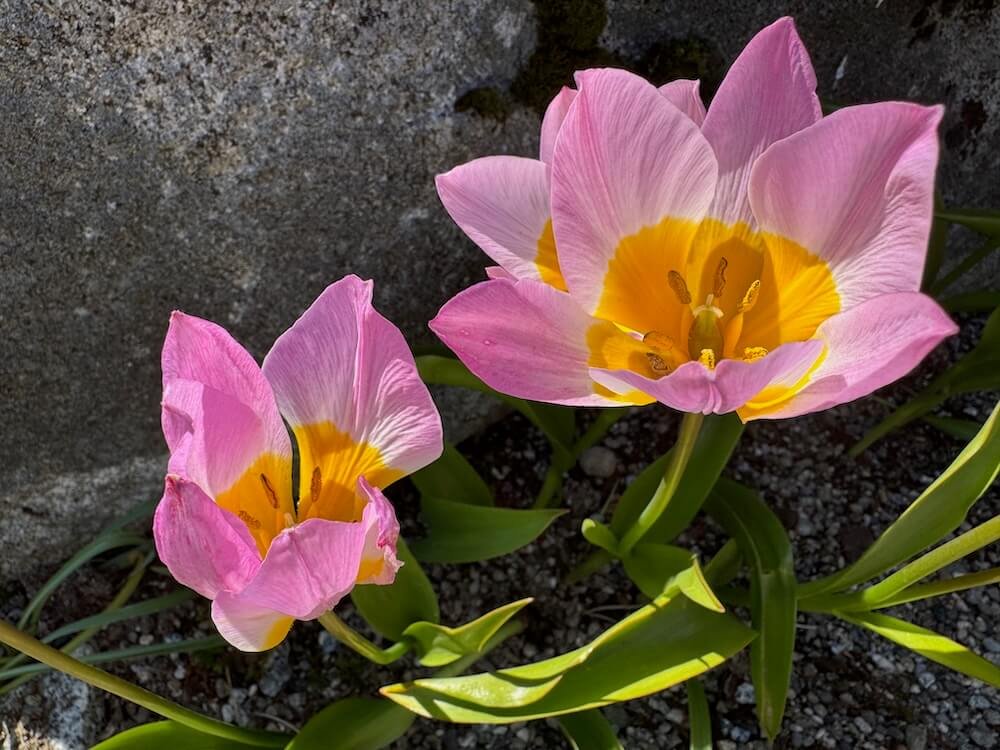
- Rosy pink to pale lilac with yellow basal blotches (often edged with white)
- Foliage color
- Glossy green, long narrow leaves
- Bloom time
- Mid spring
- Light
- Full sun
- Water
- Moderate
- Maintenance
- Low, allow flowers to die back naturally
- Growing zone
- USDA zones 3 to 8
- Wildlife
- Occasional visits from bees
About this plant
Tulipa saxatilis sends up narrow, glossy green leaves and rosy pink to lilac-purple flowers with a bright yellow center often edged in pale white. On sunny days, blooms open wider into a starry outline, and the flowers can be lightly fragrant. Stems may carry a single bloom or a small cluster, giving planted groups a soft, airy look.
A species tulip, it bears pointed, cup-shaped blossoms that open broadly, flowering in mid to late spring. Native to the southern Aegean islands and nearby southwestern Turkey, it is closely associated with Crete and is sometimes called Candia tulip. It suits rock gardens, gravel borders, and sunny containers, and it can be naturalized in small drifts.
Works well in
Borders · Sun Gardens · Woodland Gardens · Rock Gardens · Containers
Companion plants
Asters · Grape hyacinths · Black-eyed Susans · Daylilies · Lavender · Coreopsis
Design tip
The early flowers arrive when the garden is still waking up, so give it a spot you pass often in spring. Drift them in uneven groups for a natural look, and interplant with perennials that fill the gap after the leaves die back.
Where to see it
This plant can be seen at the Bellevue Botanical Garden.