Northwest Blooms · Groundcovers
Bergenia cordifolia 'Tubby Andrews'
Tubby Andrews Bergenia
- Family
- Saxifragaceae
- Height
- 12-18 inches tall
- Width
- 18-24 inches wide
- Flower color
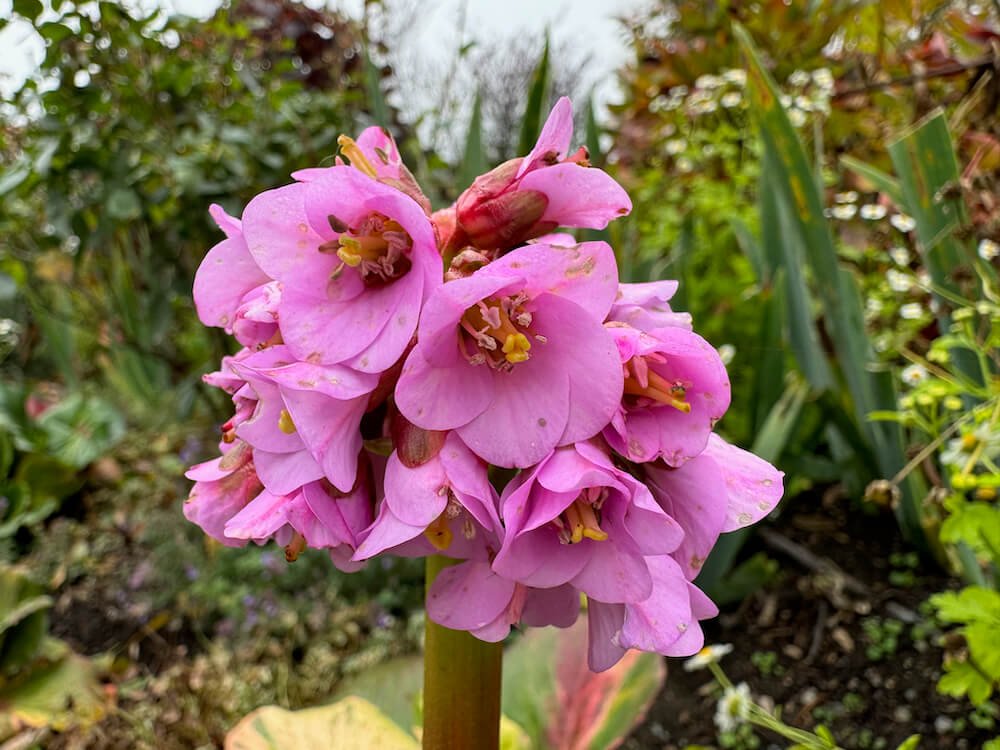
- Light to dark pink
- Foliage color
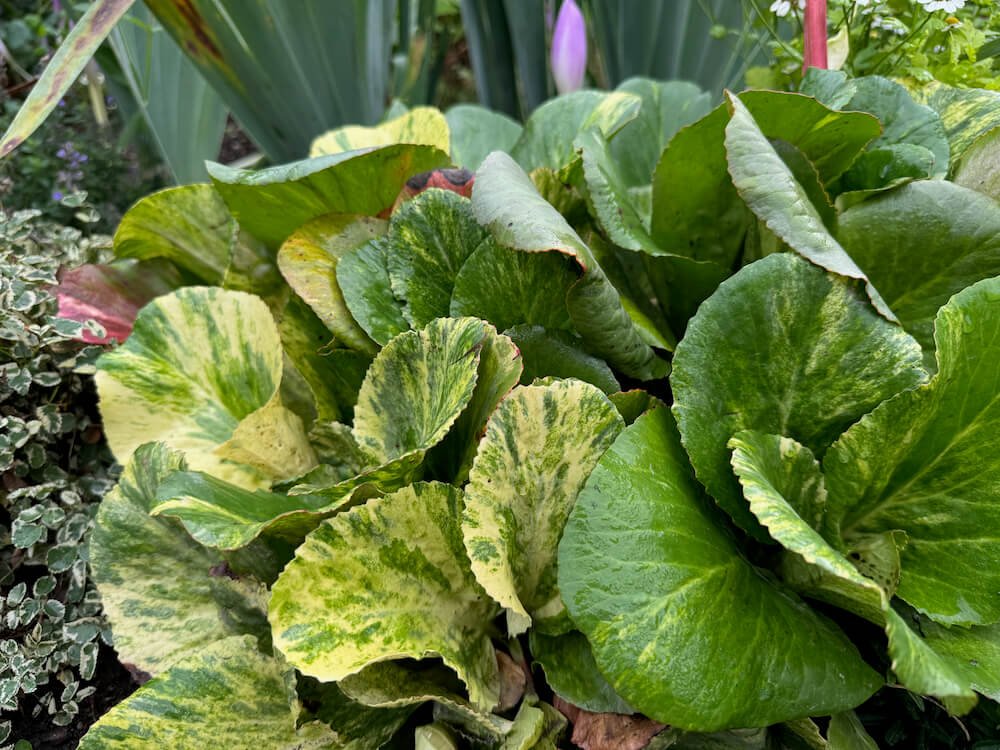
- Glossy yellow and green variegated leaves that turn red in the fall and winter
- Bloom time
- Spring and fall
- Light
- Full sun to partial shade
- Water
- Moderate
- Maintenance
- Low; occasional division every few years to maintain plant vigor
- Growing zone
- USDA Zones 4-9
- Wildlife
- Attracts pollinators, especially bees
About this plant
Bergenia cordifolia 'Tubby Andrews' is a distinctive variegated perennial, known for its unique yellow and green foliage. The heart-shaped leaves emerge with a mix of yellow and deep green, creating an attractive contrast that lasts throughout the growing season. In early to mid-spring and again in fall, the plant produces clusters of soft pink flowers, rising above the foliage on sturdy stems and adding a burst of color to the garden.
Native to the mountainous regions of Asia, 'Tubby Andrews' is a hardy and reliable variety of Bergenia, appreciated for its variegated leaves and two season blooms. Its bold foliage and vibrant color make it an excellent choice for garden borders, ground cover, or rock gardens, where it adds texture and visual interest. The plant's resilience and eye-catching variegation provide year-round appeal, enhancing shaded or woodland areas with both foliage and floral beauty.
Works well in
Pollinator Gardens · Woodland Gardens · Borders · Deer-Prone Areas
Companion plants
Astilbes · Japanese painted ferns · Pulmonaria · Solomon's seal · Primroses · Foamflowers
Design tip
Reserve this variegated selection for key focal areas where its colorful foliage can draw attention without overwhelming the planting. Limiting bold variegation to strategic locations creates visual emphasis while allowing surrounding plants to provide a calm, balanced backdrop.
Where to see it
This plant can be seen in the perennial border at the Bellevue Botanical Garden.