Northwest Blooms · Groundcovers
Aegopodium podagraria ‘Variegatum’
Variegated Bishop’s Weed
- Family
- Apiaceae
- Height
- 6 to 12 inches tall
- Width
- Spreads vigorously via rhizomes to form dense colonies
- Flower color
- Delicate clusters of tiny white flowers held above the foliage in airy, umbrella-like blooms
- Foliage color
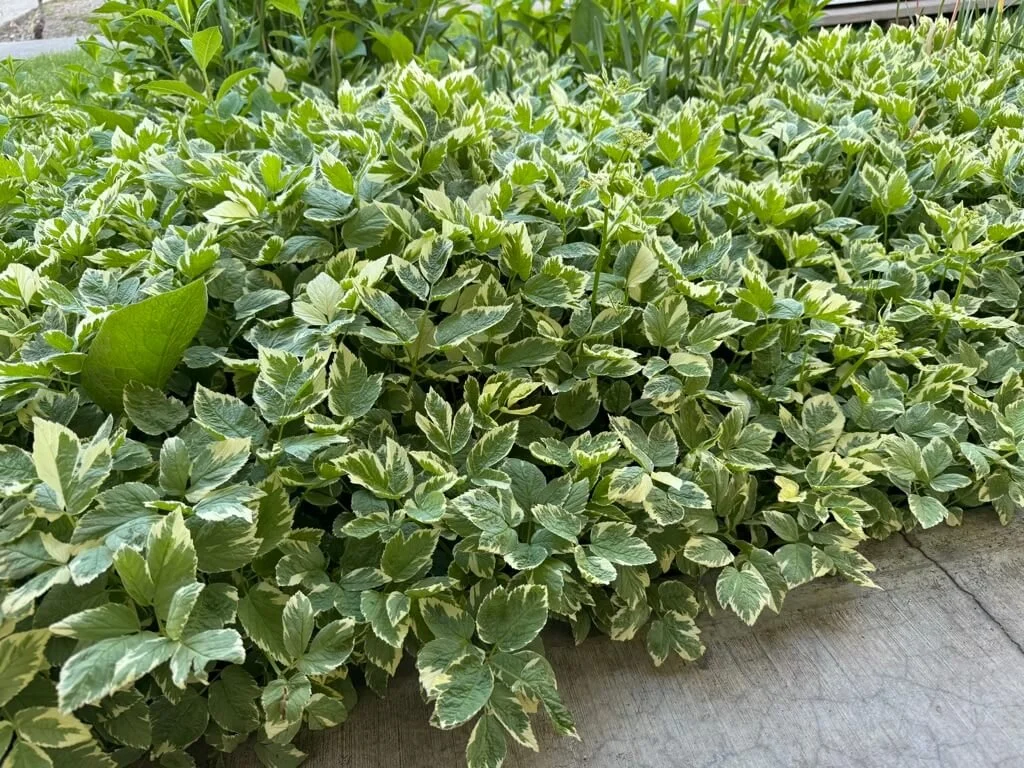
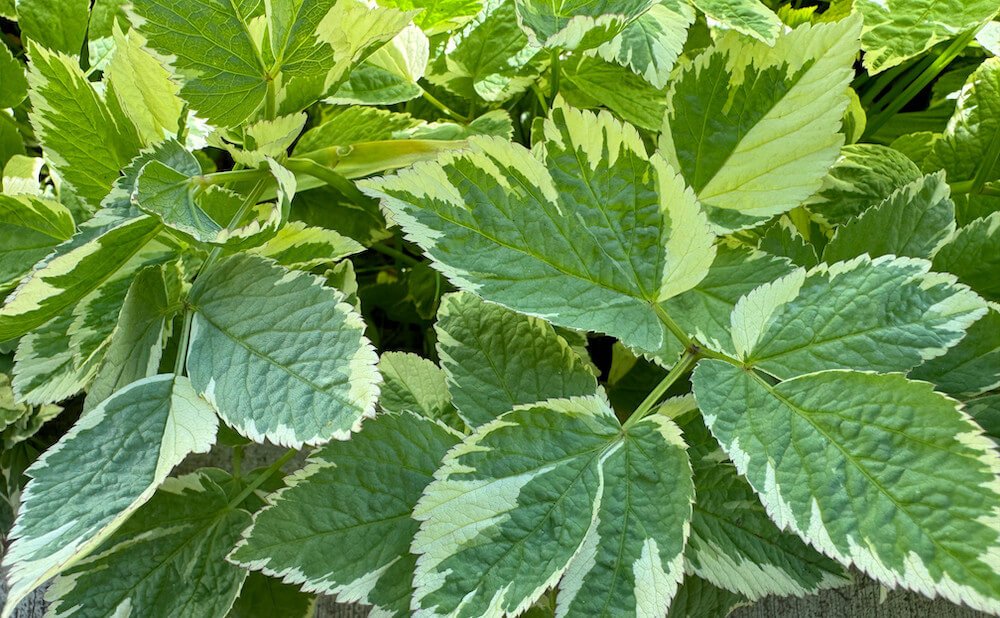
- Bright green leaflets with crisp creamy white margins, creating a luminous variegated appearance
- Bloom time
- Late spring to early summer
- Light
- Full sun to part shade
- Water
- Low to moderate; tolerates drought once established
- Maintenance
- High; can be invasive and difficult to control
- Growing zone
- USDA zones 3 to 9
- Wildlife
- The flowers attract bees and other pollinators
About this plant
Aegopodium podagraria 'Variegatum', commonly known as variegated bishop's weed, is a ground cover plant admired for its attractive variegated foliage and vigorous growth habit. It typically forms dense, spreading mats of deeply lobed and toothed leaves with a bright green color and creamy white margins, adding a bright and airy quality to shady garden areas. In late spring to early summer, 'Variegatum' produces small, white flowers in umbrella-shaped clusters, which add a delicate and airy quality to its appearance. Well-suited for shady or partially shaded areas, it tolerates a wide range of soil types and is often used as a ground cover in woodland gardens and shady borders. Relatively low-maintenance, it does not require much pruning or grooming to maintain its attractive appearance, but regular watering during dry periods can help it thrive. However, it is important to monitor this plant, as it can become invasive in some areas; regularly removing unwanted shoots or rhizomes can help keep it in check.
Works well in
Borders · Woodland Gardens · Deer Resistance · Cottage Gardens
Companion plants
Hostas · Brunneras · Ferns · Hellebores · Astilbes · Epimediums
Design tip
Use beneath mature trees or along woodland borders where its bright variegated foliage illuminates shaded spaces and unifies planting beds.