Northwest Blooms · Groundcovers
Aurinia saxatilis
Basket-of-Gold
- Family
- Brassicaceae
- Height
- 6 to 12 inches
- Width
- 12 to 18 inches
- Flower color
- Bright yellow
- Foliage color
- Gray-green, semi-evergreen leaves
- Bloom time
- Early to mid-spring
- Light
- Full sun
- Water
- Drought tolerant once established, but benefits from occasional watering during dry spells
- Maintenance
- Low maintenance; prune back after flowering to promote new growth and prevent self-seeding
- Growing zone
- Hardy in USDA zones 3 to 9
- Wildlife
- Attracts bees and butterflies with its sweet fragrance
About this plant
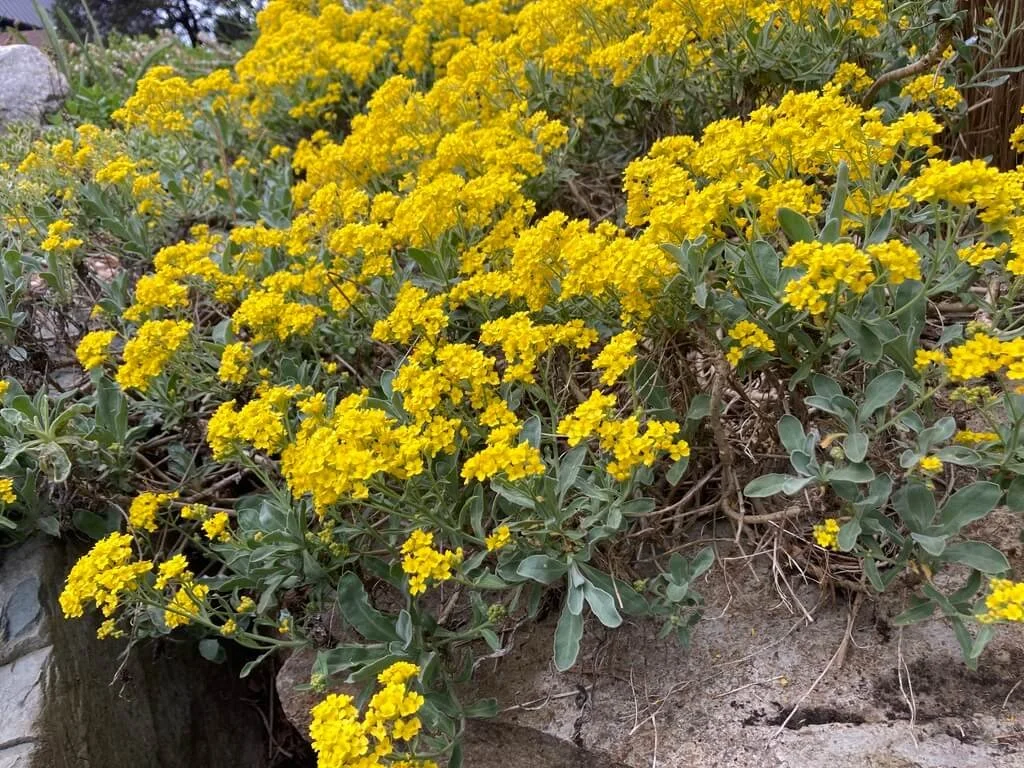
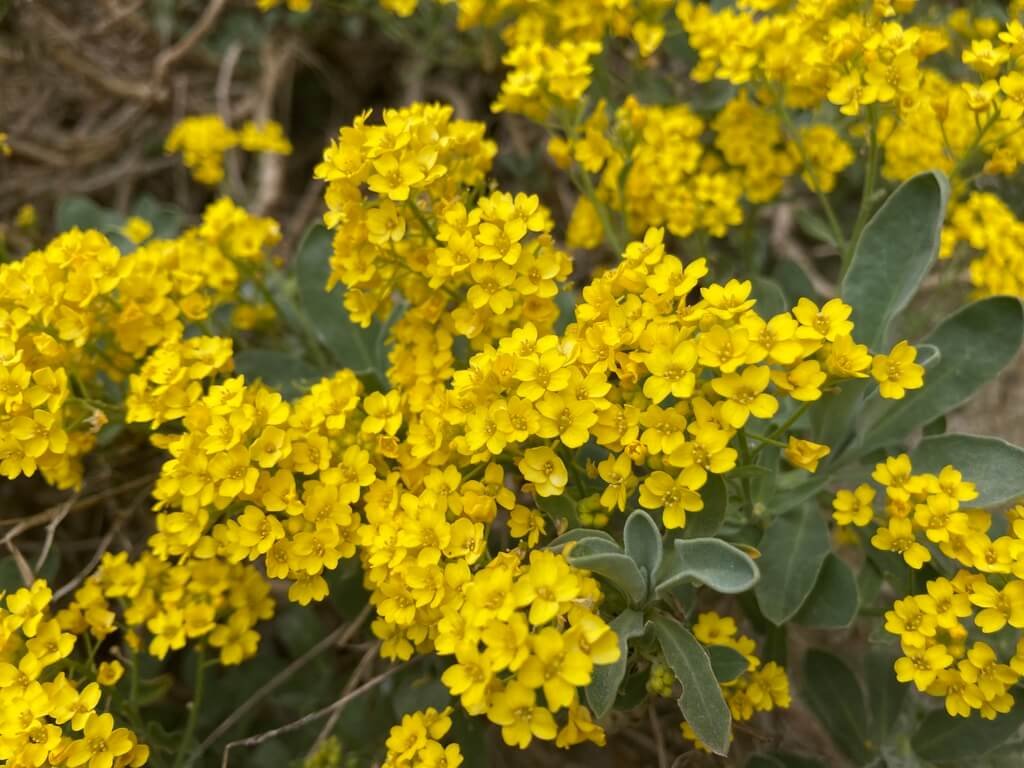
Aurinia saxatilis is a low-growing perennial plant prized for its bright and abundant spring blooms. Native to southeastern Europe and southwestern Asia, it forms a dense mat of gray-green, spoon-shaped leaves that are semi-evergreen in milder climates. In early to mid-spring, it produces a profusion of small, bright yellow flowers in clusters atop stems that rise slightly above the foliage. These half-inch flowers have a sweet, honey-like fragrance that attracts pollinators like bees and butterflies. Thriving in full sun and well-drained, alkaline soils, Aurinia saxatilis is drought tolerant once established, making it suitable for rock gardens, borders, and dry slopes. It is relatively low-maintenance, requiring occasional watering during dry spells and minimal pruning to maintain its shape and promote new growth. Trimming back spent flowers after blooming can encourage a second flush of blooms and prevent self-seeding, as this plant can be invasive in some regions.
Works well in
Pollinator Gardens · Deer-Prone Areas · Borders · Rock Gardens
Companion plants
Creeping phlox · Candytuft · Dianthus · Sedums · Lavender · Blue fescue
Design tip
Place this cheerful spring bloomer where it can welcome visitors near entrances or along frequently traveled walkways. The brilliant yellow flowers create an inviting first impression and draw attention to important areas of the garden before summer perennials begin flowering.