Northwest Blooms · Groundcovers
Sedum palmeri
Palmer's Sedum
- Family
- Crassulaceae
- Height
- 8 to 12 in
- Width
- 12 to 18 in
- Flower color
- Soft yellow to pale golden star-shaped flowers held in rounded clusters
- Foliage color
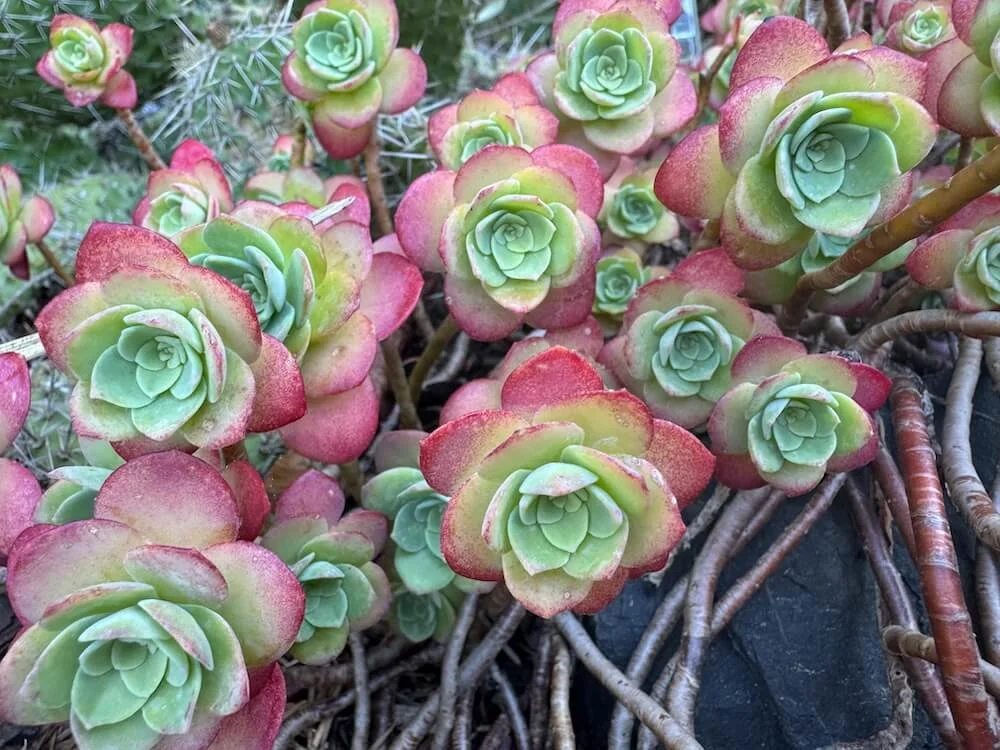
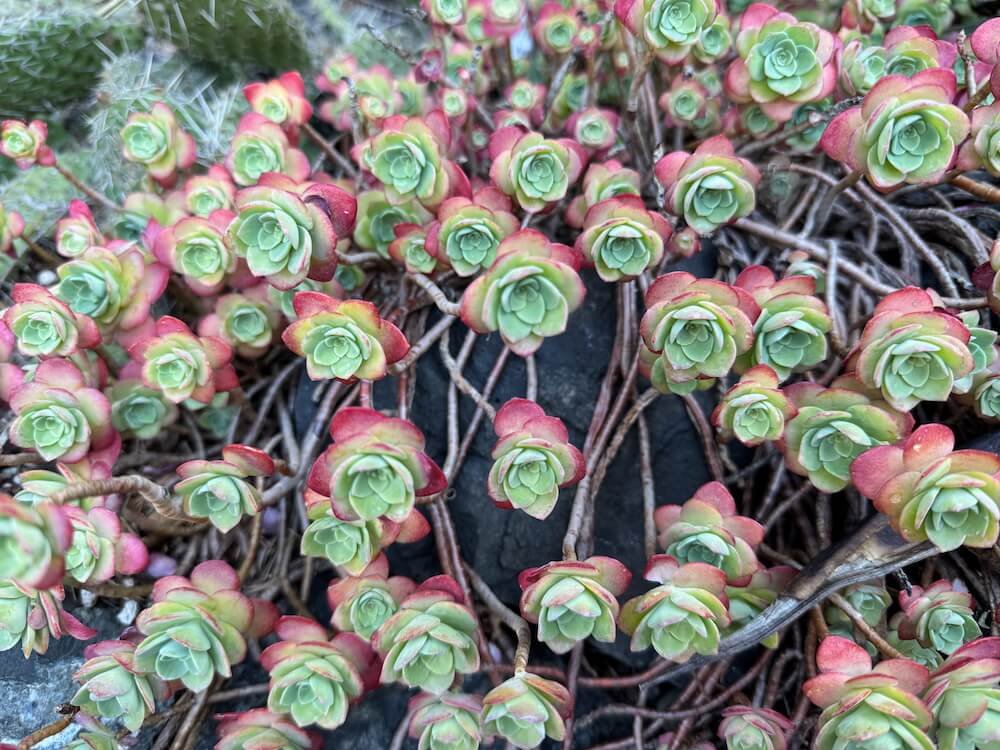
- Bright green fleshy, spoon-shaped leaves arranged in loose rosettes
- Bloom time
- Late winter to early spring
- Light
- Full sun to partial shade
- Water
- Low to moderate moisture
- Maintenance
- Very low, occasional trimming to maintain shape
- Growing zone
- USDA zones 7 to 10
- Wildlife
- Bees, early-season pollinators
About this plant
Sedum palmeri forms loose rosettes of blue-green, spoon-shaped leaves that take on soft pink and red tones in cool weather. In late winter to early spring, upright stems rise above the foliage bearing clusters of bright yellow, star-shaped flowers that bring early seasonal color. Native to northeastern Mexico, this species is valued for its dependable flowering period and its ability to provide visual interest when many perennials are still dormant.
In the garden, Sedum palmeri works well in rock gardens, borders, containers, and mixed succulent plantings where its tidy rosettes add structure year round. It is also useful for edging sunny paths and filling small spaces where low, spreading plants help knit plantings together.
Works well in
Rock Gardens · Pathways & Walkways · Slopes & Banks · Pollinator Gardens
Companion plants
Armeria · Heathers · Dianthus · Catmints · Blue oat grass · Candytufts
Design tip
Take advantage of the unusually early blooms to provide color and support for emerging pollinators before most perennials begin flowering. Combine evergreen rosettes with spring bulbs and contrasting foliage for a garden that offers interest from late winter onward.
Where to see it
This plant can be seen at Heronswood Garden.