Northwest Blooms · Groundcovers
Sedum spathulifolium ‘Cape Blanco’
Cape Blanco Stonecrop
- Family
- Crassulaceae
- Height
- 2 to 3 inches
- Width
- 12 to 18 inches
- Flower color
- Bright yellow
- Foliage color
- Silvery-gray, succulent rosettes
- Bloom time
- Late spring to early summer
- Light
- Full sun to partial shade
- Water
- Low; drought-tolerant
- Maintenance
- Low; minimal pruning needed
- Growing zone
- USDA zones 5 to 9
- Wildlife
- Attracts bees and butterflies
About this plant
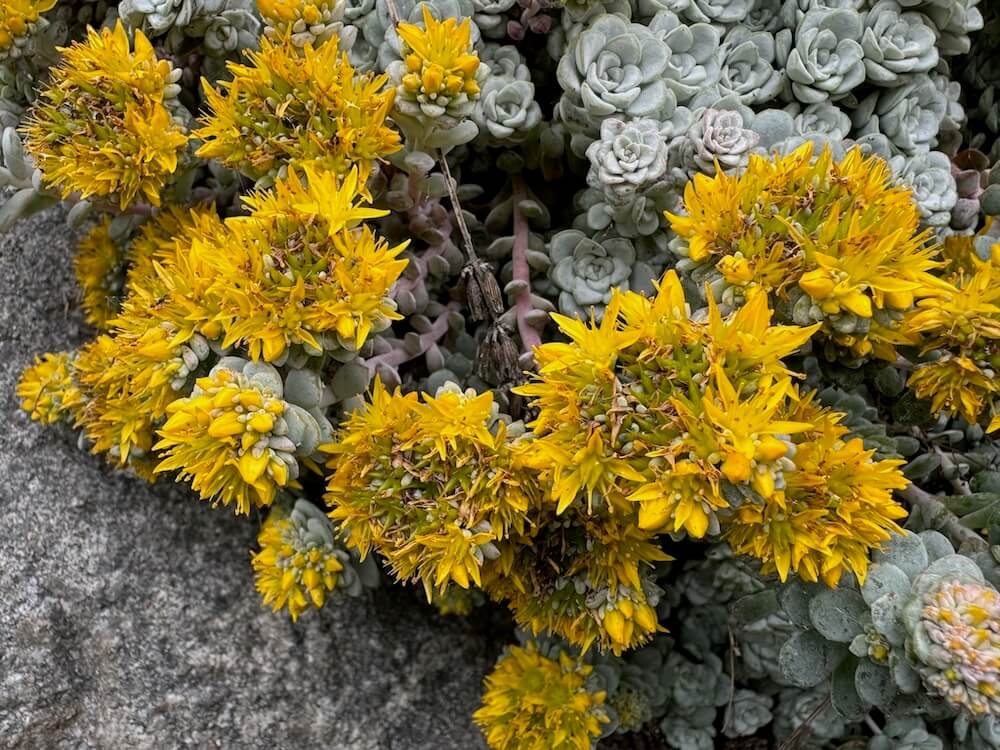
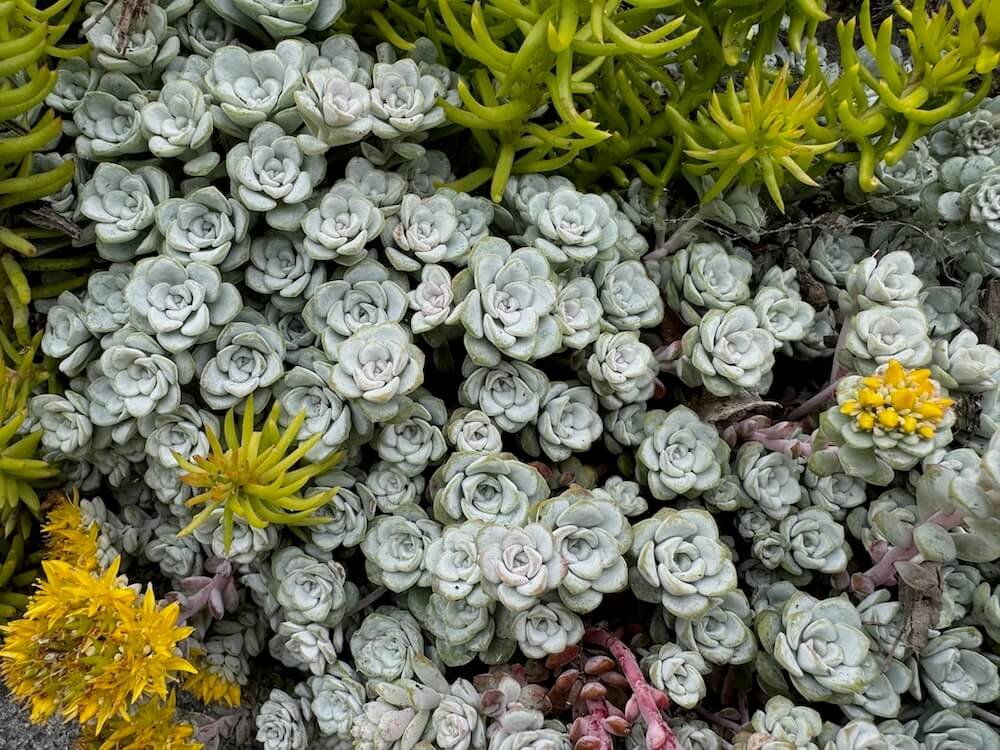
Sedum spathulifolium 'Cape Blanco' is a distinctive evergreen succulent known for its rosettes of fleshy, spoon-shaped leaves covered in a silvery-white powdery coating. This powder, called "farina," gives the plant a unique frosted appearance, which contrasts beautifully with its occasional tinge of pink or purple, especially in cooler weather. In late spring to early summer, it produces clusters of small, bright yellow star-shaped flowers, adding a vibrant pop of color against the silvery foliage.
Native to the West Coast of North America, particularly the Pacific coastal regions, 'Cape Blanco' was named after Cape Blanco, the westernmost point in Oregon, where this sedum naturally grows on rocky cliffs. Its natural hardiness and drought tolerance made it a favorite for rock gardens, containers, and green roofs.
Works well in
Rock Gardens · Pathways & Walkways · Slopes & Banks · Pollinator Gardens
Companion plants
Thyme · Heathers · Gaillardia · Penstemons · Potentilla · Catmint
Design tip
Highlight the frosted foliage by pairing it with darker stones, rich green evergreens, and deep burgundy accents. The silvery rosettes naturally catch the light, creating subtle contrast and adding year-round texture to rock gardens and sunny borders.
Where to see it
This plant can be seen at the Bellevue Botanical Garden.