Northwest Blooms · Perennials
Asclepias speciosa
Showy Milkweed
- Family
- Apocynaceae
- Classification
- Native herbaceous perennial
- Height
- 2 to 4 feet
- Width
- 1 1/2 to 3 feet
- Flower color
- Dusty rose to pinkish purple
- Foliage color
- Gray-green
- Bloom time
- Late spring to summer
- Light
- Full sun
- Water
- Low to moderate, drought tolerant once established
- Growing zone
- USDA zones 3 to 9
- Wildlife
- Monarch butterflies, bees and other pollinators
About this plant
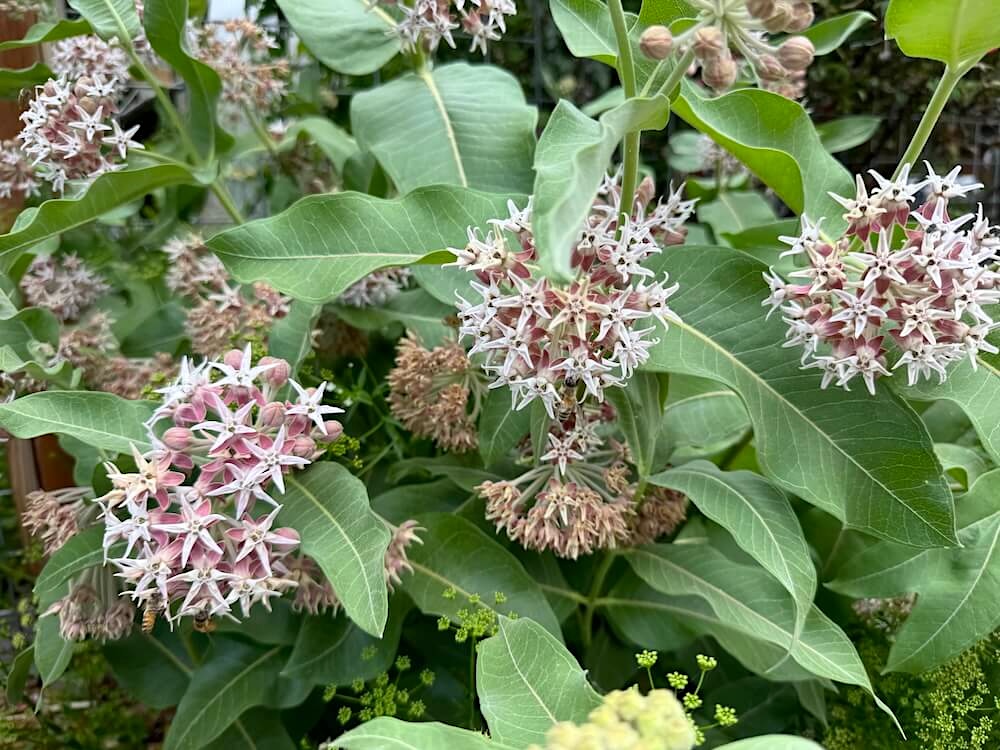
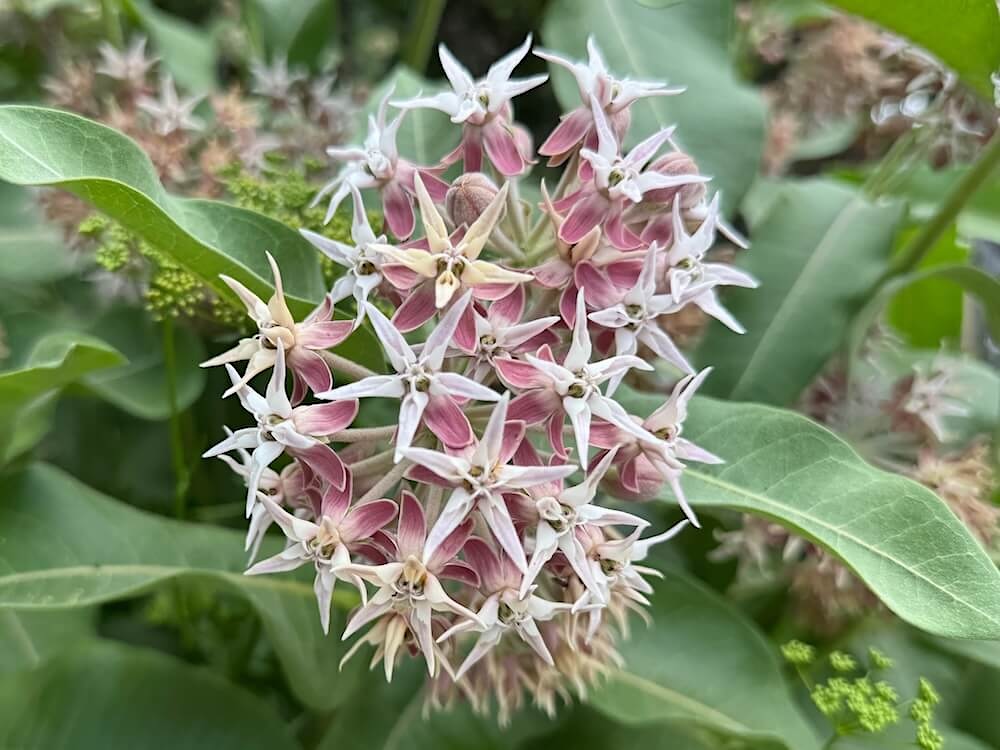
Asclepias speciosa is a herbaceous perennial with rounded clusters of star-shaped flowers that open from late spring into summer. Individual blossoms are dusty rose to pinkish purple, with reflexed petals surrounding prominent pale pink hoods that give each flower a sculptural appearance. The fragrant blooms are rich in nectar and attract butterflies, bees and other pollinators. Broad, gray-green leaves grow in opposite pairs along sturdy upright stems, creating substantial foliage even when the plant is not flowering. Elongated seed pods develop later in the season and split open to release silky, wind-carried seeds.
Native across much of western North America, including the Pacific Northwest, Asclepias speciosa is an important host plant for monarch butterfly caterpillars as well as a valuable nectar source for many insects. Underground rhizomes allow established plants to gradually form colonies, making the species particularly effective in naturalistic plantings, pollinator gardens and meadow-style landscapes. Its upright growth and large flower clusters also give it enough presence to mix successfully with ornamental grasses and other sun-loving perennials.
Planting & care
Plant in full sun and well-drained soil. Water regularly while roots establish, then reduce irrigation because mature plants tolerate dry conditions. Leave room for underground rhizomes to spread and cut old stems back after dormancy.
Works well in
Pollinator Gardens · Native Gardens · Waterwise Gardens · Meadow Gardens · Borders
Companion plants
Oceanspray · Rabbitbrush · Yarrow · Blanket flower · Penstemon · Blue flax · Kinnikinnick
Design tip
Allow showy milkweed to form a loose colony rather than treating it as a single specimen. Give the spreading roots room to move among grasses and sturdy perennials, creating a naturalistic planting where emerging stems can shift position without disrupting a formal arrangement.