Northwest Blooms · Perennials
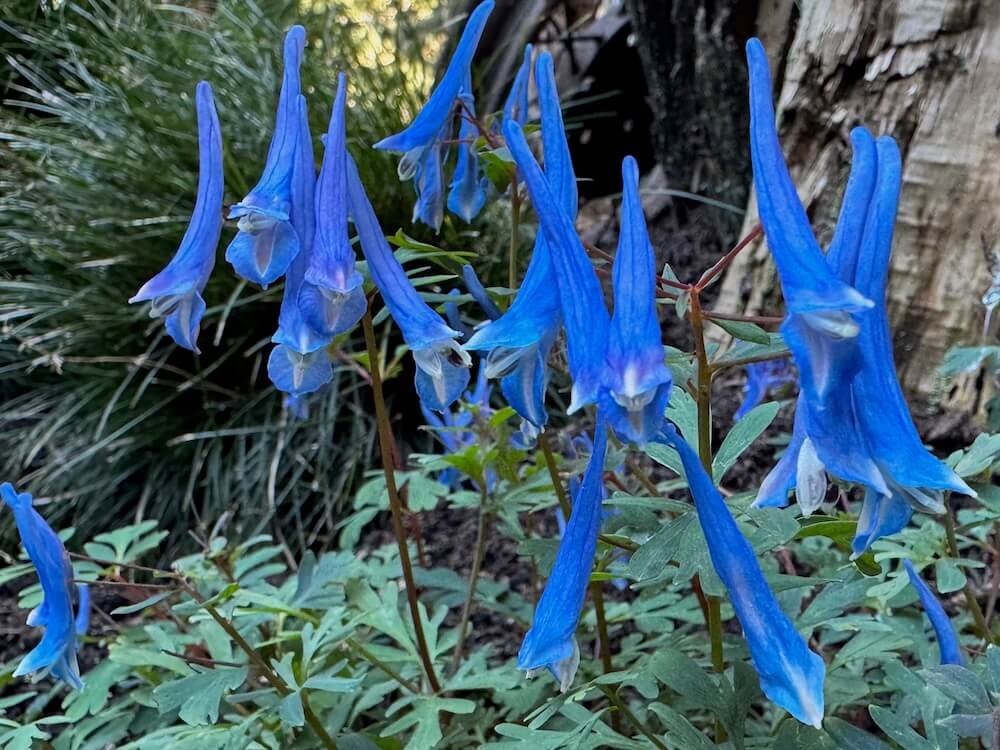
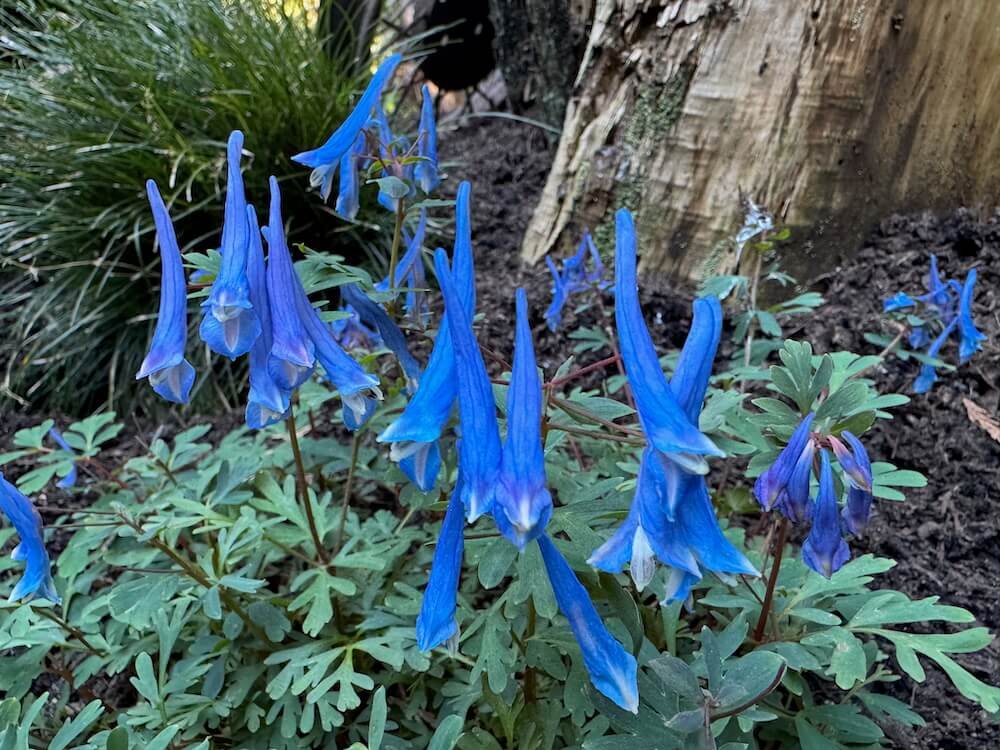
Corydalis curviflora subsp. rosthornii 'Blue Heron'
Blue Heron Corydalis
- Family
- Papaveraceae
- Height
- 8–10 in
- Width
- 8–12 in
- Flower color
- Deep or sapphire blue, often fragrant
- Foliage color
- Blue-green to gray-green
- Bloom time
- Late spring through early summer
- Light
- Partial shade to full shade
- Water
- Evenly moist, well-drained soil
- Maintenance
- Low; deadhead to prolong bloom, divide periodically, and protect from summer heat or drought dormancy
- Growing zone
- USDA zones 6–8
- Wildlife
- Butterflies and other pollinators
About this plant
Corydalis curviflora subsp. rosthornii 'Blue Heron' forms soft mounds of finely divided, fernlike foliage that set off arching sprays of deep blue, tubular flowers in late spring, often continuing into early summer. Each gently curved bloom carries pale inner tones that create a luminous, airy effect in shaded garden settings. Native to woodland regions of western China, this refined selection reflects the cool mountain habitats where the species was first gathered and later brought into cultivation.
Steady perennial growth and an extended flowering display lend calm color to woodland borders, shaded beds, and protected containers through the milder months of the growing season.
Works well in
Borders · Shade Gardens · Woodland Gardens · Pollinator Gardens · Rain Gardens
Companion plants
Epimediums · Hostas · Bleeding hearts · Solomon's seal · Ferns · Lungworts
Design tip
Summer flowers carry the middle of the season, so place it where the bed needs color once spring bulbs fade. Keep it out of hot afternoon sun and layer it with woodland companions for a full, settled look.
Where to see it
This plant can be seen at Heronswood Garden.