Northwest Blooms · Perennials
Trillium kurabayashii
Giant Purple Trillium
- Family
- Melanthiaceae
- Height
- 12 to 18 inches
- Width
- 12 inches
- Flower color
- Initially deep maroon or reddish-purple, fading to lighter pink or white with age
- Foliage color
- Dark green, slightly glossy
- Bloom time
- Late spring to early summer
- Light
- Partial to full shade
- Water
- Moist, well-draining soil
- Maintenance
- Low maintenance
- Growing zone
- USDA zones 5 to 8
- Wildlife
- Attracts bees and other pollinators; provides habitat for small mammals and birds
About this plant
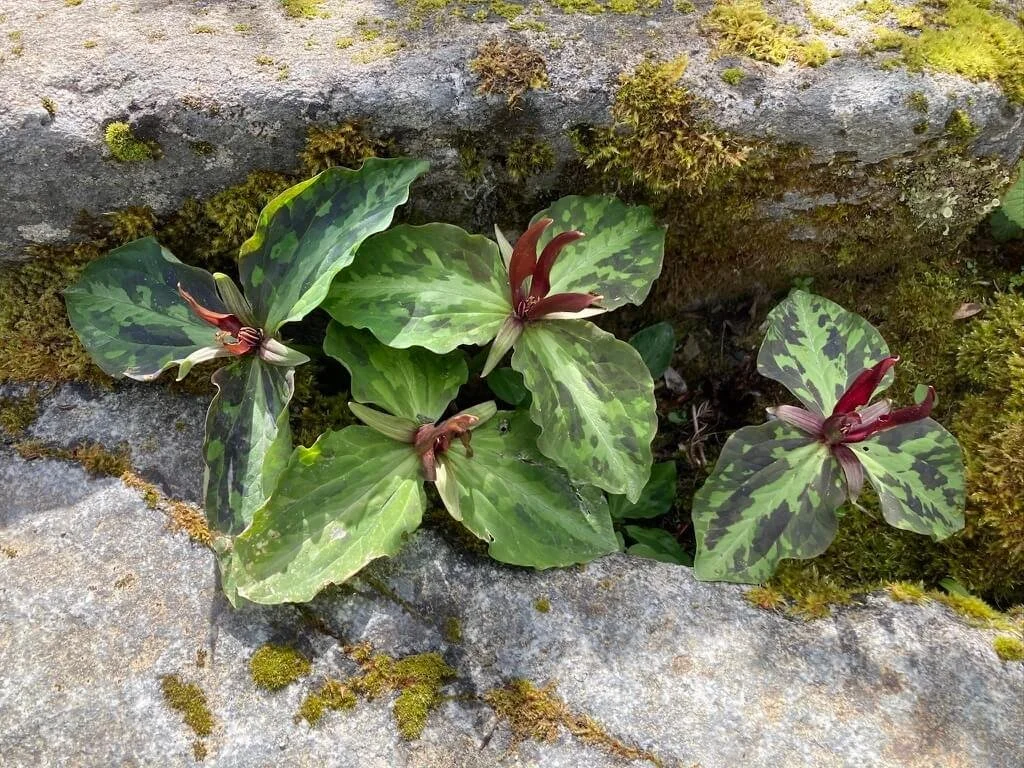
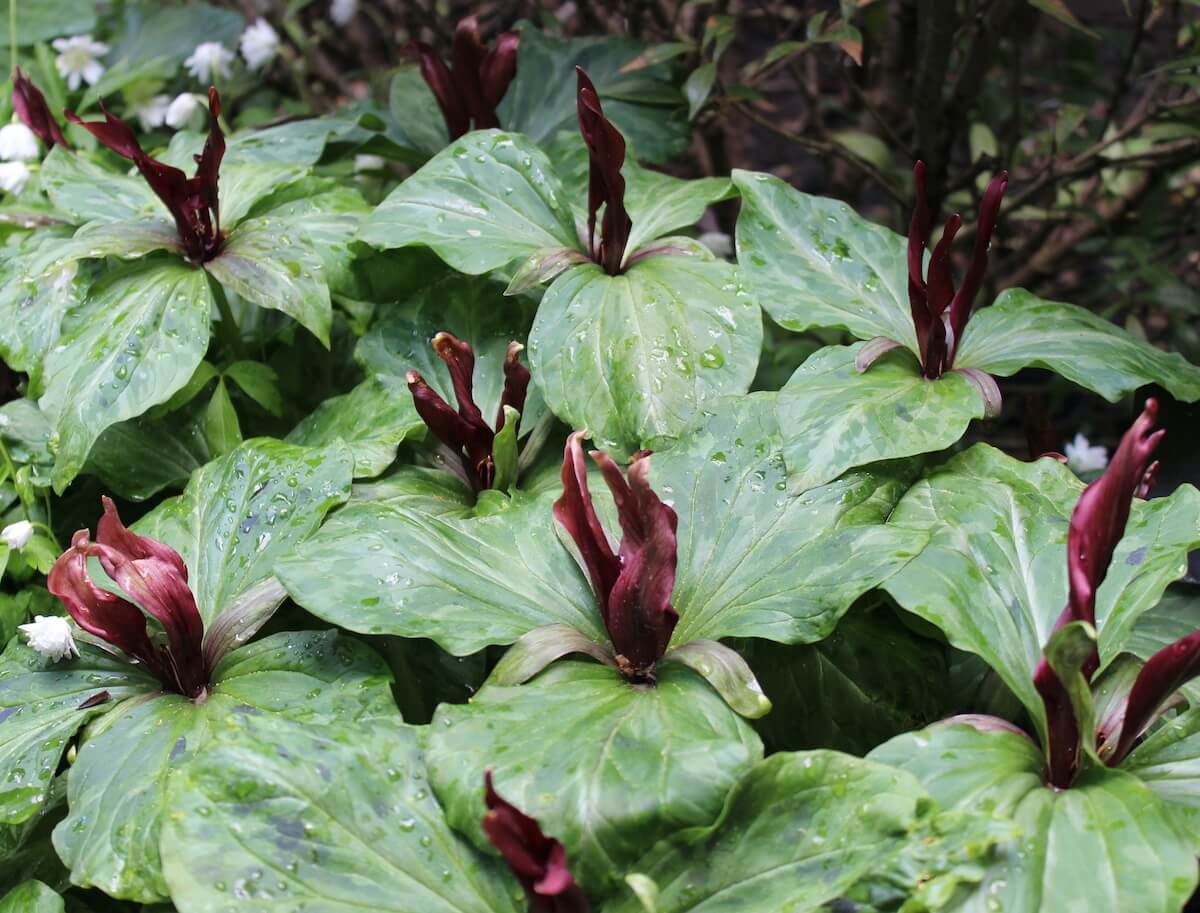
Trillium kurabayashii is a striking perennial plant native to the Pacific Northwest, prized for its elegant appearance and delicate beauty. Growing from a rhizomatous root system, it produces a single, upright stem topped with a whorl of three large, dark green, slightly glossy leaves. Its most striking feature is the deep maroon or reddish-purple flower, which emerges from the center of the leaf whorl and forms a star-like shape with three petals and three sepals. As the flower ages, it may fade to a lighter pink or white hue, adding visual interest. Thriving in moist, well-draining soil in partially to fully shaded locations, Trillium kurabayashii is ideal for woodland settings, shady gardens, or naturalized areas, where its attractive foliage and striking flowers make it a standout plant, especially when planted in groups or drifts. Additionally, it is valuable for native plant enthusiasts, providing important habitat and food sources for native wildlife.
Works well in
Borders · Shade Gardens · Woodland Gardens · Pollinator Gardens · Bird Gardens
Companion plants
Ferns · Lungworts · Wild ginger · Hellebores · Japanese forest grass · Astilbes
Design tip
Summer flowers carry the middle of the season, so place it where the bed needs color once spring bulbs fade. Keep it out of hot afternoon sun and layer it with woodland companions for a full, settled look.
Where to see it
This plant can be seen in the rock garden at the Bellevue Botanical Garden.