Northwest Blooms · Perennials
Eryngium campestre
Field Eryngo
- Family
- Apiaceae
- Height
- Approximately 28 inches
- Width
- Approximately 20 inches
- Flower color
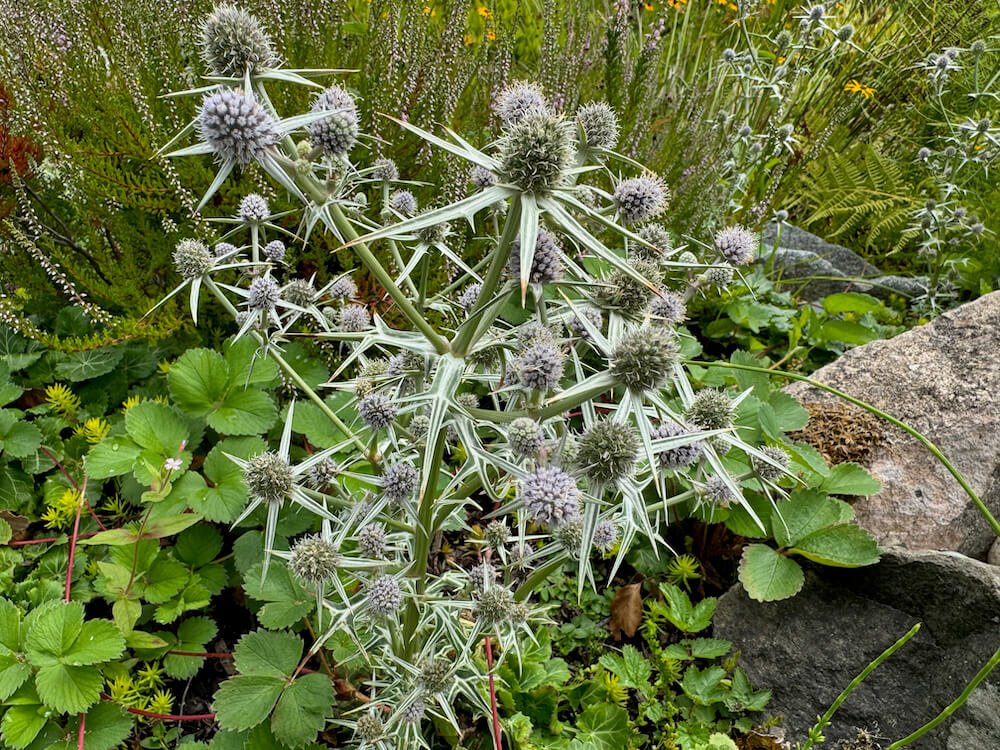
- Whitish to pale blue
- Foliage color
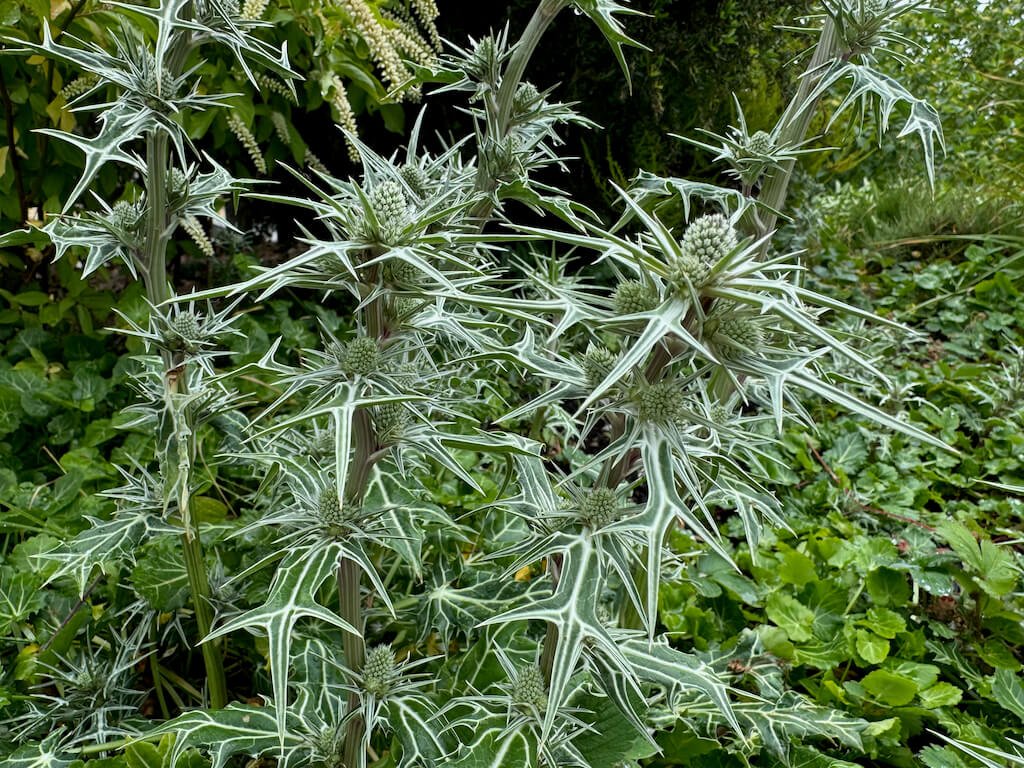
- Whitish-green, tough, and stiff leaves with spiny lobes
- Bloom time
- July to September
- Light
- Full sun
- Water
- Low; prefers dry, well-drained soils
- Maintenance
- Low; drought-tolerant and suitable for xeriscaping
- Growing zone
- USDA zones 5 to 9
- Wildlife
- Attracts bees and other pollinators; deer-resistant
About this plant
Eryngium campestre is a perennial herb native to central and western Europe, North Africa, the Middle East, and the Caucasus region. This plant features erect, highly branched stems accompanied by spiny, deeply lobed leaves. Its flowers, which bloom from late spring to early autumn, are white to pale blue and clustered into compact heads encircled by a whorl of bracts.
Eryngium campestre thrives in dry, open habitats such as roadsides and abandoned fields. The plant is notable for its long roots, allowing it to access water from deeper soil layers. Additionally, it has a symbiotic relationship with the edible mushroom Pleurotus eryngii, commonly known as the king oyster mushroom, which grows on its roots and is highly valued in Mediterranean cuisine.
Works well in
Borders · Sun Gardens · Pollinator Gardens · Waterwise Gardens
Companion plants
Garden phlox · Black-eyed Susans · Daylilies · Lavender · Coreopsis · Russian sage
Design tip
Foliage and form do most of the work here, so lean on texture and repetition rather than one flowering moment. In full sun it holds its shape best, and grouping several together keeps the color strong enough to be seen from across the garden.
Where to see it
This plant can be seen at the Center for Urban Horticulture.