Northwest Blooms · Perennials
Hedychium coccineum 'Tara'
Tara Ginger Lily
- Family
- Zingiberaceae
- Height
- 4-6 feet tall
- Width
- 2-3 feet wide
- Flower color
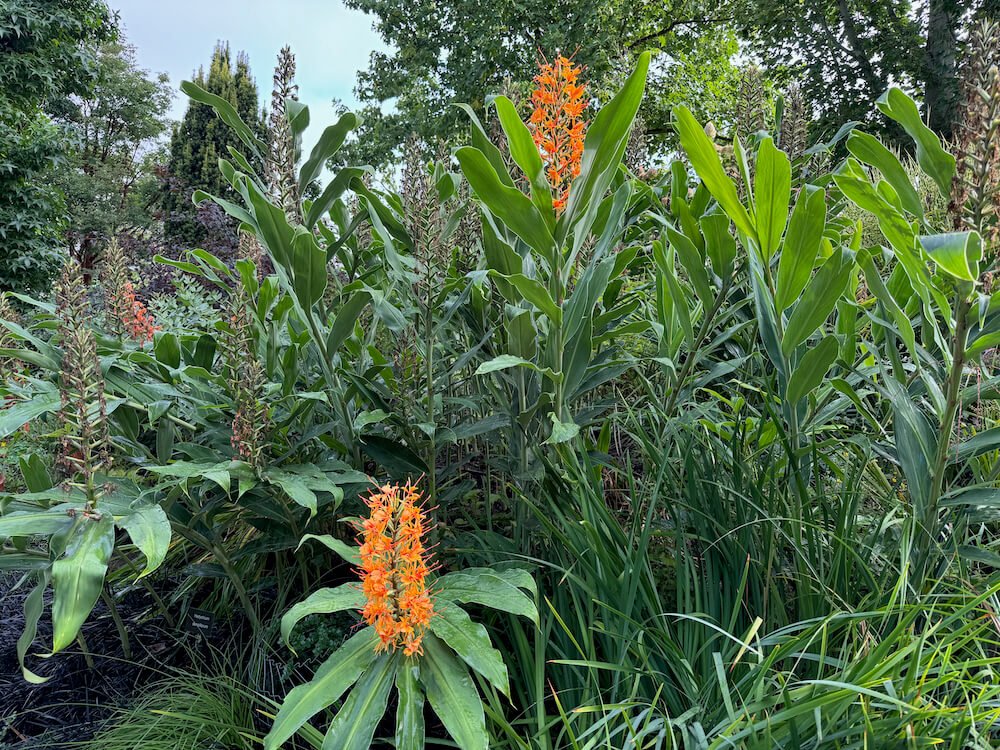
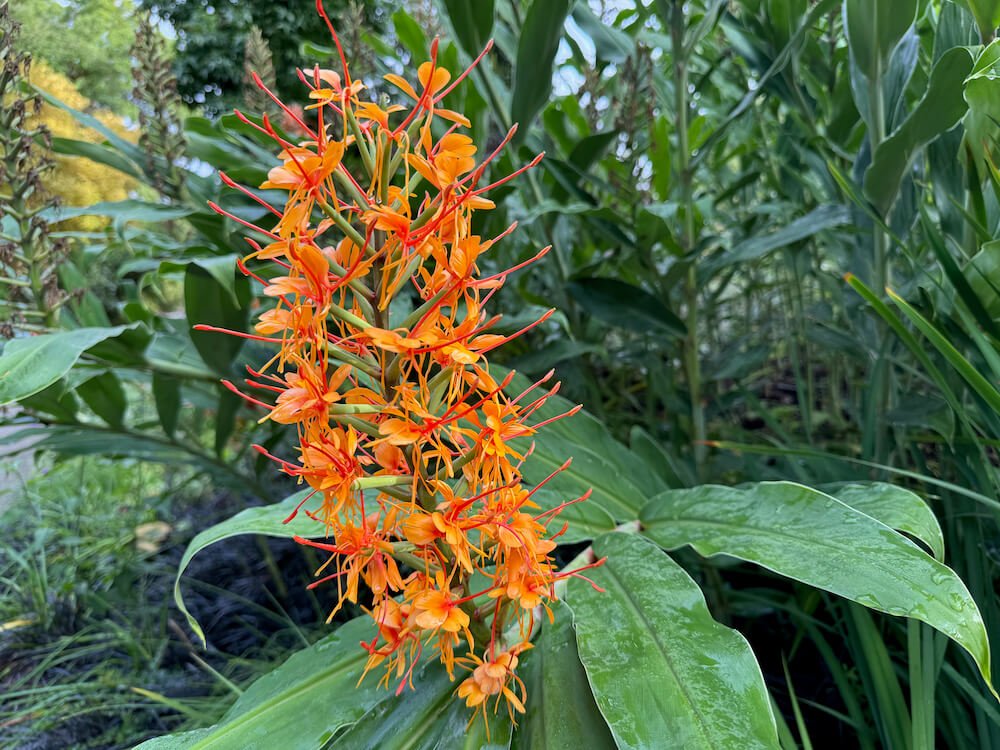
- Bright orange to red-orange flowers arranged in dense, upright spikes
- Foliage color
- Large, lance-shaped, green leaves
- Bloom time
- Late summer to early fall
- Light
- Full sun to partial shade
- Water
- Medium
- Maintenance
- Low to moderate; cut back after frost, and provide mulch in colder zones for winter protection
- Growing zone
- USDA Zones 7-10
- Wildlife
- Attracts pollinators, including butterflies and hummingbirds
About this plant
Hedychium coccineum 'Tara' is a bold perennial with dramatic, fiery orange-red flower spikes that bloom from late summer to early autumn. Each flower spike features numerous small, slender blooms with long, graceful stamens that create an almost feathered appearance, giving the plant a tropical elegance. The flowers are lightly fragrant and attract pollinators such as bees and butterflies, adding life to the late-season garden.
Originating from the Himalayas, Hedychium coccineum 'Tara' is admired for its hardiness and adaptability to temperate climates, making it suitable for gardens beyond tropical zones. Its lush, green, lance-shaped foliage forms a dense, leafy backdrop that enhances its vivid blooms and brings a lush, exotic look to borders, containers, or tropical-themed gardens. The plant's vibrant color and structural presence make it a valuable addition to late-season plantings, providing warmth and interest as summer transitions into fall.
Works well in
Borders · Cottage Gardens · Pollinator Gardens · Hummingbird Gardens · Cut Flower Gardens
Companion plants
Hardy geraniums · Hostas · Ferns · Astilbes · Foxgloves · Bergenias
Design tip
Fall bloom is its strength, and it earns a place near a path or seating area used late in the year. Because it is easy about light, use it to carry a planting from a sunny end of the bed into the shadier side.
Where to see it
This plant can be seen in the perennial border at the Bellevue Botanical Garden.