Northwest Blooms · Perennials
Hemerocallis fulva 'Kwanso Variegata'
Kwanso Variegata Daylily
- Family
- Asphodelaceae
- Height
- 2-3 feet tall
- Width
- 1-2 feet wide
- Flower color
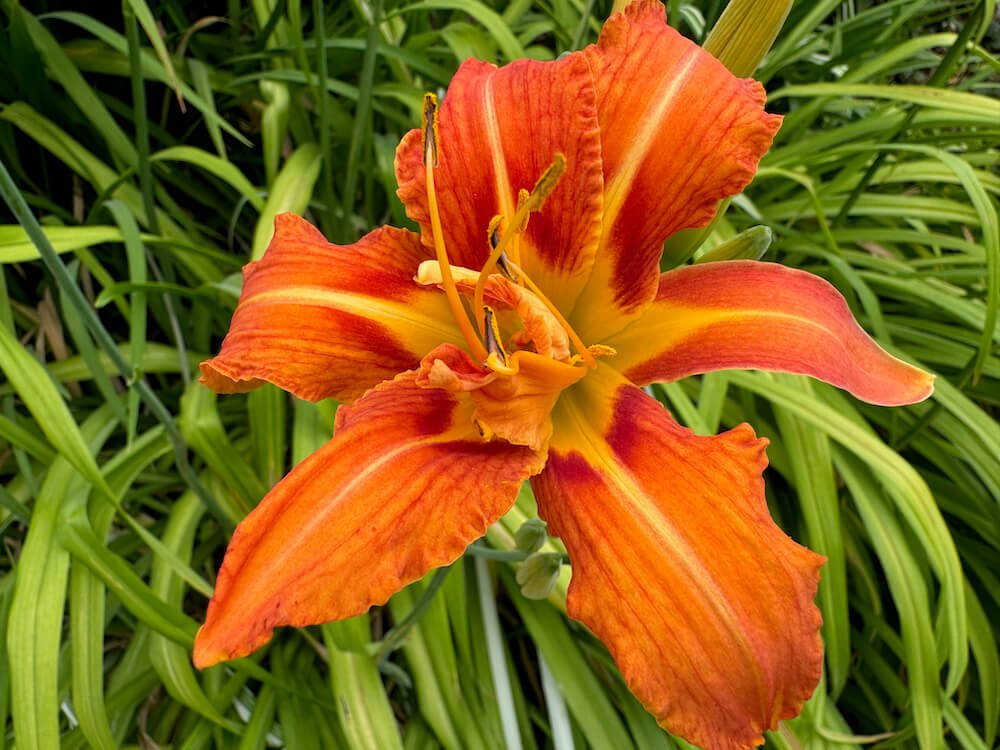
- Bright orange with yellow throat and midrib
- Foliage color
- Green with white variegation, strap-like leaves
- Bloom time
- Midsummer
- Light
- Full sun to partial shade
- Water
- Moderate
- Maintenance
- Low; remove spent flowers to promote tidiness and cut back foliage in late fall
- Growing zone
- USDA Zones 4-9
- Wildlife
- Attracts butterflies and hummingbirds
About this plant
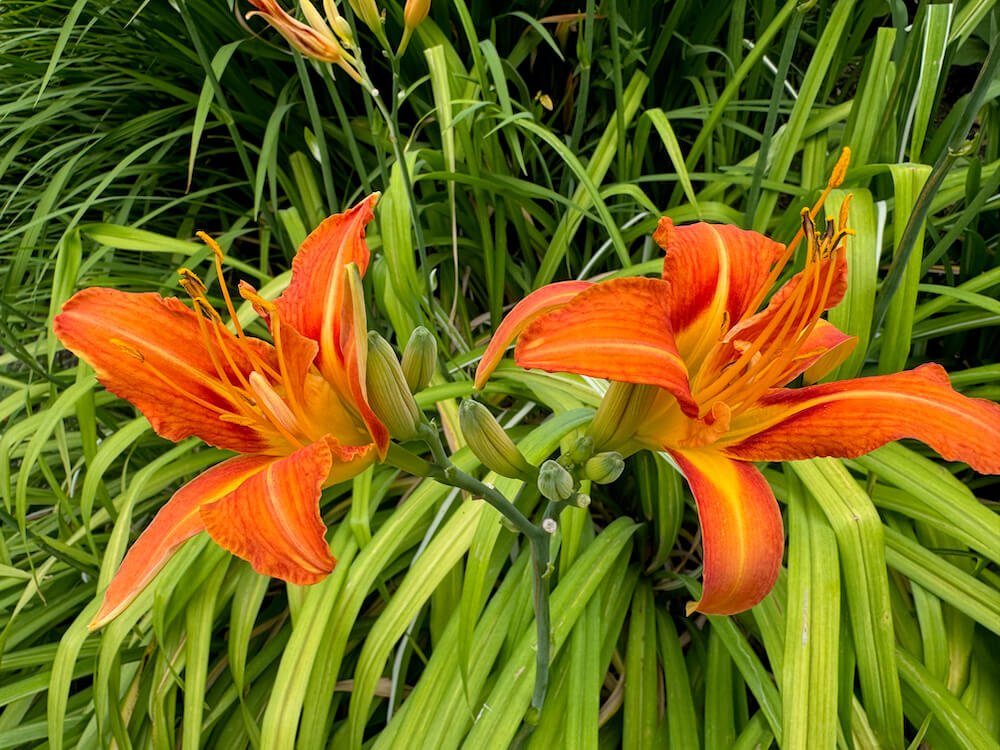
Hemerocallis fulva 'Kwanso Variegata' offers vibrant, double orange blooms accented by a yellow throat and a subtle yellow midrib running through each petal, adding layers of warmth and dimension to its flowers. The blooms are lushly layered with ruffled petals, bringing a textured, eye-catching look to the garden. Originally from Asia and cultivated for its hardiness, this variety is particularly valued for its variegated foliage, with green leaves striped in creamy white, making it a standout even when not in bloom.
In midsummer, 'Kwanso Variegata' produces a lively display of flowers that attract butterflies and bees, enhancing the garden's natural beauty. The interplay of its bright orange petals with the yellow accents and contrasting striped foliage creates a bold, dynamic effect well-suited to cottage gardens, borders, or as a focal point in mixed plantings. This cultivar's colorful blooms and decorative foliage make it an excellent choice for adding long-lasting visual interest.
Works well in
Borders · Cottage Gardens · Pollinator Gardens · Hummingbird Gardens · Cut Flower Gardens
Companion plants
Lungworts · Daylilies · Japanese anemones · Bleeding hearts · Catmint · Heucheras
Design tip
Summer flowers carry the middle of the season, so place it where the bed needs color once spring bulbs fade. Because it is easy about light, use it to carry a planting from a sunny end of the bed into the shadier side.
Where to see it
This plant can be seen in the perennial border at the Bellevue Botanical Garden.