Northwest Blooms · Perennials
Hibiscus moscheutos 'Mars Madness'
Mars Madness Rose Mallow
- Family
- Malvaceae
- Height
- 4-5 feet tall
- Width
- 3-4 feet wide
- Flower color
- Large, red blooms
- Foliage color
- Deep green leaves with a bronze tint
- Bloom time
- Mid to late summer
- Light
- Full sun
- Water
- High
- Maintenance
- Moderate; cut back stems in late fall, and mulch for winter protection in colder zones
- Growing zone
- USDA Zones 4-9
- Wildlife
- Attracts butterflies, hummingbirds, and other pollinators
About this plant
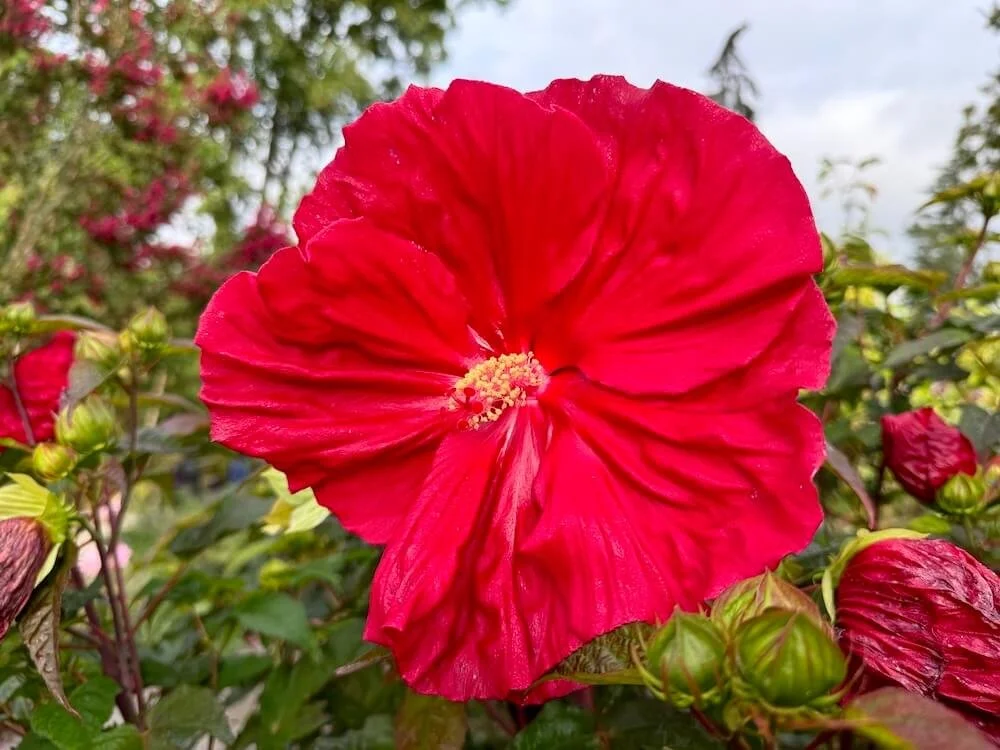
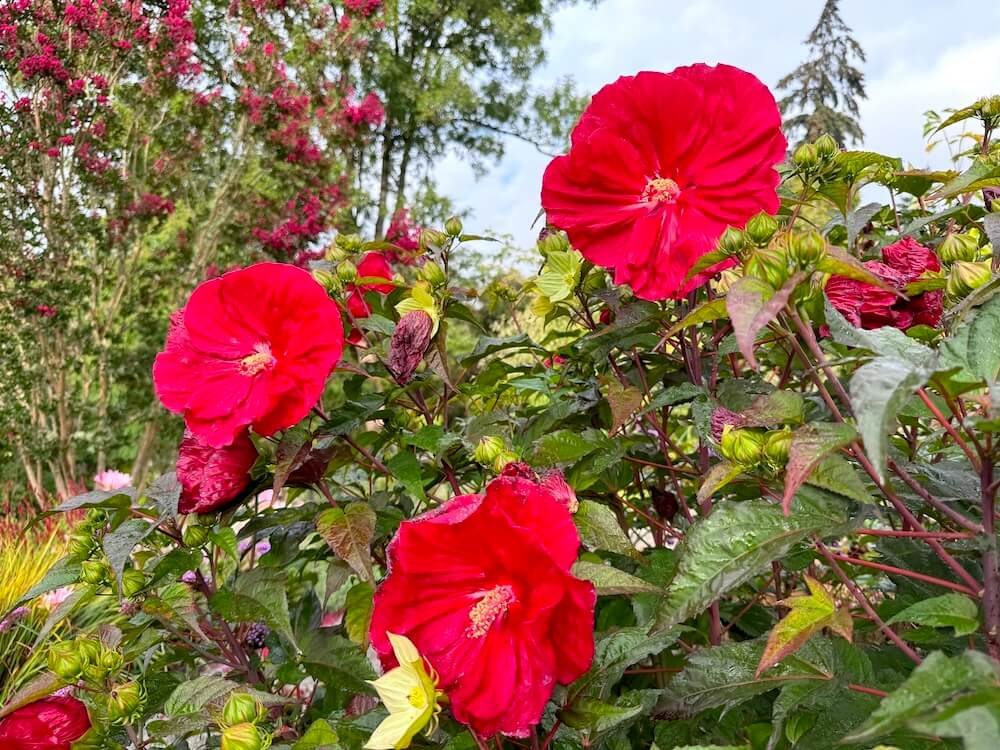
Hibiscus moscheutos 'Mars Madness' is known for its large, bold flowers that bloom from midsummer to early fall, creating a dramatic presence in the garden. The blooms are a deep, rich red with overlapping petals that form a broad, saucer-like shape, each flower spanning up to 8-10 inches across. The intense color and sheer size of the blossoms add a tropical flair to garden beds and borders, attracting hummingbirds and butterflies throughout its blooming season.
This hardy hibiscus variety originates from North America and is well-suited to sunny, moist areas where it can thrive and show off its vibrant blooms. In addition to its showy flowers, 'Mars Madness' has attractive foliage with a hint of bronze, adding another layer of interest and complementing its bold red flowers. It makes an excellent focal point in mixed perennial plantings or as a standout feature in pollinator gardens, offering color and texture that last well into the autumn months.
Works well in
Borders · Sun Gardens · Pollinator Gardens · Hummingbird Gardens · Rain Gardens
Companion plants
Sedums · Peonies · Coneflowers · Salvias · Shasta daisies · Asters
Design tip
Summer flowers carry the middle of the season, so place it where the bed needs color once spring bulbs fade. Give it open sun and room to fill out, and repeat it in threes or fives so the planting reads as one sweep instead of scattered dots.
Where to see it
This plant can be seen in the perennial border at the Bellevue Botanical Garden.