Northwest Blooms · Perennials
Paeonia obovata var. willmottiae
Chinese Woodland Peony
- Height
- 18–24 inches tall
- Width
- 20–30 inches wide
- Flower color
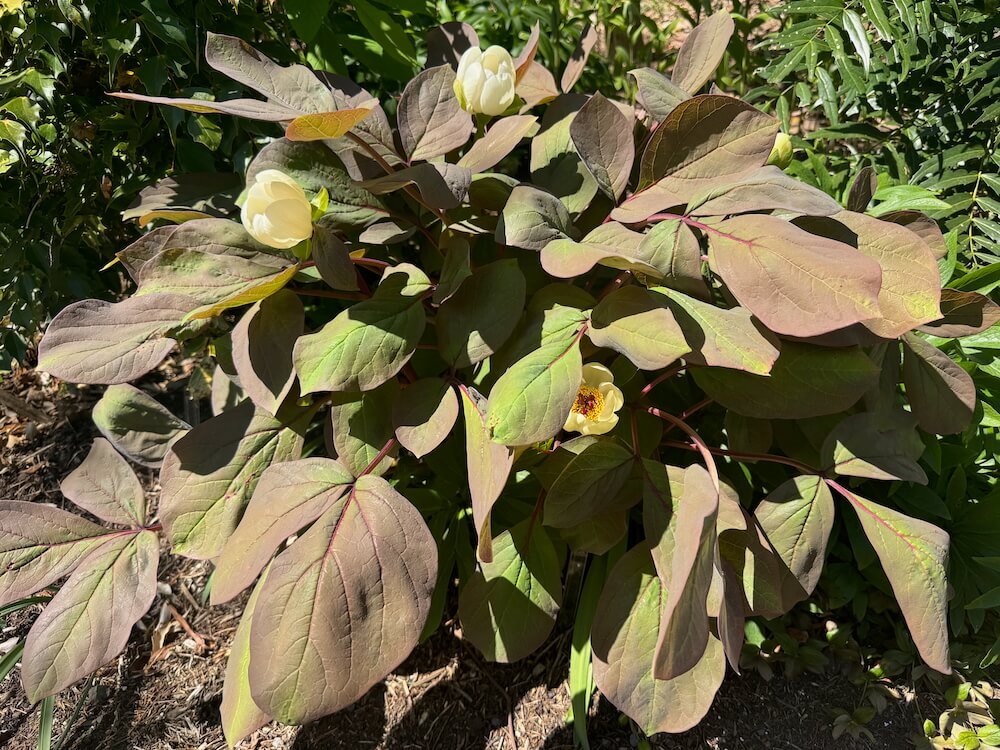
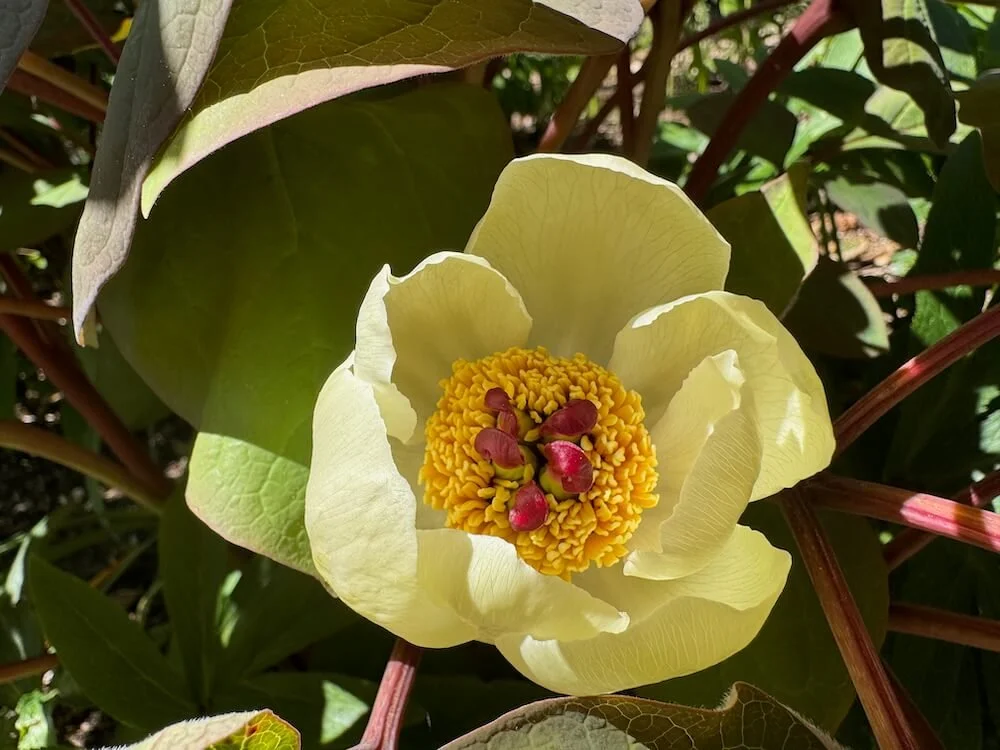
- Single, cup-shaped white blooms sometimes tinged with cream
- Foliage color
- Green; new growth may appear reddish
- Bloom time
- Early to mid-spring
- Light
- Part sun to light shade
- Water
- Moderate
- Maintenance
- Low to medium, remove spent blooms, cut back foliage after frost; rarely requires division
- Growing zone
- USDA zones 4a–7b
- Wildlife
- Showy flowers draw bees, butterflies, and other pollinators; deer- and rabbit-resistant
About this plant
Paeonia obovata var. willmottiae is a woodland peony native to the shaded, mountainous forests of central China, including the Qinling Range, and parts of Japan. It blooms in spring with single, white to cream cup-shaped flowers and a vibrant display of golden stamens often tipped with purple-red filaments. The blooms are mild-scented, and leaves emerge with a reddish flush before maturing to deep green. After flowering, the plant forms distinctive seed pods that ripen into bold red structures.
First described in 1916 based on plants grown from seeds collected in China by Ernest Henry Wilson, this tetraploid form is identifiable by its densely hairy leaf undersides and robust habit. Deer-resistant and naturally adept at self-seeding, this variety integrates well into woodland settings and shaded garden borders. Its combination of elegant early-season flowers, decorative foliage, and bold seed pods makes it a standout choice for multi-season woodland charm.
Works well in
Borders · Shade Gardens · Woodland Gardens · Pollinator Gardens · Containers
Companion plants
Heucheras · Siberian bugloss · Sweet woodruff · Foamflowers · Epimediums · Hostas
Design tip
The early flowers arrive when the garden is still waking up, so give it a spot you pass often in spring. Keep it out of hot afternoon sun and layer it with woodland companions for a full, settled look.
Where to see it
This plant can be seen at Windcliff Nursery.