Northwest Blooms · Perennials
Phlomis russeliana
Turkish Sage
- Family
- Lamiaceae
- Height
- 36–48 inches
- Width
- 48–60 inches
- Flower color
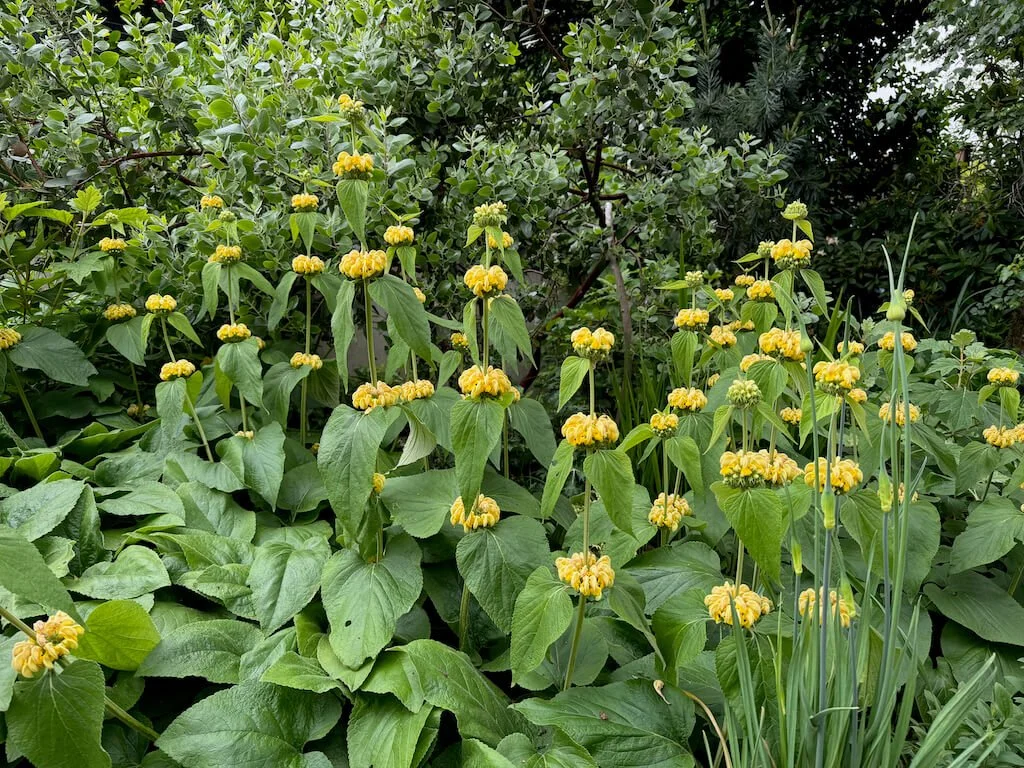
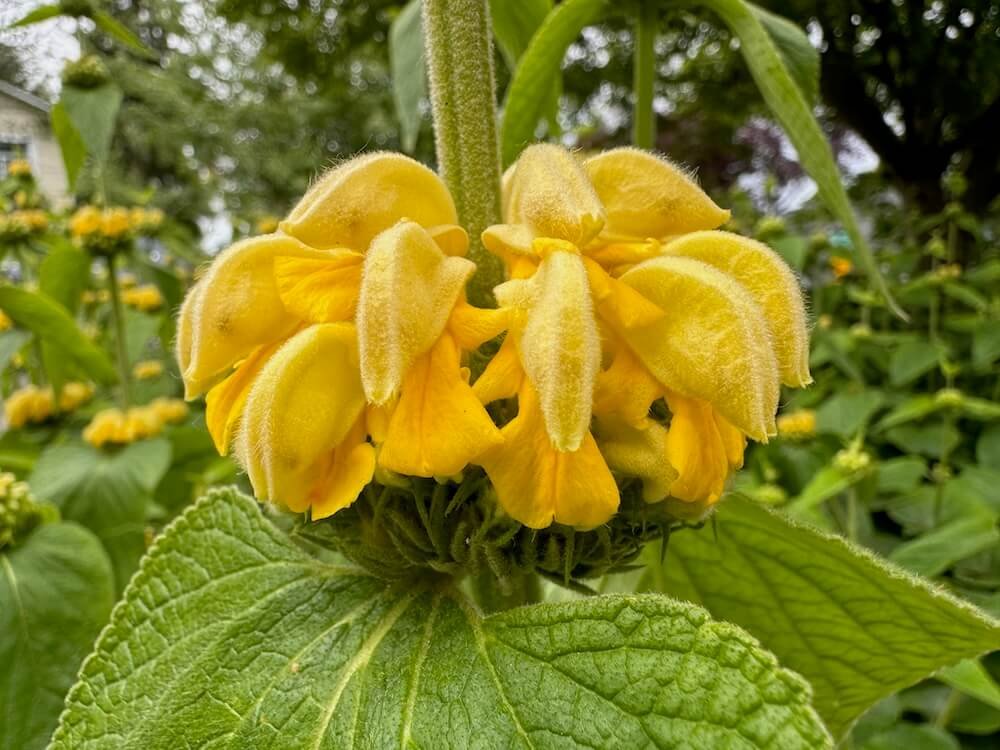
- Pale yellow tubular flowers in whorls, arranged in dense, ball-like clusters
- Foliage color
- Gray-green, velvety leaves with a rough texture and aromatic scent when crushed
- Bloom time
- Late spring to early autumn
- Light
- Full sun to partial shade
- Water
- Medium; drought-tolerant once established
- Maintenance
- Low; prune back spent flowers to encourage rebloom; remove dead foliage in early spring
- Growing zone
- USDA zones 5–9
- Wildlife
- Attracts bees, butterflies, and birds; deer-resistant
About this plant
Phlomis russeliana is a perennial plant native to Turkey and Syria. It blooms profusely from early to late summer, producing clusters of pale yellow, hooded flowers that form distinctive whorls along upright stems. These floral arrangements create a tiered effect, adding architectural interest to the garden. The plant's aromatic, heart-shaped leaves are gray-green and remain evergreen, providing year-round foliage.
Beyond its ornamental appeal, Phlomis russeliana offers practical benefits. The dried flower heads persist through autumn and winter, providing food for birds and maintaining visual interest in the landscape. This species is recognized for its resilience and low-maintenance nature, making it a valuable addition to gardens seeking both beauty and durability.
Works well in
Borders · Cottage Gardens · Pollinator Gardens · Bird Gardens · Waterwise Gardens
Companion plants
Ferns · Astilbes · Foxgloves · Bergenias · Sedums · Columbines
Design tip
Late flowers extend the season, so set it behind or beside plants that finish in midsummer. It takes sun or light shade, which makes it useful along the changing light of a bed edge or a partly shaded border.
Where to see it
This plant can be seen at the Center for Urban Horticulture.