Northwest Blooms · Perennials
Ranunculus aconitifolius 'Flore Pleno'
Fair Maids of France
- Family
- Ranunculaceae
- Height
- 1.5-2 feet tall
- Width
- 1-2 feet wide
- Flower color
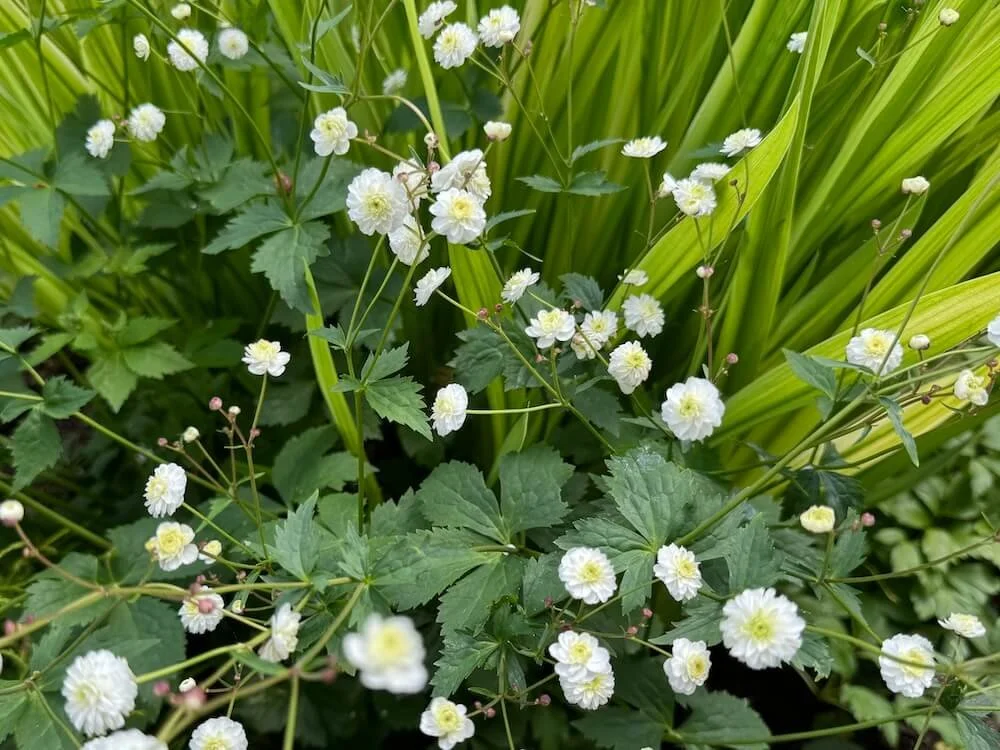
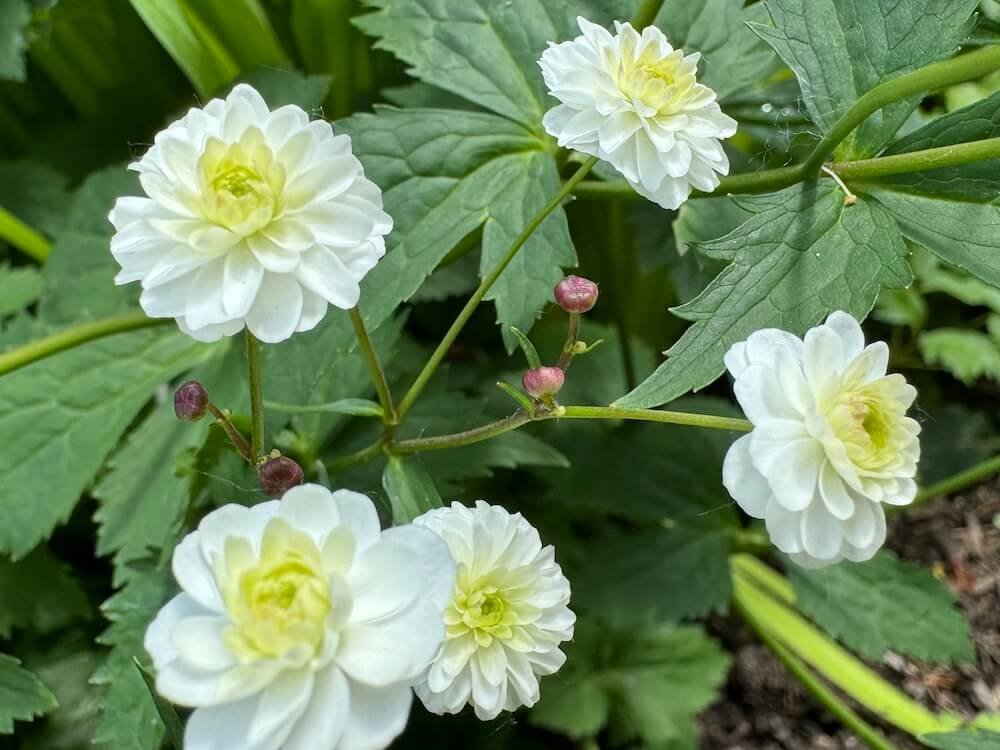
- Double white, small and rose-like
- Foliage color
- Deep green, lobed leaves
- Bloom time
- Late spring to early summer
- Light
- Partial shade to full sun
- Water
- Medium to high
- Maintenance
- Moderate; trim after flowering to encourage compact growth
- Growing zone
- USDA Zones 4-7
- Wildlife
- Attracts pollinators, including bees
About this plant
Ranunculus aconitifolius 'Flore Pleno', often known as the double-flowered form of fair maids of France, is cherished for its delicate, pure white, double blooms that resemble small, clustered roses. These blossoms emerge in late spring to early summer, creating a soft, cloud-like effect in the garden that pairs beautifully with other early-season perennials. The flowers are densely packed with petals, adding a refined, almost lace-like appearance against the plant's lush green foliage.
Native to the cool, mountainous regions of Europe, this ranunculus cultivar has been appreciated in European gardens for its elegance and adaptability to cooler climates. 'Flore Pleno' is especially suited for naturalistic or cottage-style plantings, where its soft, romantic blooms can be allowed to naturalize or complement other shade-loving plants. This cultivar is both ornamental and easy to maintain, making it a favorite for gardeners seeking timeless, understated beauty in shaded or woodland settings.
Works well in
Borders · Cottage Gardens · Pollinator Gardens · Rain Gardens · Containers
Companion plants
Japanese anemones · Bleeding hearts · Catmint · Heucheras · Lady's mantle · Hellebores
Design tip
Summer flowers carry the middle of the season, so place it where the bed needs color once spring bulbs fade. It takes sun or light shade, which makes it useful along the changing light of a bed edge or a partly shaded border.
Where to see it
This plant can be seen in the perennial border at the Bellevue Botanical Garden.