Northwest Blooms · Perennials
Rodgersia pinnata 'Bronze Peacock'
Bronze Peacock Rodger's Flower
- Family
- Saxifragaceae
- Height
- 1.5-2 feet tall
- Width
- 2-3 feet wide
- Flower color
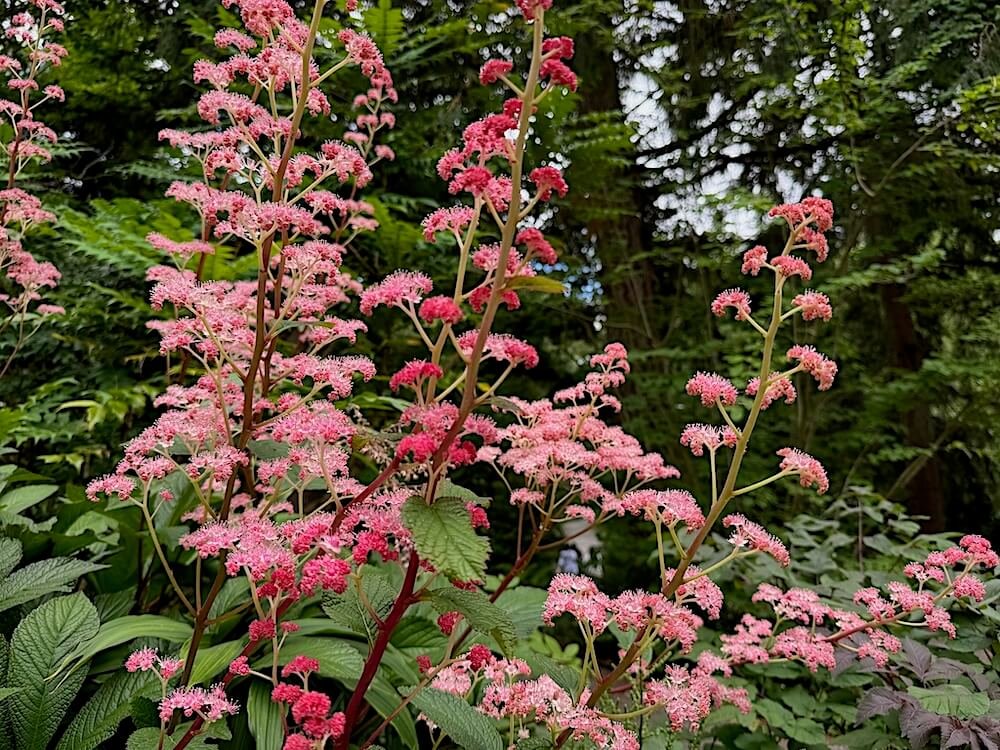
- Light to dark pink blooms on tall, airy spikes
- Foliage color
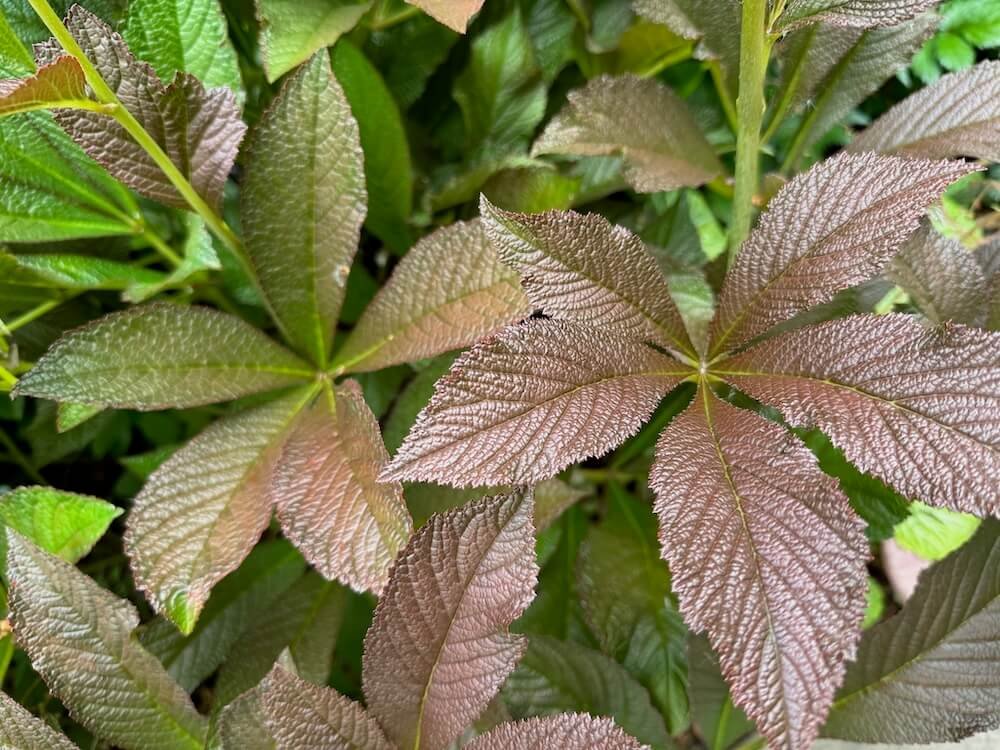
- Glossy, dark bronze leaves with a rich metallic sheen
- Bloom time
- Early to mid-summer
- Light
- Partial shade to full shade
- Water
- High
- Maintenance
- Moderate; remove spent flowers and trim back in late fall; mulch to retain moisture
- Growing zone
- USDA Zones 4-8
- Wildlife
- Attracts bees and other pollinators
About this plant
Rodgersia pinnata 'Bronze Peacock' features dramatic, glossy leaves that emerge a deep bronze-purple in spring, creating a bold, dark backdrop in shaded or partially shaded areas. As the season progresses, the foliage matures to a rich green with bronze undertones, maintaining a lush, textured appearance. In midsummer, tall spikes of light to dark pink flowers rise above the foliage, creating a lovely contrast and adding a soft, airy quality to its overall form.
Native to East Asia, Rodgersia pinnata thrives in woodland and damp garden environments, where it brings a distinctive presence. 'Bronze Peacock' is especially valued for its unique foliage color and texture, which make it a superb companion for other moisture-loving, shade-tolerant plants. Its long-lasting leaves and seasonal flower spikes add both structure and visual interest to garden beds, making it an excellent choice for adding depth and contrast to shaded landscapes.
Works well in
Borders · Shade Gardens · Woodland Gardens · Pollinator Gardens · Rain Gardens
Companion plants
Bleeding hearts · Solomon's seal · Ferns · Lungworts · Wild ginger · Hellebores
Design tip
Summer flowers carry the middle of the season, so place it where the bed needs color once spring bulbs fade. Cooler light suits it, so tuck it on the north side of a shrub or wall where the soil stays even.
Where to see it
This plant can be seen in the perennial border at the Bellevue Botanical Garden.