Northwest Blooms · Perennials
Salvia officinalis
Common Sage
- Family
- Lamiaceae
- Height
- 18 to 24 in
- Width
- 18 to 24 in
- Flower color
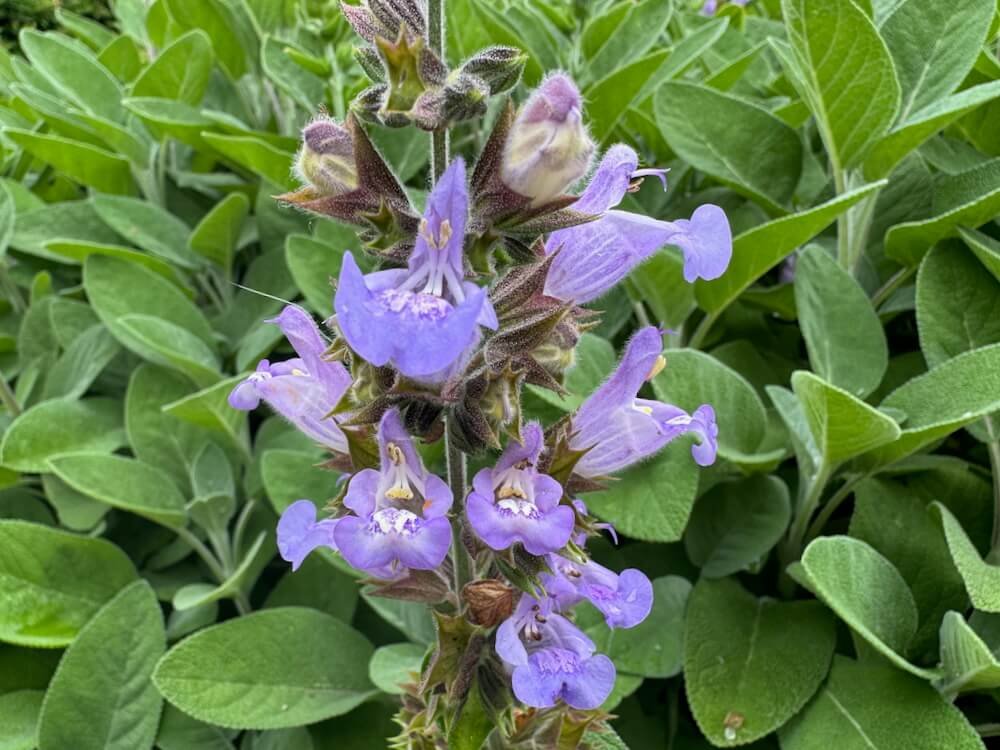
- Lavender to pale violet on short, upright flower spikes
- Foliage color
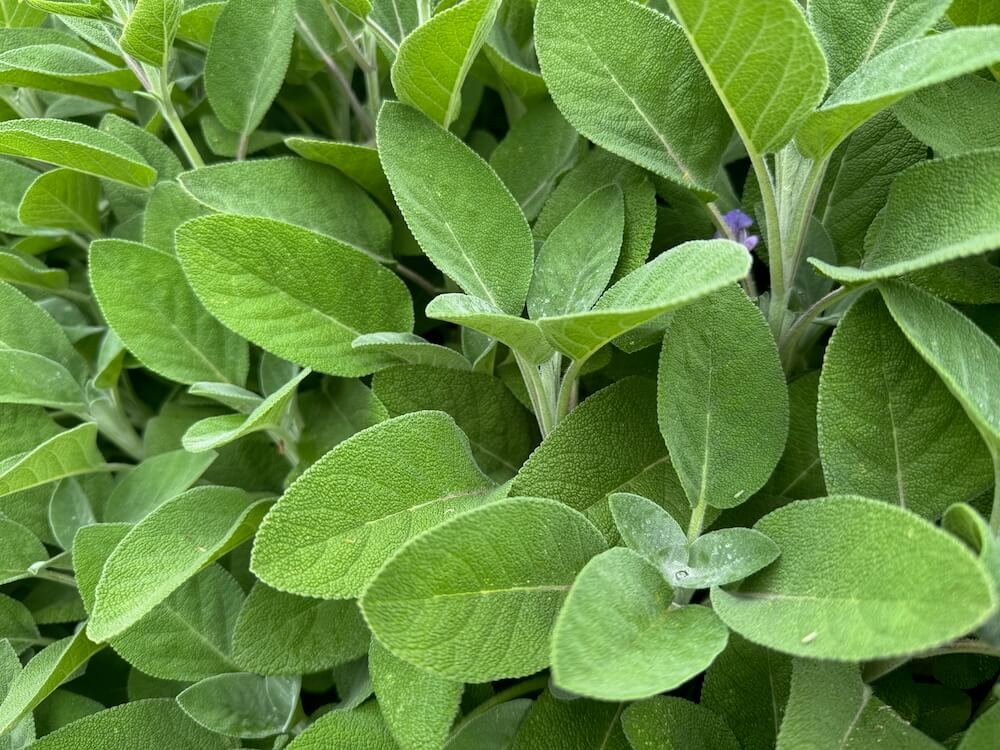
- Soft gray-green, oval leaves with a lightly textured, velvety surface
- Bloom time
- Late spring to early summer
- Light
- Full sun
- Water
- Low to moderate
- Maintenance
- Low, trim lightly after flowering to maintain shape
- Growing zone
- USDA zones 4 to 8
- Wildlife
- Bees, butterflies, and other pollinators
About this plant
Salvia officinalis forms softly textured mounds of silvery gray-green leaves with a distinctly aromatic character. In late spring to early summer, upright stems rise above the foliage carrying whorls of soft lavender to pale violet flowers that add a gentle wash of color above the leaves. The plant's evergreen habit in mild climates allows it to provide visual interest well beyond its flowering season, making it a steady presence in the garden.
Native to the Mediterranean region, Salvia officinalis has been cultivated for centuries for both ornamental and practical purposes. In garden settings, it works well in borders, herb gardens, and mixed perennial plantings, where its silvery foliage adds texture and its seasonal blooms support pollinator activity. It also adapts easily to containers and pathway edges, offering year-round structure and dependable seasonal interest
Works well in
Borders · Sun Gardens · Pollinator Gardens · Waterwise Gardens · Containers
Companion plants
Asters · Catmint · Coreopsis · Bearded irises · Bee balm · Yarrow
Design tip
Summer flowers carry the middle of the season, so place it where the bed needs color once spring bulbs fade. Give it open sun and room to fill out, and repeat it in threes or fives so the planting reads as one sweep instead of scattered dots.
Where to see it
This plant can be seen at Vista Gardens.