Northwest Blooms · Perennials
Tanacetum parthenium
Feverfew

- Family
- Asteraceae
- Height
- 1-3 feet tall
- Width
- 1-2 feet wide
- Flower color
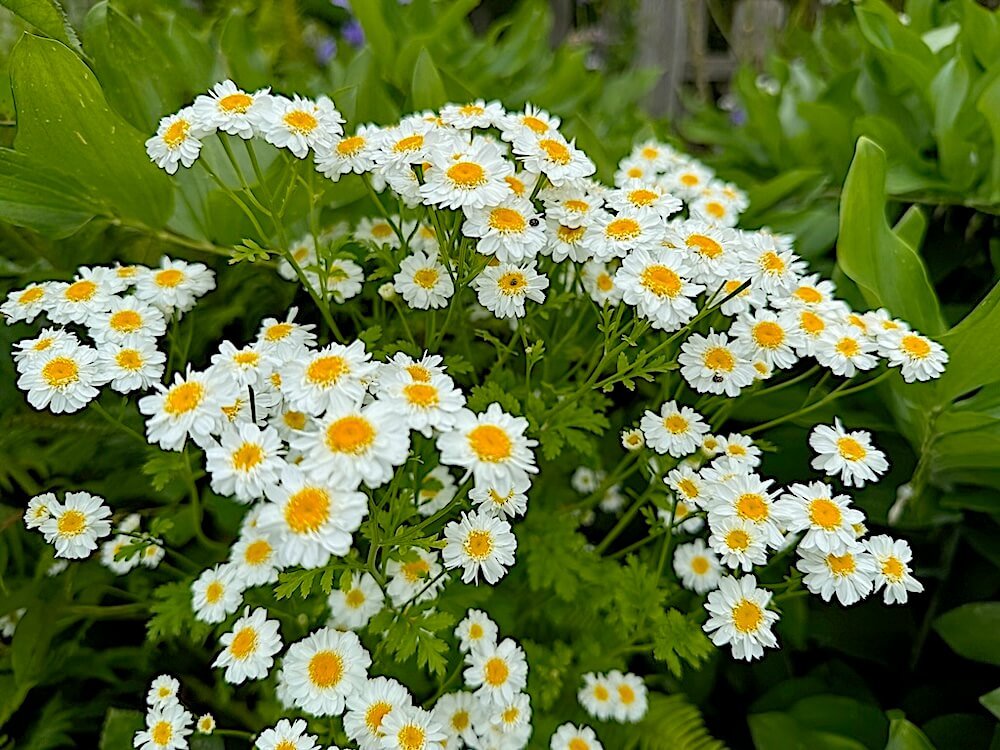
- Small, daisy-like flowers with white petals and yellow centers
- Foliage color
- Bright green, finely divided leaves with a lacy texture
- Bloom time
- Early summer to fall
- Light
- Full sun to partial shade
- Water
- Moderate
- Maintenance
- Low; deadhead to prolong blooming and prevent self-seeding, cut back in fall or spring
- Growing zone
- USDA Zones 5-9
- Wildlife
- Attracts bees and other pollinators
About this plant
Tanacetum parthenium, commonly known as feverfew, is a charming perennial that produces clusters of small, daisy-like flowers with bright white petals and yellow centers. Blooming from early to late summer, its cheerful blooms add a light, airy quality to the garden and are known to attract pollinators such as bees and butterflies. The flowers are often used as a filler in floral arrangements, bringing a delicate, classic look to bouquets.
Native to parts of Europe and western Asia, feverfew has a long history of cultivation both as an ornamental and medicinal herb. Its finely divided, aromatic foliage is a vibrant green, providing a lovely contrast to the simple beauty of its blossoms. This plant is often used in cottage gardens, herb gardens, and borders, where it complements a variety of other perennials, adding texture and continuous interest throughout the growing season.
Works well in
Borders · Cottage Gardens · Pollinator Gardens · Cut Flower Gardens
Companion plants
Hardy geraniums · Hostas · Ferns · Astilbes · Foxgloves · Bergenias
Design tip
Late flowers extend the season, so set it behind or beside plants that finish in midsummer. It takes sun or light shade, which makes it useful along the changing light of a bed edge or a partly shaded border.
Where to see it
This plant can be seen in the perennial border at the Bellevue Botanical Garden.