Northwest Blooms · Perennials
Trillium luteum
Yellow Trillium
- Family
- Melanthiaceae
- Height
- 10 to 15 inches
- Width
- 10 to 15 inches
- Flower color
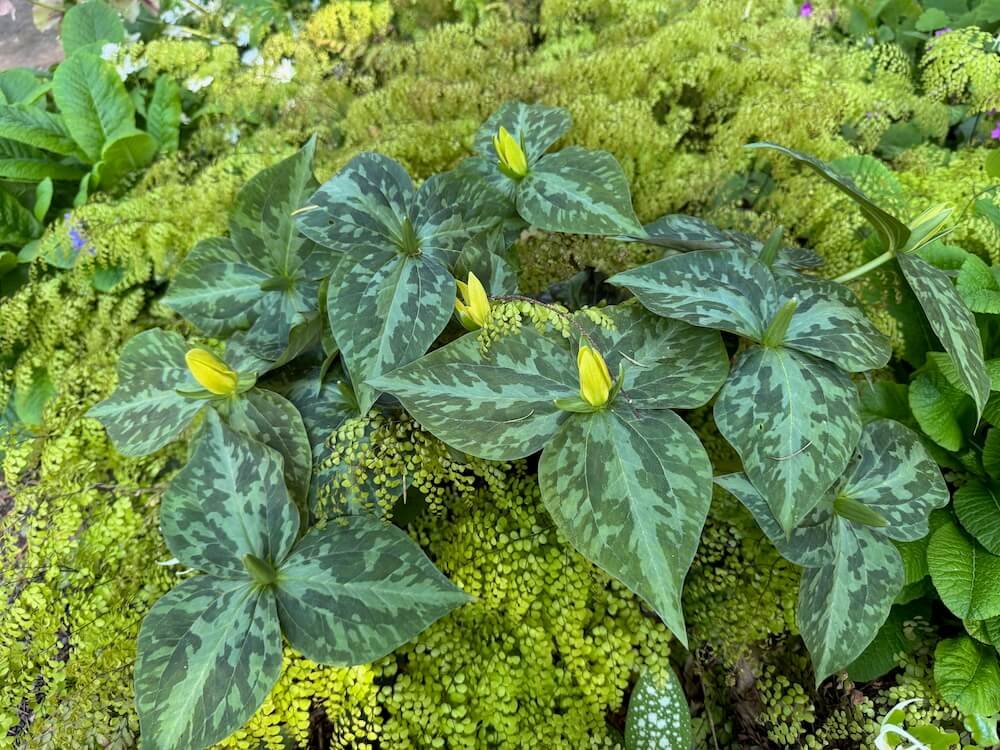
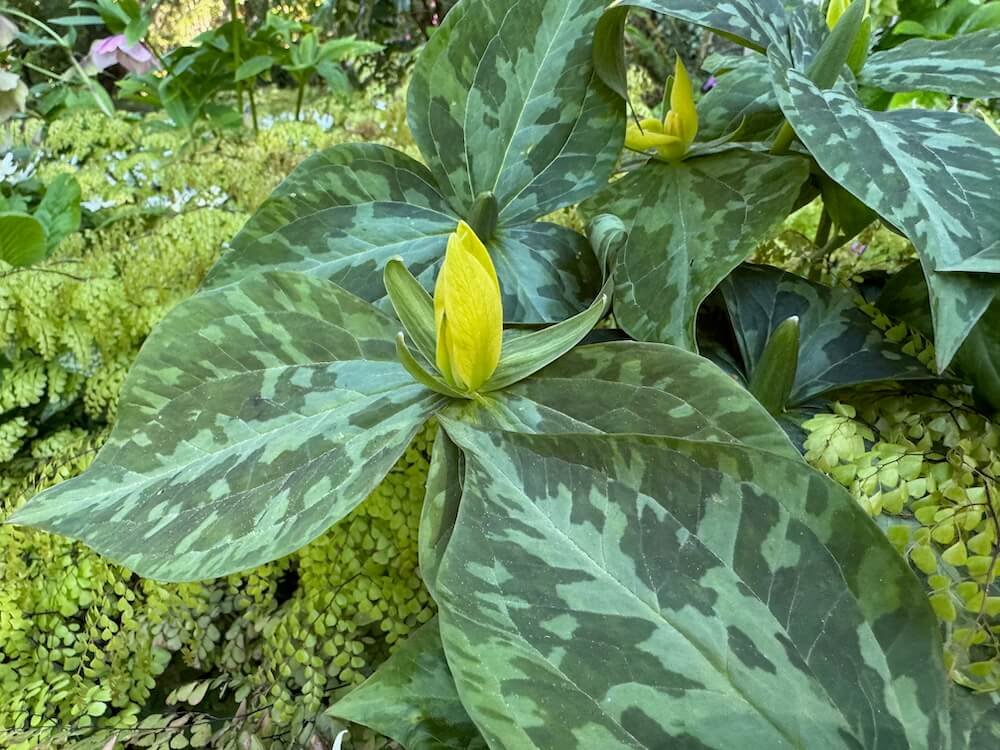
- Clear yellow three petaled flowers with greenish yellow centers often lightly scented
- Foliage color
- Bright green leaves heavily mottled with silver or gray green markings
- Bloom time
- Early to mid spring
- Light
- Partial shade to full shade
- Water
- Evenly moist humus rich soil
- Maintenance
- Low; allow foliage to die back naturally after flowering; divide only when plants become crowded
- Growing zone
- USDA zones 4 to 8
- Wildlife
- Native bees flies early season pollinators and ants that disperse the seeds
About this plant
Trillium luteum emerges in early spring with a whorl of three broad leaves mottled with silvery green and darker marbling. In mid spring, three narrow, lemon-yellow petals emerge, surrounding a cluster of yellow stamens, releasing a faint lemony fragrance that adds another layer of interest. The petals stand erect above the patterned leaves, creating a bright focal point in shaded woodland plantings.
Native to the southeastern United States, Trillium luteum occurs naturally in rich deciduous forests of Tennessee, Kentucky, and neighboring states. In gardens it is valued for woodland borders, shade gardens, and naturalized plantings beneath trees, where its patterned foliage and cheerful spring flowers provide early seasonal interest among ferns and other shade-loving perennials.
Works well in
Borders · Shade Gardens · Woodland Gardens · Pollinator Gardens · Rain Gardens
Companion plants
Astilbes · Heucheras · Siberian bugloss · Sweet woodruff · Foamflowers · Epimediums
Design tip
The early flowers arrive when the garden is still waking up, so give it a spot you pass often in spring. Keep it out of hot afternoon sun and layer it with woodland companions for a full, settled look.
Where to see it
This plant can be seen at Heronswood Garden.