Northwest Blooms · Shrubs
Arctostaphylos manzanita 'Hood Mountain'
Hood Mountain Manzanita
- Family
- Ericaceae
- Height
- 6 to 10 feet
- Width
- 6 to 10 feet
- Flower color
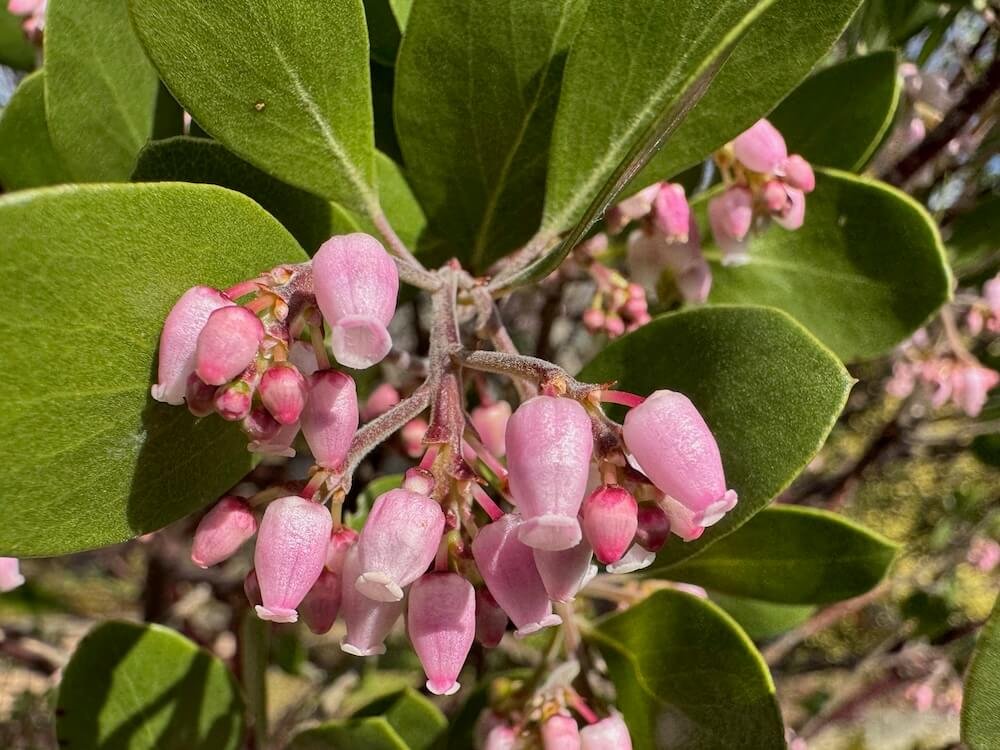
- Pale pink urn shaped flowers
- Foliage color
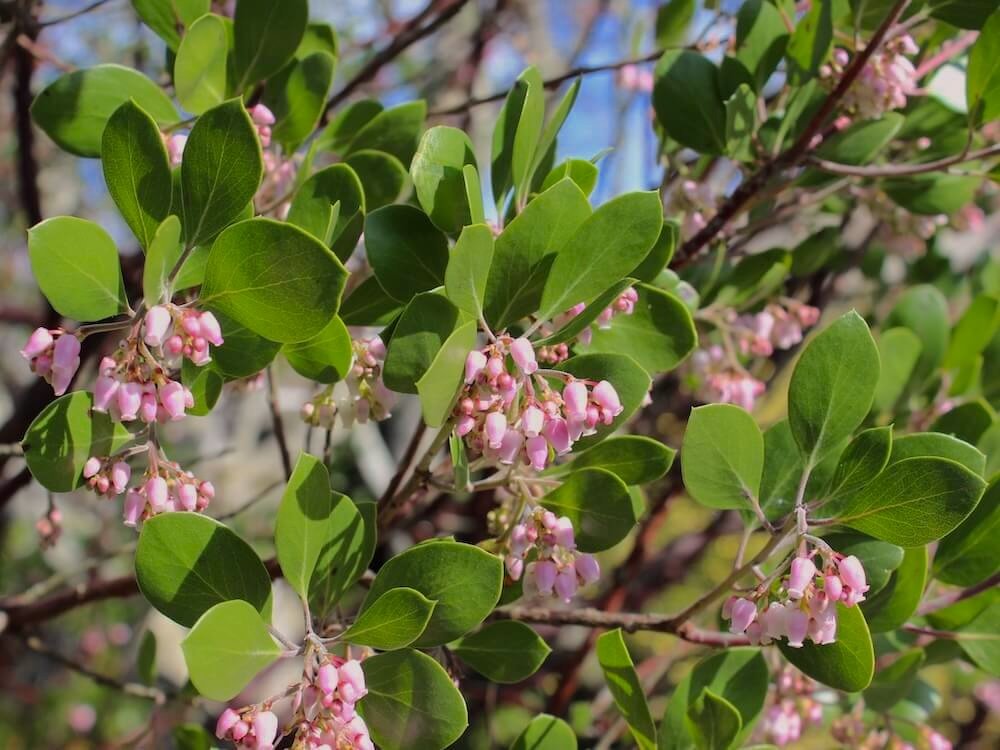
- Gray green to blue green oval leaves with smooth reddish brown bark
- Bloom time
- Late winter to early spring
- Light
- Full sun to light partial shade
- Water
- Low; very drought tolerant
- Maintenance
- Low; prune lightly after flowering to shape plants
- Growing zone
- USDA zones 7 to 10
- Wildlife
- Bees, hummingbirds, butterflies and birds that feed on the small red berries
About this plant
Arctostaphylos manzanita 'Hood Mountain' carries dense branching clothed in small, leathery, gray-green leaves that create a refined evergreen canopy throughout the year. Smooth bark develops warm cinnamon and reddish tones that add subtle color along the twisting stems. From late winter into early spring, clusters of soft pink, urn-shaped flowers appear along the branches, their delicate bells hanging in tight groups and bringing early seasonal interest.
This selection traces its heritage to Arctostaphylos manzanita native to the coastal mountains of northern California. In gardens it lends evergreen structure to borders, naturalistic plantings, and wildlife-friendly landscapes, where the winter flowers provide nectar for early pollinators.
Works well in
Native Gardens · Pollinator Gardens · Hummingbird Gardens · Waterwise Gardens
Companion plants
Hebe · Flowering quince · Crocus · Matilija poppy · Mallow · Sweet William
Design tip
Give this manzanita room to show off its twisting branches and colorful bark, especially near a patio or favorite garden view. Surround it with lower-growing, drought-tolerant plants that highlight its graceful form while creating a relaxed, natural-looking landscape year-round.
Where to see it
This plant can be seen at the Center for Urban Horticulture.