Northwest Blooms · Shrubs
Berberis (Mahonia) aquifolium
Oregon Grape
- Family
- Berberidaceae
- Height
- 3 to 6 feet
- Width
- 3 to 5 feet
- Flower color
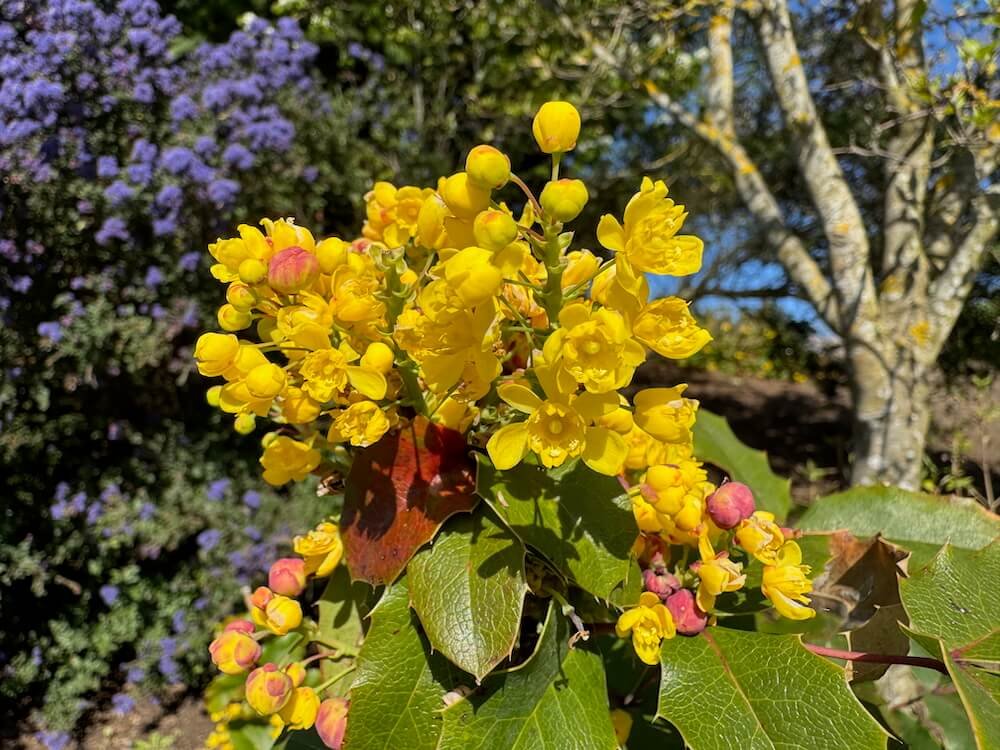
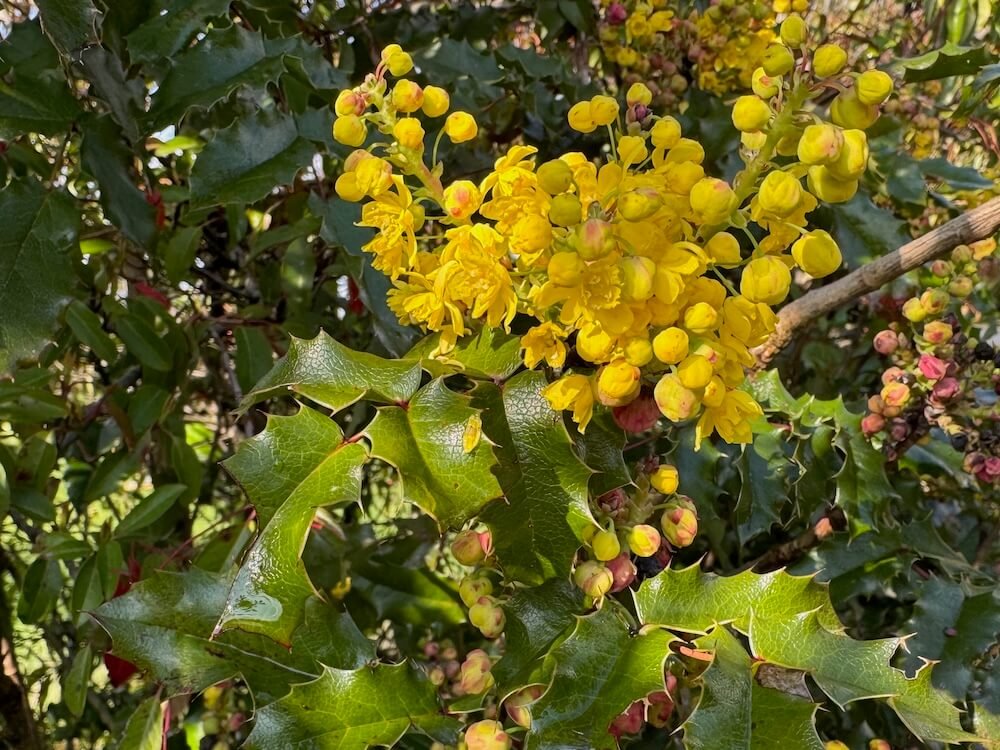
- Bright yellow fragrant flowers borne in dense upright clusters
- Foliage color
- Glossy dark green holly like leaves often turning reddish bronze to purple in winter
- Bloom time
- Early to mid spring, often March to May
- Light
- Partial shade to full shade
- Water
- Low to average
- Maintenance
- Low; prune after flowering to shape plants and remove older stems to encourage dense growth
- Growing zone
- USDA zones 5 to 9
- Wildlife
- Bees, butterflies and birds that feed on the blue purple berries
About this plant
Berberis aquifolium carries glossy, holly-like leaves that emerge with bronze tones before maturing to deep green. The leathery foliage forms dense clusters along the stems and often develops rich reddish or purplish hues in cooler seasons. In early to mid spring, bright clusters of golden-yellow flowers appear at the tips of the branches. The lightly fragrant blooms are followed by deep blue berries with a dusty coating that adds ornamental interest.
Native to western North America, Berberis aquifolium occurs naturally in forests and open slopes from British Columbia south through California. In gardens it provides evergreen structure for woodland plantings, native landscapes, and wildlife gardens, where the flowers attract pollinators and the berries are valued by birds.
Works well in
Shade Gardens · Woodland Gardens · Pollinator Gardens · Native Gardens
Companion plants
Pieris · Hakone grass · Bamboo · Viburnum · Snowdrop · Bergenia
Design tip
Tuck this evergreen into a woodland border or beneath taller trees, where its glossy foliage can add structure and depth. Pair it with ferns, grasses, and flowering shade plants to create a relaxed, layered garden that feels naturally at home.