Northwest Blooms · Shrubs
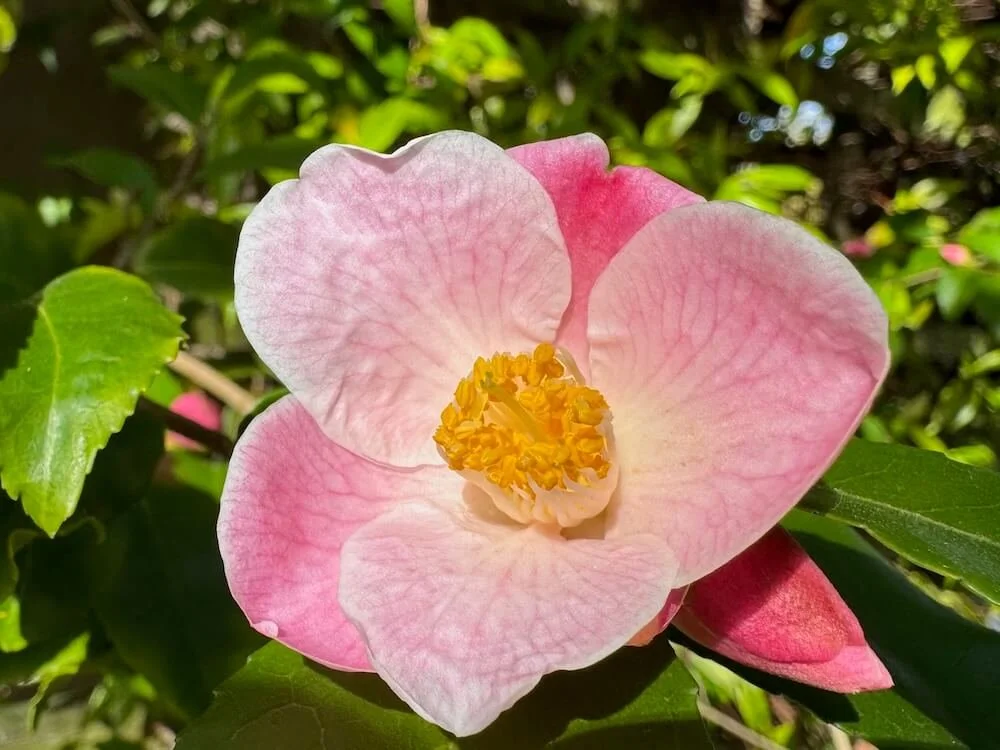
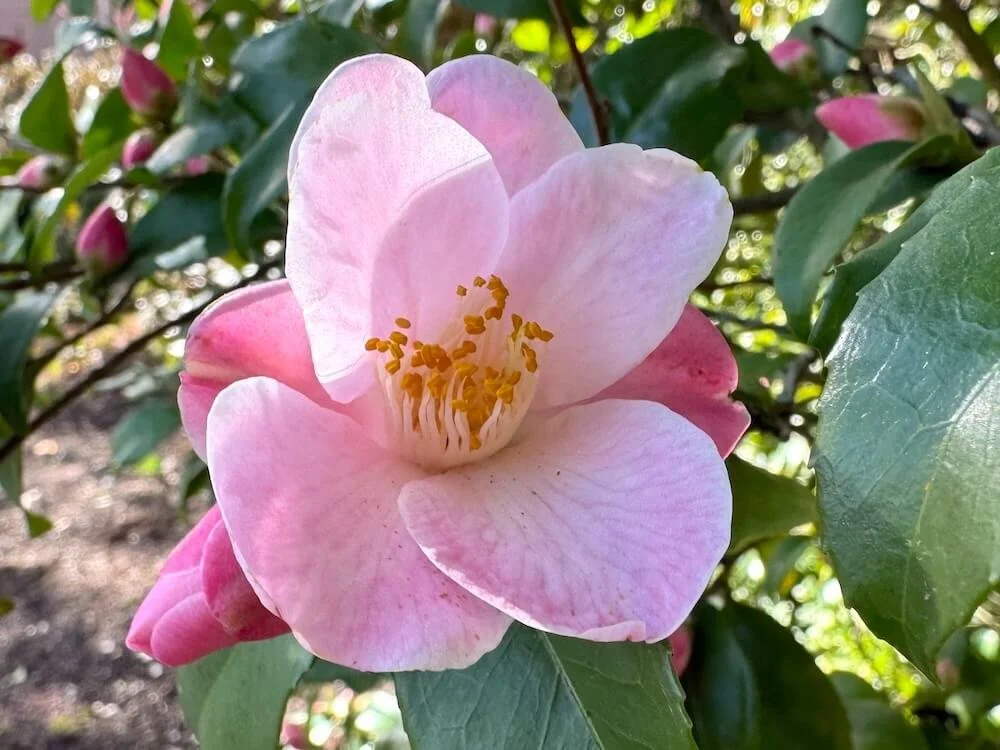
Camellia x lutchuensis 'Minato-no-Akebono'
Minato-no-Akebono Camellia
- Family
- Theaceae
- Height
- 5 to 9 ft
- Width
- 4 to 8 ft
- Flower color
- Light to medium pink, single blooms with golden-yellow stamens
- Foliage color
- Glossy evergreen dark green leaves
- Bloom time
- Late fall through winter to early spring
- Light
- Part shade to filtered light
- Water
- Moderate
- Maintenance
- Low; occasional light pruning after flowering to thin branches or shape
- Growing zone
- USDA zones 7a to 10b
- Wildlife
- Fragrant winter-season flowers attract early-season pollinators (bees, beneficial insects, possibly hummingbirds)
About this plant
Camellia x lutchuensis 'Minato-no-Akebono' is an evergreen shrub with arching branches and glossy, deep green leaves that stay beautiful year-round. Along the stems, numerous small single flowers appear in clusters, soft shell pink to medium pink with slightly deeper tones toward the petal tips. The blooms are strongly fragrant, with a sweet perfume that carries on still days, and open over a long season from late fall through winter into early spring.
Raised in Japan by Masaomi Murata, 'Minato-no-Akebono', the name translates as "Harbor at Dawn," reflecting its gentle pink coloring and extended flowering season. Its evergreen foliage, scented flowers, and lengthy bloom period make it well suited to woodland-style plantings, sheltered borders, and positions near paths, patios, or entrances where the fragrance can be enjoyed up close.
Works well in
Foundation Plantings · Specimen Plants · Woodland Gardens · Shade Gardens
Companion plants
Pieris · Hakone grass · Bamboo · Viburnum · Snowdrop · Bergenia
Design tip
Strong fragrance deserves a spot where it can become part of everyday garden life. Near a sheltered entrance, patio, or well-traveled path, this camellia can create a memorable winter experience, combining soft pink color with perfume during months when outdoor spaces often feel quieter.
Where to see it
This plant can be seen at the Center for Urban Horticulture.