Northwest Blooms · Shrubs
Caryopteris divaricata ‘Snow Fairy’
Snow Fairy Bluebeard
- Family
- Lamiaceae
- Height
- 2 to 3 feet
- Width
- 2 to 3 feet
- Flower color
- Pale blue to lavender
- Foliage color
- Variegated green with white margins
- Bloom time
- Late summer to early fall
- Light
- Full sun to partial shade
- Water
- Moderate
- Maintenance
- Low; prune in early spring to encourage new growth and maintain shape
- Growing zone
- USDA zones 6 to 9
- Wildlife
- Attracts bees, butterflies, and other pollinators
About this plant
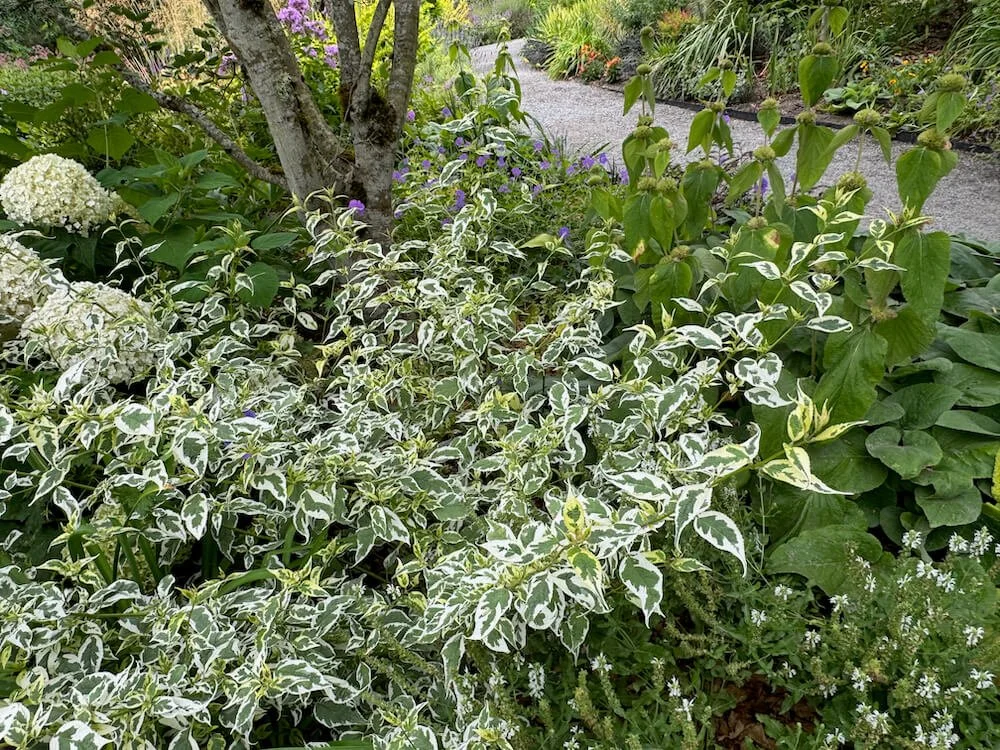
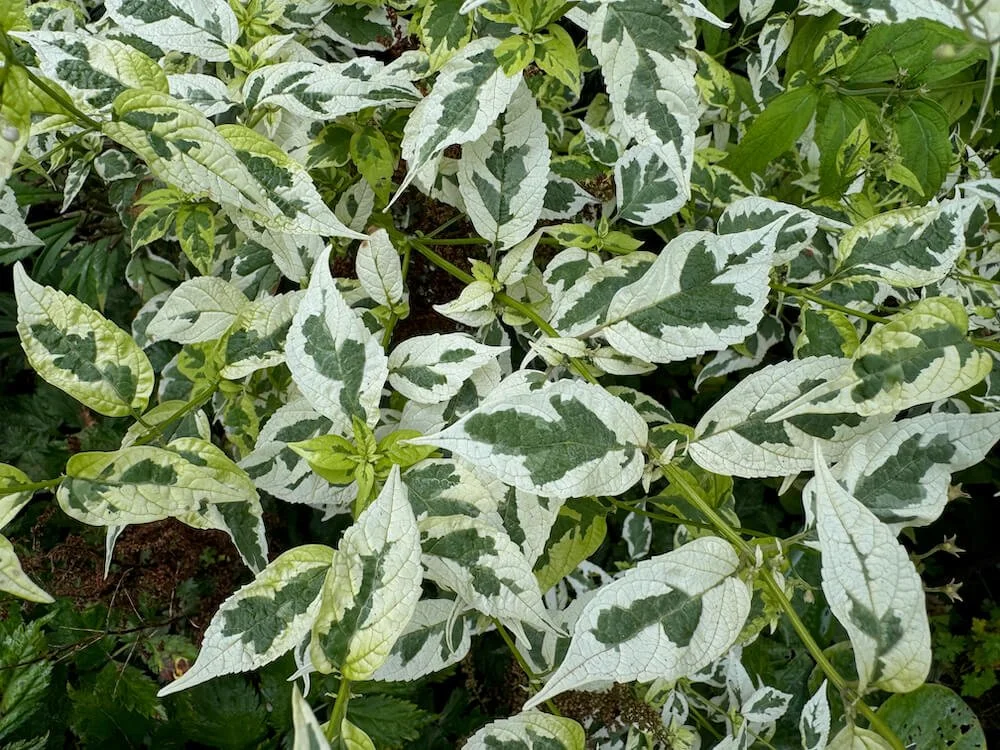
Caryopteris divaricata 'Snow Fairy' produces delicate clusters of lavender-blue to cobalt-blue flowers from late summer into early fall, attracting bees, butterflies, hummingbirds, and other pollinators. Ovate to lance-shaped leaves are soft green with irregular creamy white margins, creating luminous variegated foliage that remains colorful throughout the growing season. Finely textured leaves densely cover the branching stems, forming a rounded, shrub-like mound that brings brightness and definition to garden plantings before the late-season flowers appear.
Native to the Himalayas, the species grows naturally on forested slopes and roadsides, while 'Snow Fairy' originated as a cultivated selection introduced from Japan. Its combination of variegated foliage and late flowering makes it well suited to perennial borders, cottage gardens, pollinator gardens, mixed plantings, and massed displays, where it provides season-long foliage interest followed by welcome autumn color.
Works well in
Sun Gardens · Borders · Butterfly Gardens · Pollinator Gardens
Companion plants
Barberry · Butterfly bush · Feverfew · False sunflower · Chives · Snow-in-summer
Design tip
Variegated foliage can brighten a planting long before the late-season flowers appear, making this shrub useful for carrying color through summer. Repeat touches of creamy white elsewhere in the garden to create continuity, while lavender and blue flowers keep the overall palette soft and relaxed.
Where to see it
This plant can be seen at the Bellevue Botanical Garden.