Northwest Blooms · Shrubs
Chaenomeles speciosa
Flowering Quince
- Family
- Oleaceae
- Height
- 6 to 10 feet
- Width
- 5 to 10 feet
- Flower color
- Vibrant yellow
- Foliage color
- Bright green
- Bloom time
- Early spring
- Light
- Prefers full sun to partial shade
- Water
- Somewhat drought-tolerant once established
- Maintenance
- Relatively low-maintenance. Pruning should be done immediately after flowering to control size and shape
- Growing zone
- Hardy in USDA zones 5 to 8
- Wildlife
- The flowers attract bees and other pollinators
About this plant
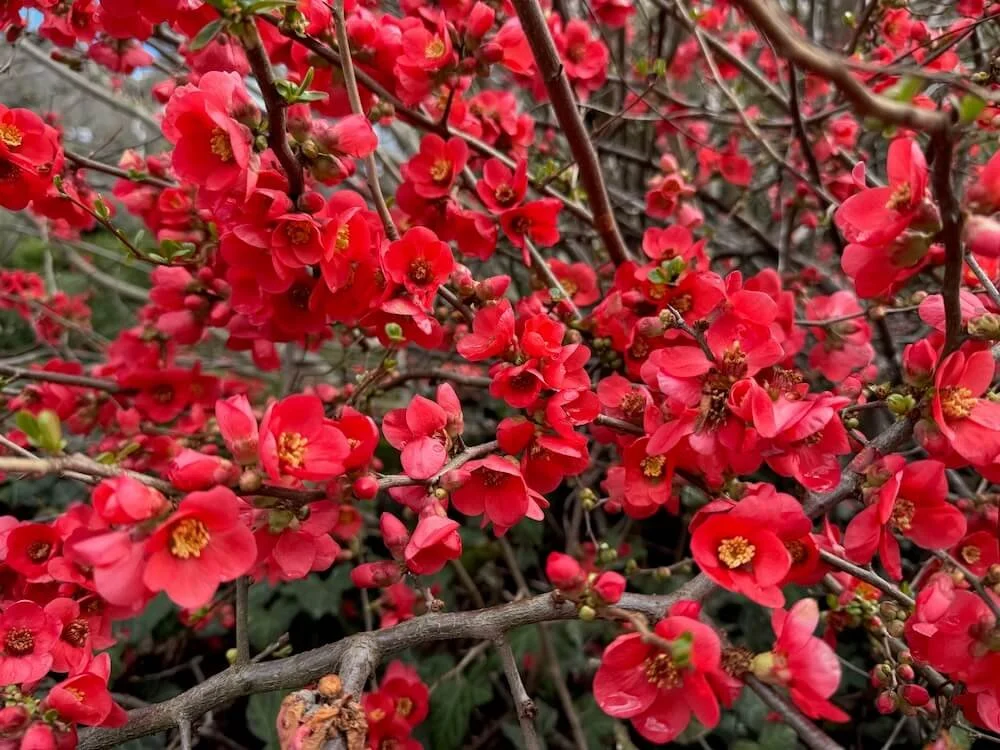
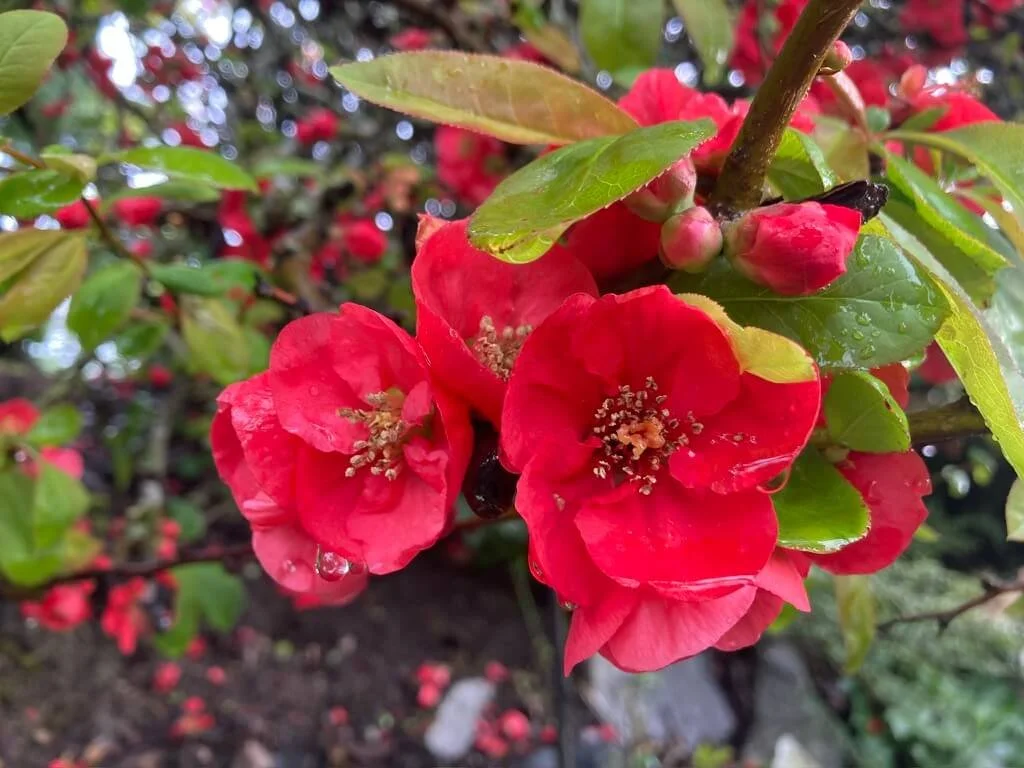
Chaenomeles speciosa, or Flowering Quince, is a deciduous shrub native to China, Korea, and Japan, known for its scarlet red flowers that bloom in early spring before the leaves emerge. Growing 6 to 10 feet tall and wide, it has glossy dark green leaves that turn reddish-purple in the fall. After blooming, it produces small, tart, apple-like fruits that ripen to a yellow-green in the fall, often used for jellies and preserves. Preferring full sun to partial shade, it has moderate water needs and can tolerate some drought once established.
This low-maintenance shrub requires pruning after flowering to shape it and remove dead branches. Its thorny branches make it suitable for barriers or hedges, and it attracts pollinators like bees and butterflies. With its versatility and ornamental value, Flowering Quince is excellent for gardens, borders, or mixed plantings.
Works well in
Sun Gardens · Foundation Plantings · Informal Hedges · Pollinator Gardens
Companion plants
Spirea · Feather reed grass · Catmint · Shasta daisy · Candytuft · Ornamental onion
Design tip
Thorny, densely branched growth makes flowering quince useful where beauty and a sense of enclosure are both wanted. Along a property edge or garden boundary, its substantial form can create definition while the scarlet spring flowers keep the planting feeling ornamental rather than purely functional.