Northwest Blooms · Shrubs
Fothergilla gardenii
Dwarf Fothergilla
- Family
- Hamamelidaceae
- Height
- 3 to 6 feet
- Width
- 3 to 5 feet
- Flower color
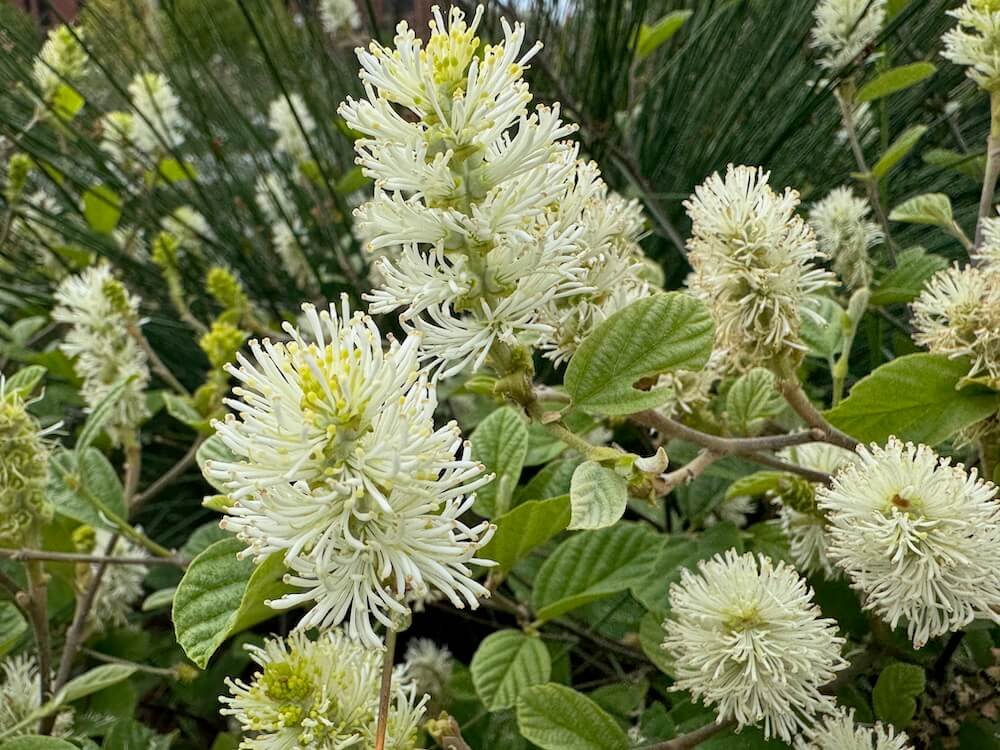
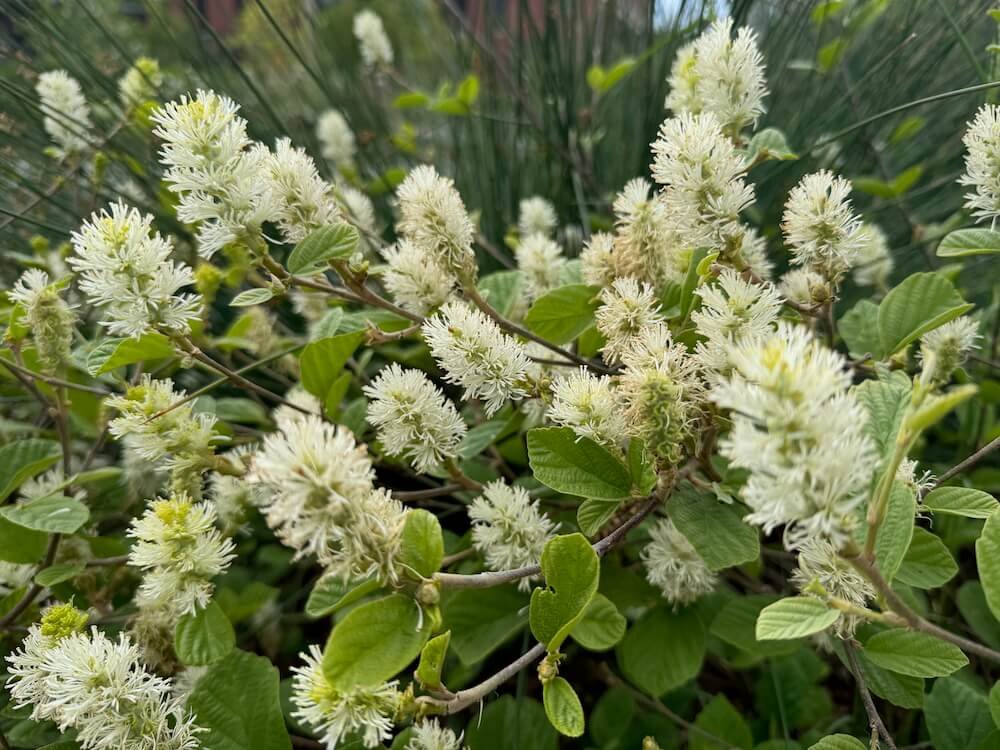
- Fragrant white bottlebrush like flowers composed of many showy stamens
- Foliage color
- Blue green to dark green oval leaves often turning brilliant shades of yellow orange and red in fall
- Bloom time
- Early to mid spring, often April to May
- Light
- Full sun to partial shade
- Water
- Average evenly moist well drained acidic soil
- Maintenance
- Low; prune lightly after flowering to shape plants and remove older stems if needed
- Growing zone
- USDA zones 5 to 8
- Wildlife
- Bees, butterflies and other pollinating insects
About this plant
Fothergilla gardenii produces fragrant white bottlebrush flowers in early to mid spring, each bloom composed of soft filaments that create a feathery cluster along the branches. The blossoms appear just as the foliage begins to emerge. Rounded blue-green leaves unfold soon after, forming a dense canopy that develops warm shades of orange, red, and gold in autumn.
Native to the southeastern United States, particularly coastal regions from North Carolina to Florida, Fothergilla gardenii grows naturally in woodland edges and open landscapes. In gardens it adds seasonal interest to borders, woodland plantings, and native landscapes where the spring flowers and vibrant fall foliage bring changing color.
Works well in
Sun Gardens · Woodland Gardens · Native Gardens · Pollinator Gardens
Companion plants
Thyme · Switch grasses · Catmint · Penstemons · Coreopsis · Blanket flower
Design tip
Dwarf fothergilla offers two very different color moments: airy white bottlebrush flowers in spring and a blend of orange, red, and gold foliage in autumn. Pair it with quieter summer foliage so these seasonal transformations remain prominent rather than competing with other strongly colored shrubs.