Northwest Blooms · Shrubs
Grevillea victoriae 'Marshall Olbricht'
Marshall Olbricht Royal Grevillea
- Family
- Proteaceae
- Height
- 6 to 8 feet
- Width
- 6 to 8 feet
- Flower color
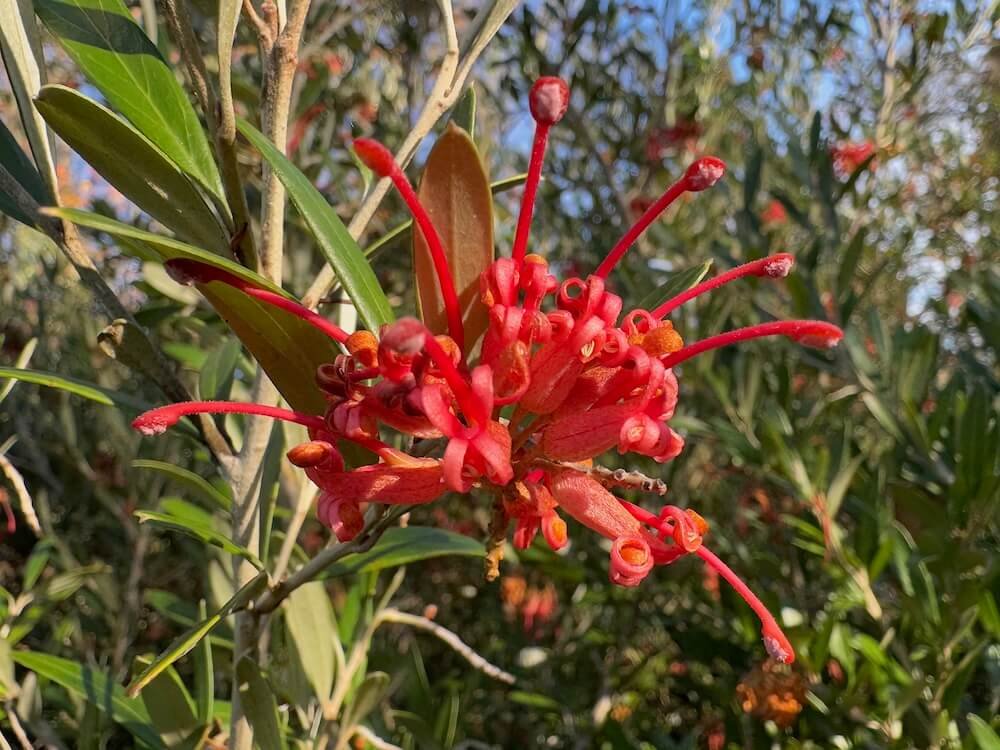
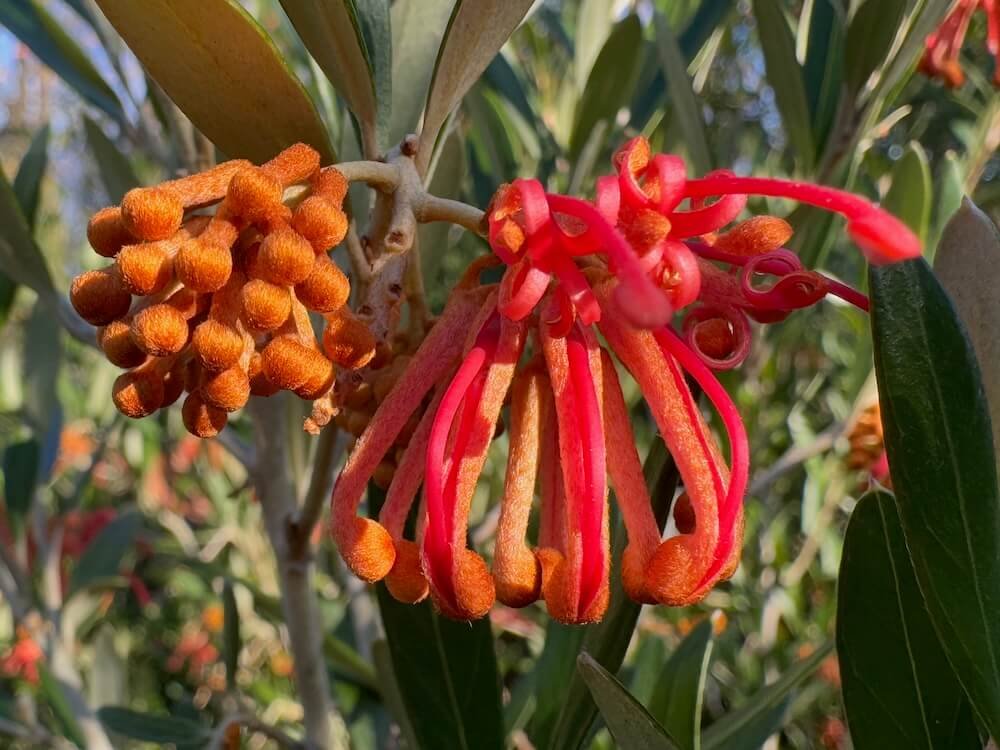
- Deep orange red tubular flowers in clustered spider-like heads with prominent protruding styles
- Foliage color
- Narrow gray green to silvery green leathery leaves with pale undersides
- Bloom time
- Late winter through spring
- Light
- Full sun to light partial shade
- Water
- Low
- Maintenance
- Low; prune lightly after flowering to maintain shape; avoid heavy fertilization
- Growing zone
- USDA zones 8 to 10
- Wildlife
- Hummingbirds, bees and other nectar feeding pollinators
About this plant
Grevillea victoriae 'Marshall Olbricht' produces clusters of warm apricot to orange flowers from late winter into spring, the curved blooms opening in rounded heads along the stems and drawing visiting hummingbirds. The blossoms appear among narrow, leathery leaves with deep green upper surfaces and softly silvery undersides that give the foliage a muted sheen. The evergreen leaves create a dense canopy along the branches throughout the year.
This cultivar traces its heritage to Grevillea victoriae native to southeastern Australia. In gardens it brings evergreen structure and seasonal color to borders and wildlife-friendly landscapes where the nectar-rich flowers support visiting birds.
Works well in
Sun Gardens · Waterwise Gardens · Winter Interest · Hummingbird Gardens
Companion plants
Yucca · New Zealand flax · Ice plant · Red hot poker · Crocosmias · Smoke bush
Design tip
‘Marshall Olbricht’ can become an important source of garden color when relatively few shrubs are flowering. Place it near other winter-interest plants with staggered bloom periods to create a sequence of color extending into spring.
Where to see it
This plant can be seen at the Washington Park Arboretum.