Northwest Blooms · Shrubs
Mahonia repens 'MonRws'
Darkstar Creeping Oregon Grape
- Family
- Berberidaceae
- Height
- 12 to 18 inches
- Width
- 18 to 36 inches
- Flower color
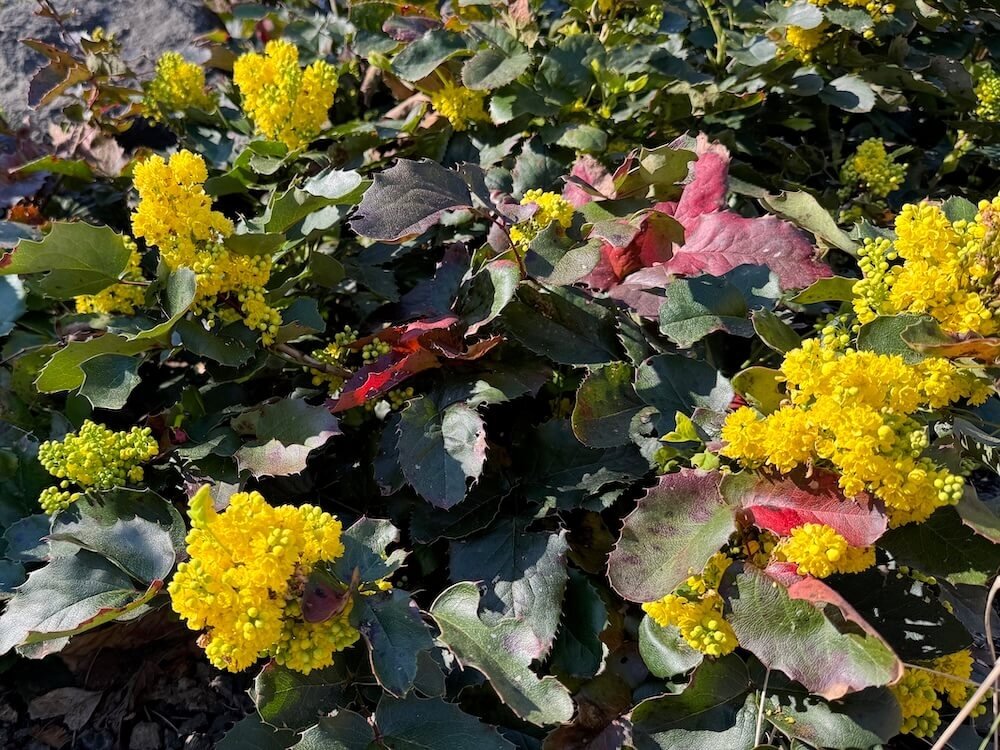
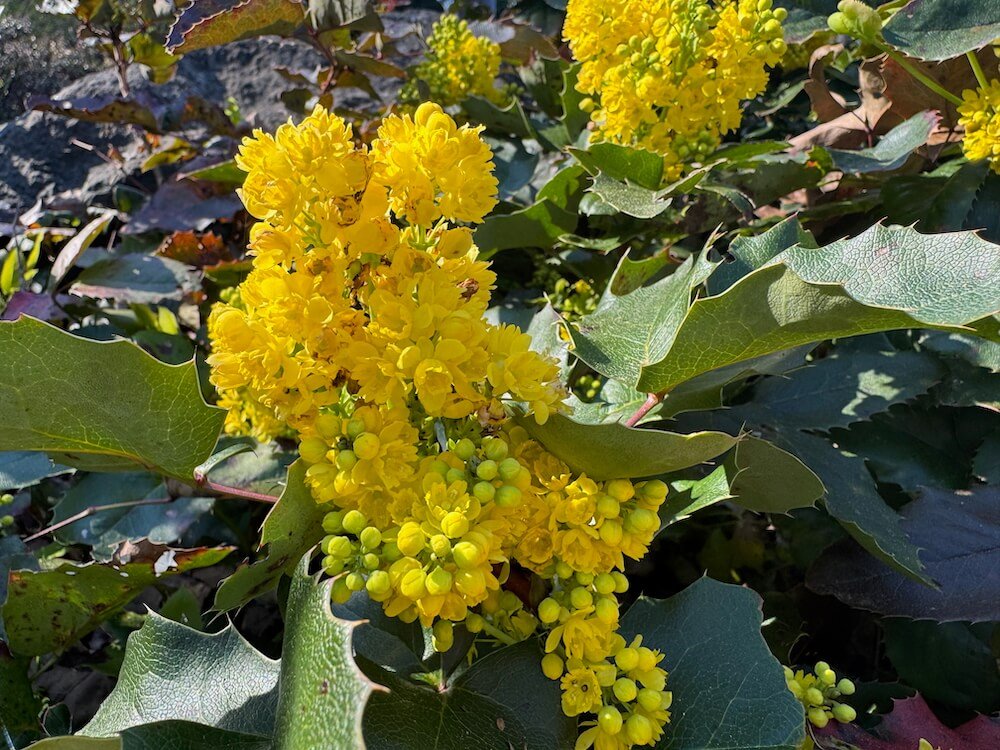
- Bright yellow fragrant flowers borne in short upright clusters
- Foliage color
- Blue green to gray green holly like leaves, often turning burgundy to purple in winter
- Bloom time
- Mid to late spring, often April to May
- Light
- Full sun to partial shade
- Water
- Low to average well drained soil
- Maintenance
- Low; remove older stems if needed to maintain a compact spreading habit and trim lightly after flowering if shaping is desired
- Growing zone
- USDA zones 4 to 8
- Wildlife
- Bees, butterflies and birds that feed on the blue purple berries
About this plant
Mahonia repens 'MonRws' produces clusters of bright yellow flowers in mid to late spring, the small blooms gathered in upright sprays that rise above the foliage. The blossoms are followed by dusty blue berries that add seasonal interest later in the year. Low stems carry leathery leaves divided into several holly-like leaflets with softly spined edges. The evergreen foliage emerges deep green before developing rich burgundy to purple tones that intensify through the growing season and often deepen further in cooler weather.
This cultivar traces its heritage to Mahonia repens native to western North America. In gardens it provides colorful evergreen groundcover for borders, woodland plantings, and native landscapes where the flowers attract pollinators and the berries support birds.
Works well in
Shade Gardens · Borders · Native Gardens · Bird Gardens
Companion plants
Aucuba · Hellebore · Brunnera · Japanese maple · Lungwort · Autumn fern
Design tip
Use ‘MonRws’ as a low evergreen layer along the front of borders or beneath taller shrubs, where its spreading habit can visually connect neighboring plants. Pair it with lighter green foliage to emphasize the burgundy and purple tones that develop as the season progresses.
Where to see it
This plant can be seen at Heronswood Garden.