Northwest Blooms · Shrubs
Picea abies 'Aty's Acrocona Pusch'
Aty's Acroconca Pusch Norway Spruce
- Family
- Pinaceae
- Height
- 3 ft to 5 ft
- Width
- 3 ft to 4 ft
- Flower color
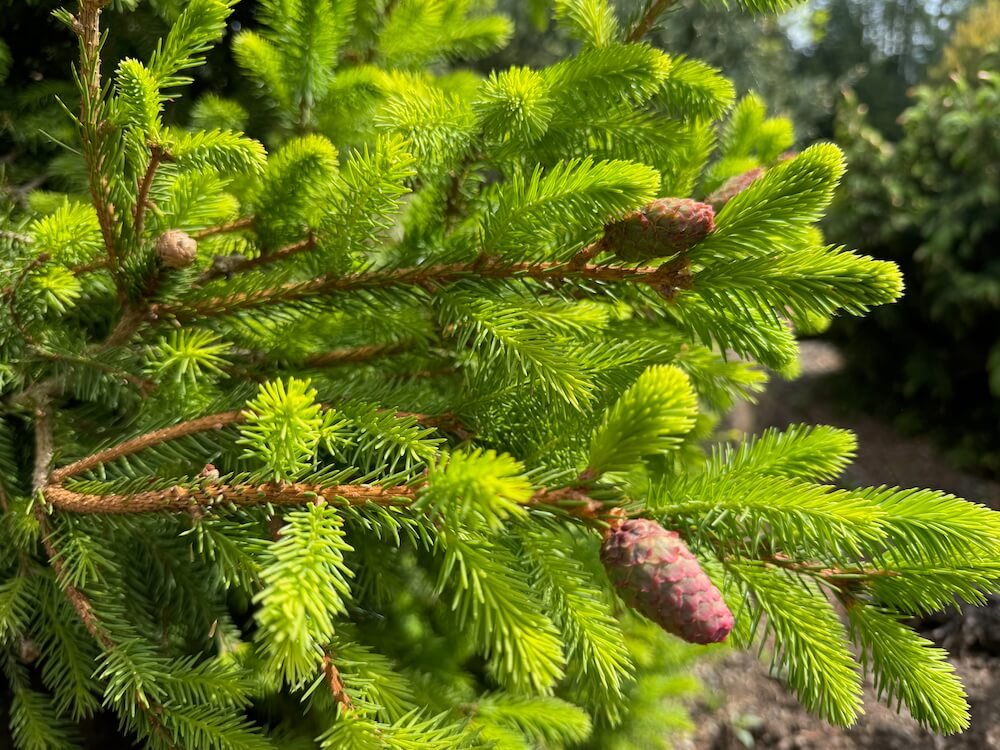
- Rosy red immature cones maturing to reddish brown
- Foliage color
- Short dark green needles
- Bloom time
- Spring
- Light
- Full sun
- Water
- Moderate
- Maintenance
- Low; prune selectively to maintain shape and remove damaged branches as needed
- Growing zone
- USDA zones 3 to 8
- Wildlife
- Songbirds use the dense branches for shelter with seeds supporting wildlife
About this plant
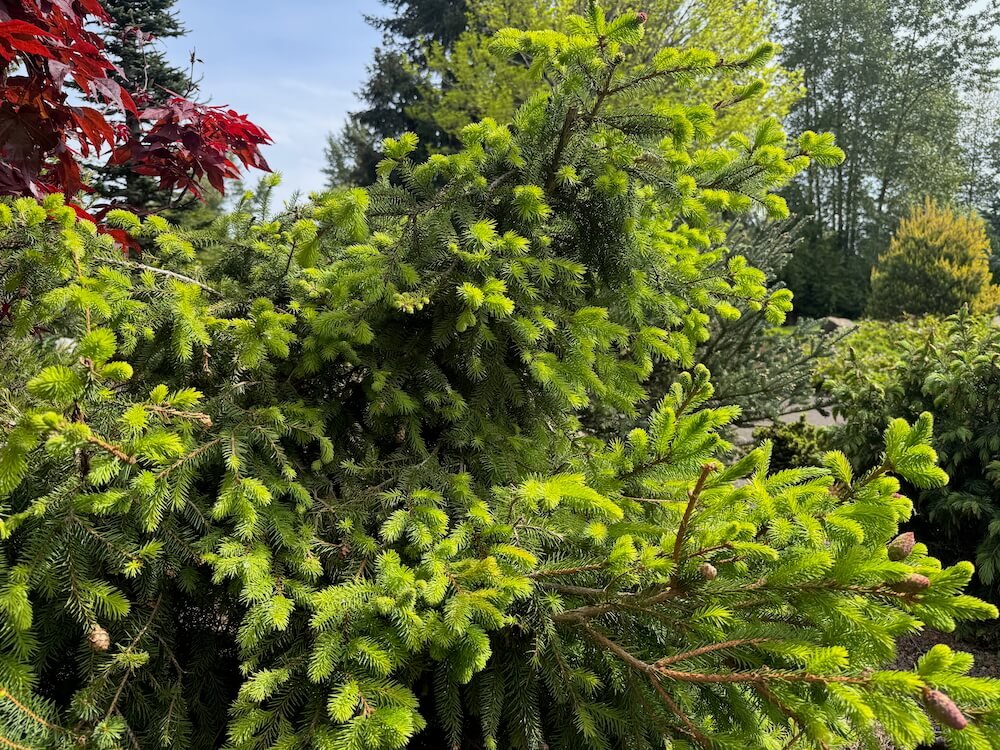
Picea abies 'Aty's Acrocona Pusch' produces abundant crimson female cones in spring, creating colorful clusters that mature to reddish brown and remain an ornamental feature long after the new growth emerges. Short, dark green needles are densely arranged along compact branches, forming a richly textured evergreen canopy that provides year-round interest. The prominent cones are borne at the branch tips, often appearing in profusion and adding unusual color and structure to the plant. Fresh spring growth emerges bright green, providing a pleasing contrast against the mature foliage.
Originating from a selected mutation of Norway spruce developed in Europe, this cultivar reflects breeding focused on ornamental cones and compact growth. It is well suited to rock gardens, conifer collections, containers, and foundation plantings, where its evergreen form and colorful spring cones provide enduring seasonal appeal.
Works well in
Sun Gardens · Containers · Rock Gardens · Bird Gardens
Companion plants
Barberry · Butterfly bush · Feverfew · False sunflower · Chives · Snow-in-summer
Design tip
Position ‘Aty’s Acrocona Pusch’ where its branch tips can be easily seen, allowing the abundant crimson spring cones to become the focal point of the display. The cones remain ornamental as they mature, extending the plant’s seasonal interest against its dense evergreen foliage.
Where to see it
This plant can be seen at The Oregon Garden.