Northwest Blooms · Shrubs
Podocarpus nivalis
Snow Totara
- Family
- Podocarpaceae
- Height
- 6 to 30 in
- Width
- 4 to 10 ft
- Flower color
- None; produces small cones, not flowers
- Foliage color
- Dense, leathery evergreen leaves; olive to mid-green
- Light
- Full sun to light shade
- Water
- Moderate
- Maintenance
- Low; little or no pruning needed
- Growing zone
- USDA zones 7 to 9
- Wildlife
- Dense foliage offers year-round shelter for small birds and wildlife; pollen and fleshy seed cones may provide food for some birds and small mammals
About this plant
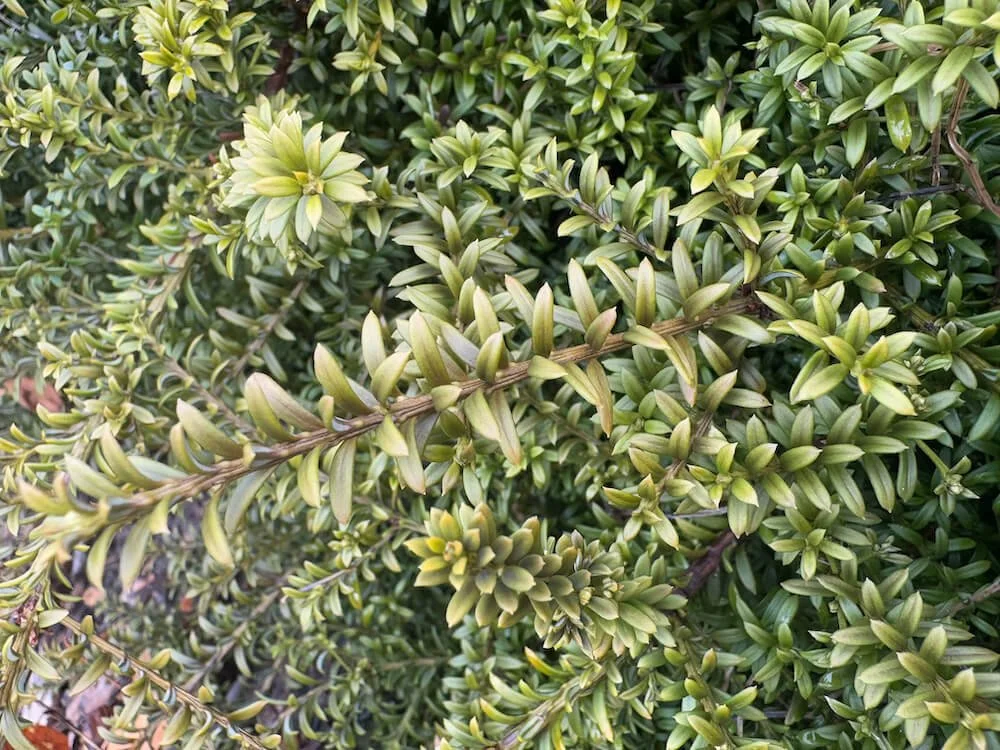
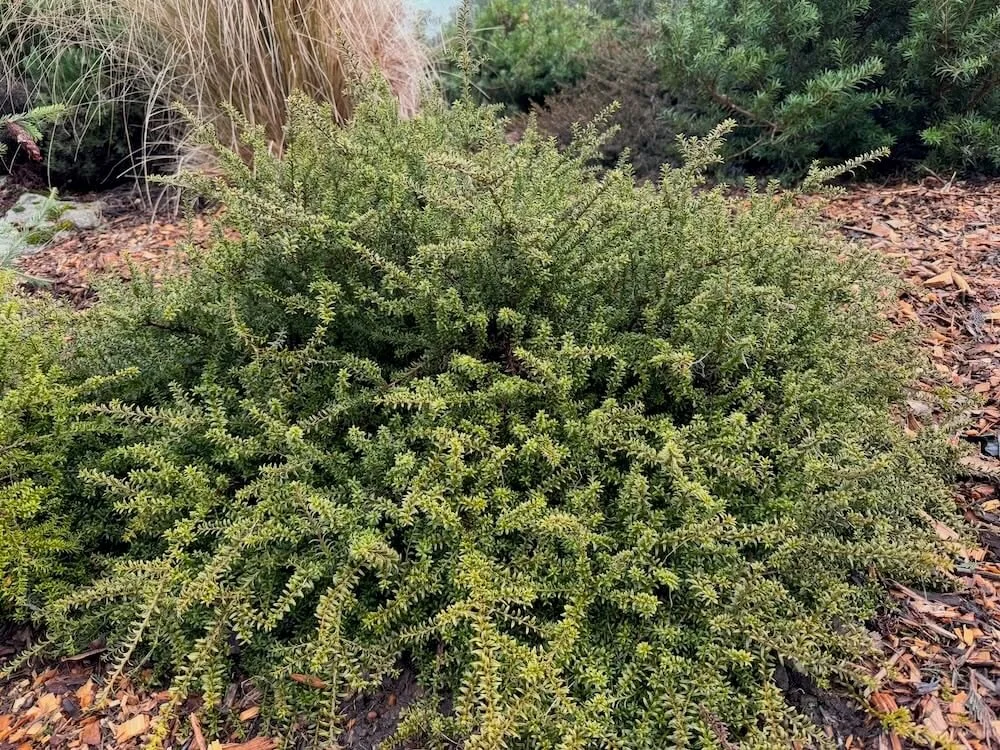
Podocarpus nivalis, known as snow tōtara, is a low, spreading evergreen conifer with dense foliage. Short, thick leaves sit close along the stems, olive green and often flushed bronze or reddish in cold weather. Branchlets can root where they touch the ground, forming interwoven mats over rocks, banks, and walls.
Native to alpine regions of New Zealand's North and South Islands, Podocarpus nivalis grows on exposed slopes and rocky grassland. Male pollen cones appear from spring into early summer, followed by fleshy seed-bearing structures that linger on the plant. Its compact habit, foliage color, and tolerance of wind and cold suit rock gardens, troughs, and small landscapes.
Works well in
Sun Gardens · Rock Gardens · Slopes & Banks · Bird Gardens
Companion plants
Salvias · Bottlebrush · Blazing star · Maiden grass · Candytuft · Daisy bush
Design tip
Snow totara looks especially attractive spilling over rocks or along a slope, where its low, spreading branches can soften hard edges. Its olive-green foliage develops bronze and reddish tones in colder weather, adding welcome color to the winter garden.
Where to see it
This plant can be seen at the Washington Park Arboretum.