Northwest Blooms · Shrubs
Rhododendron arborescens
Sweet Azalea
- Family
- Ericaceae
- Height
- 5 to 6 feet
- Width
- 5 to 6 feet
- Flower color
- White to pale pink with a sweet fragrance
- Foliage color
- Dark green, turning red or bronze in fall
- Bloom time
- Late spring to early summer
- Light
- Partial shade to full sun
- Water
- Moderate
- Maintenance
- Low; minimal pruning needed
- Growing zone
- USDA zones 4 to 8
- Wildlife
- Attracts butterflies and hummingbirds
About this plant
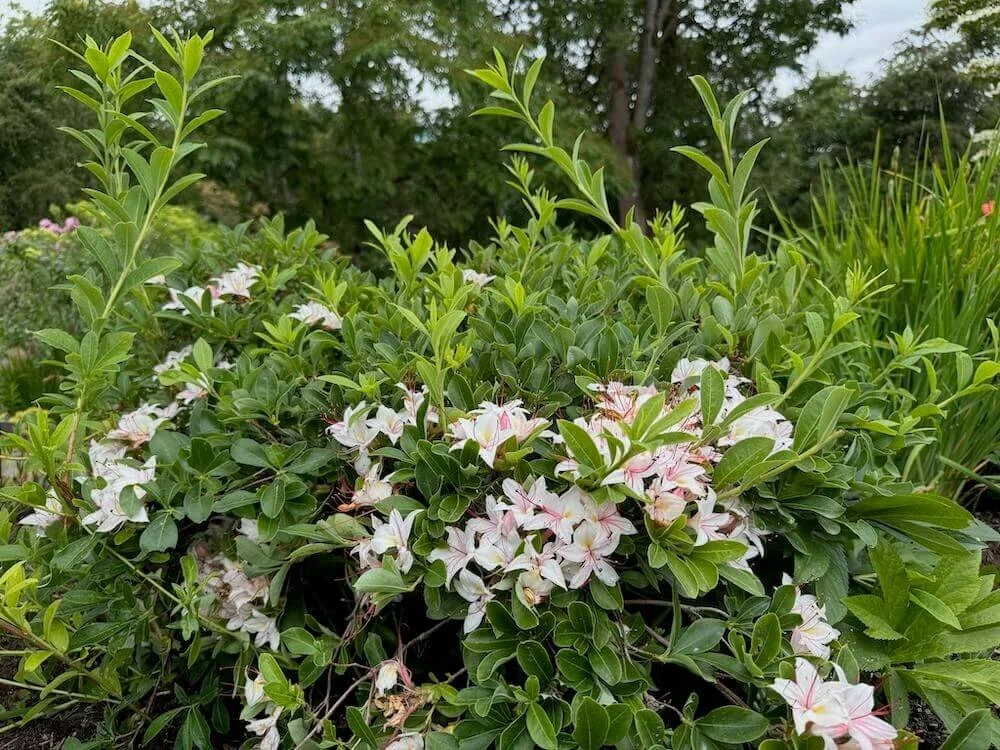
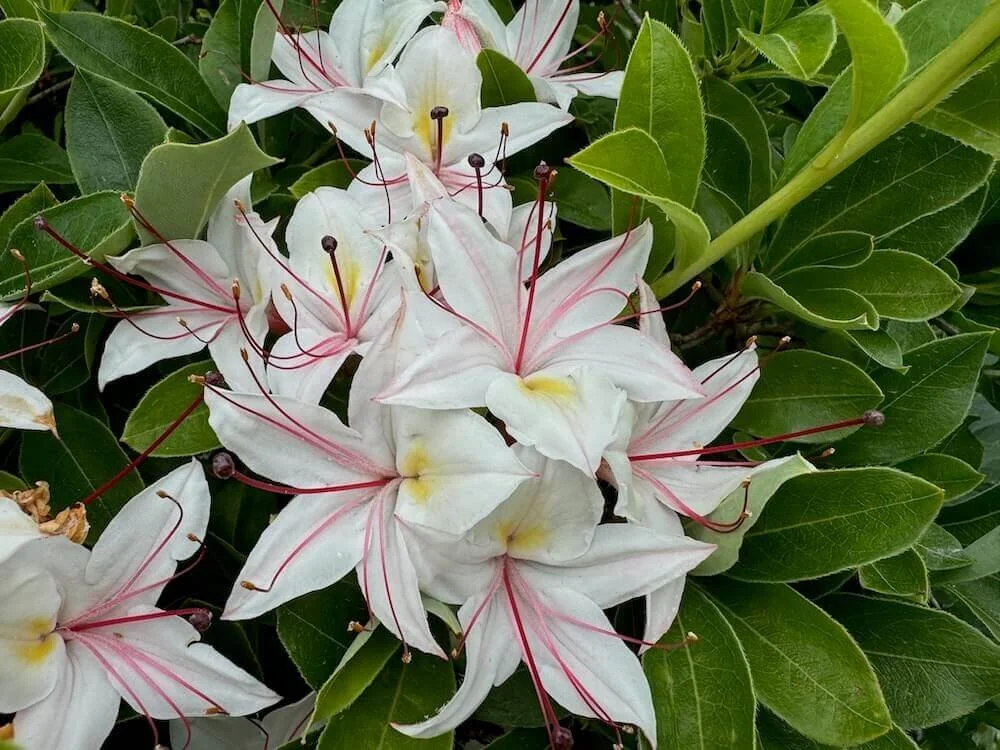
Rhododendron arborescens produces highly fragrant, funnel-shaped white to blush-pink flowers from late spring into early summer, accented by long, prominent red to deep pink stamens extending beyond the petals. Smooth, glossy dark green leaves emerge before flowering, creating a leafy backdrop for the delicate blooms. In autumn, the deciduous foliage develops rich shades of orange, crimson, red, and purple before falling, adding another season of color.
Native to the Appalachian region of the eastern United States, sweet azalea occurs naturally along streams, woodland slopes, and moist mountain areas. Its graceful branching, powerful fragrance, and late flowering make it especially valuable in native gardens, woodland settings, pollinator gardens, mixed shrub borders, and naturalized plantings, where it attracts butterflies, hummingbirds, and native bees.
Works well in
Shade Gardens · Fragrant Gardens · Pathways & Walkways · Woodland Gardens
Companion plants
Hydrangea · Viburnum · Pulmonaria · Japanese forest grass · Wood sorrel · Epimedium
Design tip
Grow sweet azalea near a patio, walkway, or other area where you spend time in late spring so its sweet, spicy fragrance can be enjoyed up close. Its loose, airy shape also fits naturally along woodland edges, where it won’t look overly formal or manicured.
Where to see it
This plant can be seen at the Bellevue Botanical Garden.