Northwest Blooms · Shrubs
Ribes sanguineum
Red Flowering Currant
- Family
- Grossulariaceae
- Height
- 6 to 10 feet
- Width
- 5 to 8 feet
- Flower color
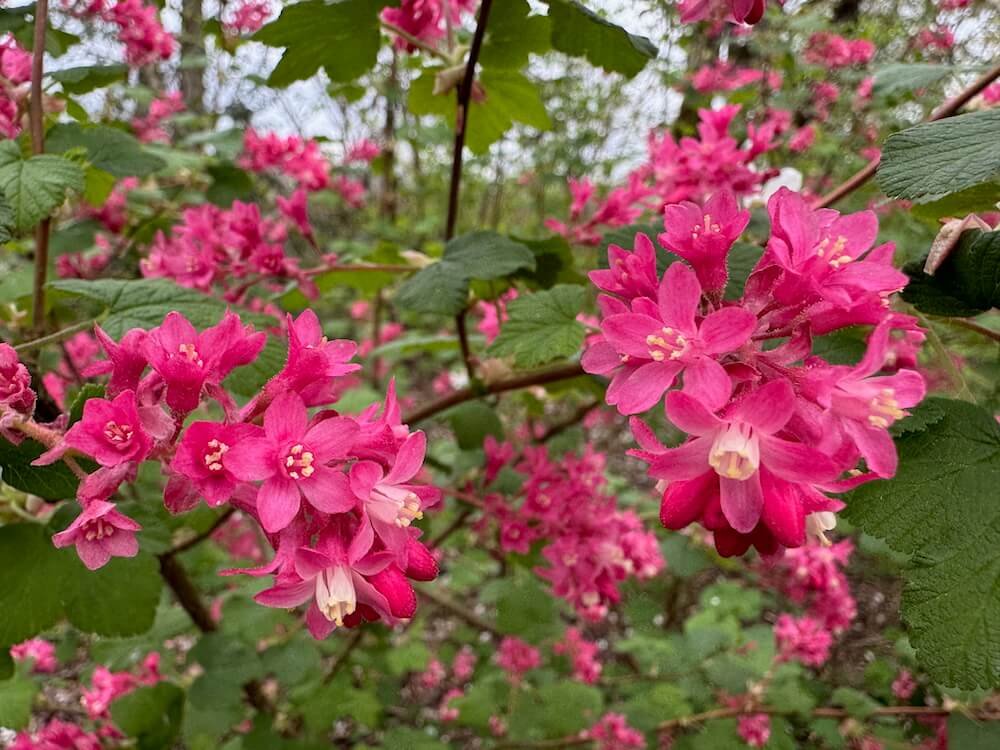
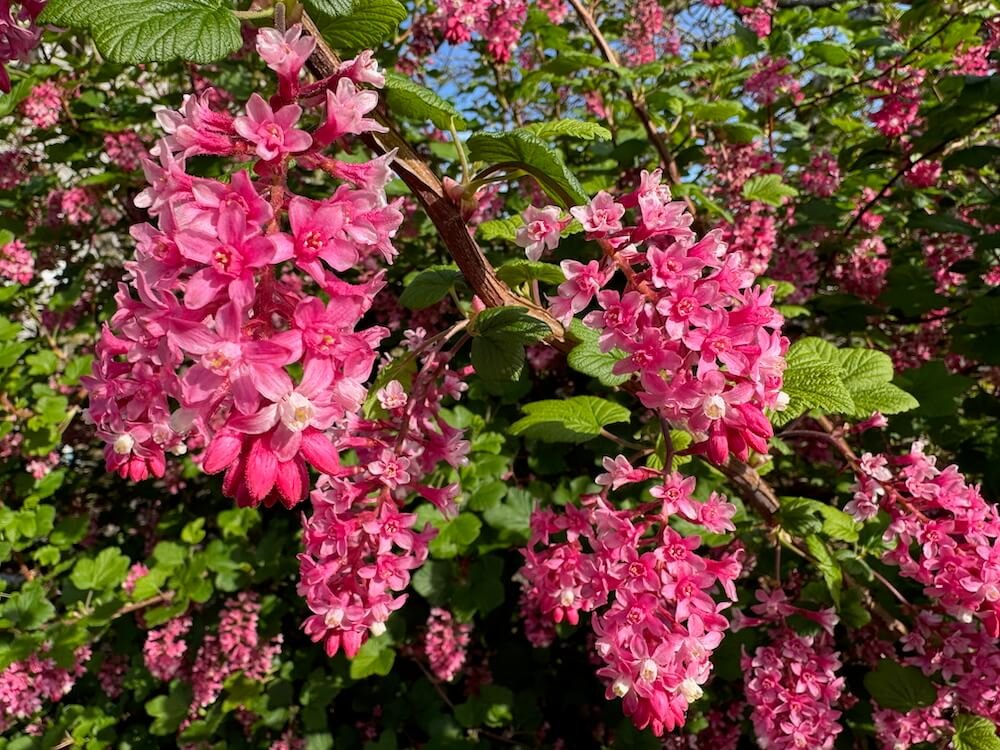
- Deep pink to red drooping clusters of tubular flowers, sometimes white or pale pink forms
- Foliage color
- Medium green lobed leaves with a soft texture; often turning yellow in fall
- Bloom time
- Early to mid spring; often March to April
- Light
- Full sun to partial shade
- Water
- Low to average
- Maintenance
- Low; prune after flowering to shape plants and remove older stems to encourage vigorous growth
- Growing zone
- USDA zones 6 to 9
- Wildlife
- Hummingbirds, bees butterflies and birds that feed on the blue-black berries
About this plant
Ribes sanguineum produces pendulous clusters of deep pink to red flowers in early to mid spring, the tubular blooms hanging in elongated racemes along the branches. The blossoms are followed by small blue-black berries with a soft bloom later in the season. Rounded, softly lobed leaves emerge in fresh green and carry a lightly textured surface, forming a full canopy through the growing season.
Native to western North America, particularly from British Columbia to California, Ribes sanguineum grows naturally in open woodlands and forest edges. In gardens it provides seasonal interest in borders and wildlife plantings where the early flowers attract pollinators and the berries offer food for birds.
Works well in
Sun Gardens · Native Gardens · Specimen Plants · Bird Gardens
Companion plants
Irises · Italian buckthorn · Sneezeweed · Fountain grass · Rock cress · Flowering quince
Design tip
Allow Ribes sanguineum to form an informal screen or hedge along a property edge or at the back of a planting, where its arching branches have room to spread. Layer smaller shrubs in front to soften its base and create a natural transition.