Northwest Blooms · Shrubs
Rosmarinus officinalis
Rosemary
- Family
- Lamiaceae
- Height
- 3 to 5 feet
- Width
- 3 to 4 feet
- Flower color
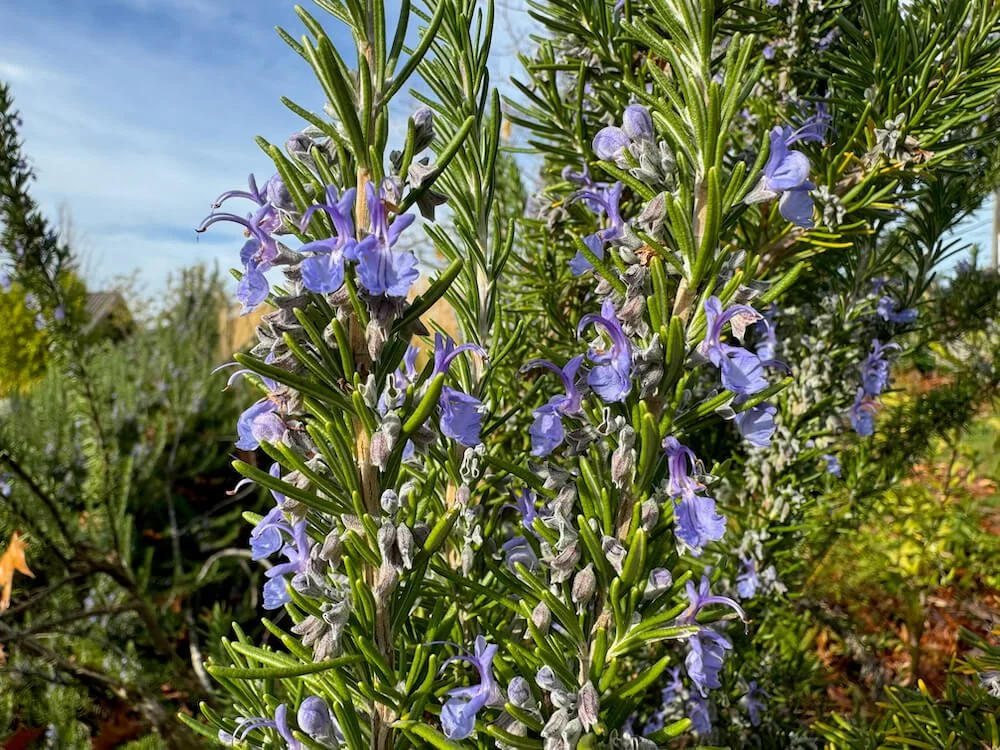
- Blue, purple, or white, small, tubular
- Foliage color
- Dark green, needle-like leaves with a silvery underside
- Bloom time
- Spring to early summer
- Light
- Full sun
- Water
- Moderate
- Maintenance
- Low; prune to maintain shape
- Growing zone
- USDA zones 8 to 10
- Wildlife
- Attracts bees, butterflies, and birds
About this plant
Rosmarinus officinalis, commonly known as rosemary, is a fragrant, evergreen herb native to the Mediterranean region. This versatile plant is highly valued for its aromatic leaves, which are often used in cooking, especially for flavoring meats, vegetables, and sauces. Rosemary is also known for its attractive, needle-like foliage that is green on top and silvery white underneath. During late winter to early spring, it produces small, tubular flowers in shades of blue, purple, or white, attracting pollinators such as bees.
Historically, rosemary has been used for medicinal purposes, including as a natural remedy for digestion and memory enhancement. The plant thrives in warm, sunny climates and is often grown in herb gardens or as a decorative addition to landscapes. It is widely cultivated both for its culinary uses and ornamental value, with varieties suited for different growing conditions.
Works well in
Sun Gardens · Mediterranean Gardens · Pathways & Walkways · Pollinator Gardens
Companion plants
Aster · Firethorn · Sneezeweed · Blue grama grass · Hebe · Manzanita
Design tip
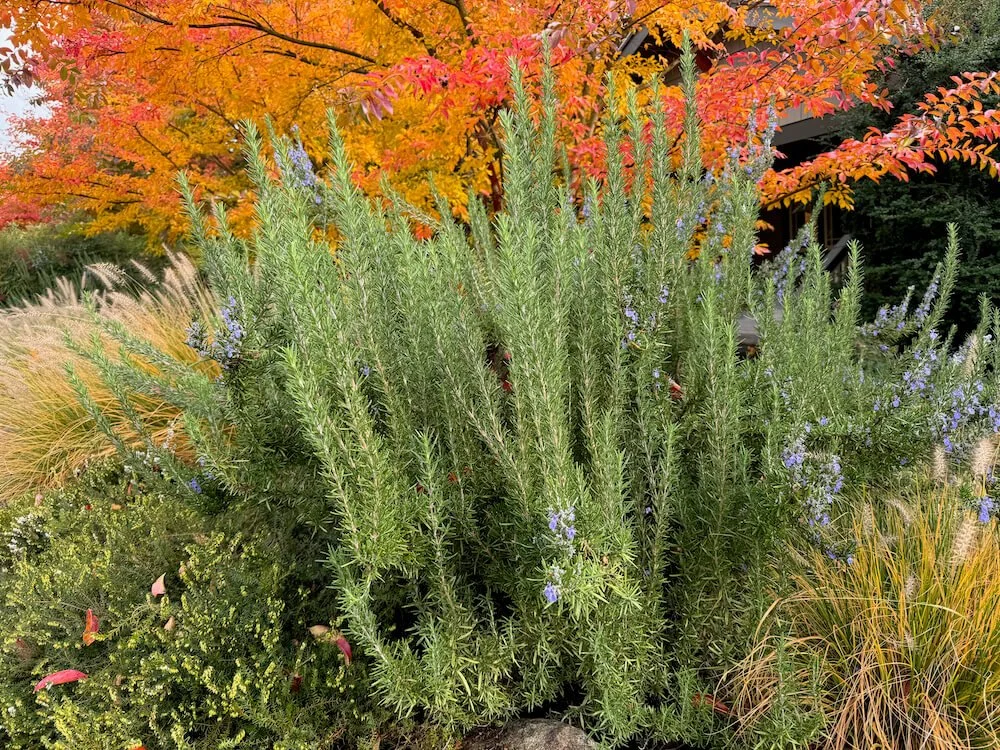
Border a sunny patio or outdoor dining area with rosemary, where brushing past the foliage releases its fragrance and keeps fresh sprigs conveniently within reach. Its narrow leaves also offer a pleasing contrast to plants with broader, softer foliage nearby.