Northwest Blooms · Shrubs
Salix integra 'Hakuro Nishiki'
Japanese Dappled Willow
- Family
- Salicaceae
- Height
- 4 to 6 feet
- Width
- 5 to 7 feet
- Flower color
- Yellowish catkins (insignificant)
- Foliage color
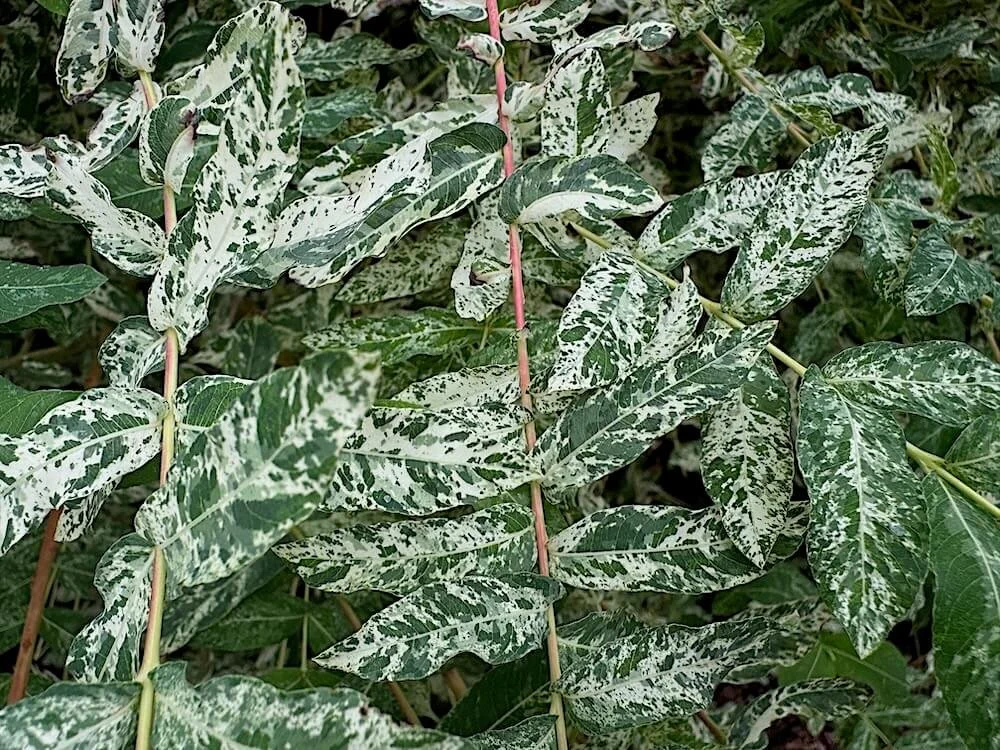
- Leaves emerge pink in spring, transitioning to green with white variegation
- Bloom time
- Spring
- Light
- Full sun to partial shade
- Water
- Moderate
- Maintenance
- Medium; occasional pruning to shape
- Growing zone
- USDA Zones 4 to 9
- Wildlife
- Provides shelter for birds and adds habitat diversity to gardens
About this plant
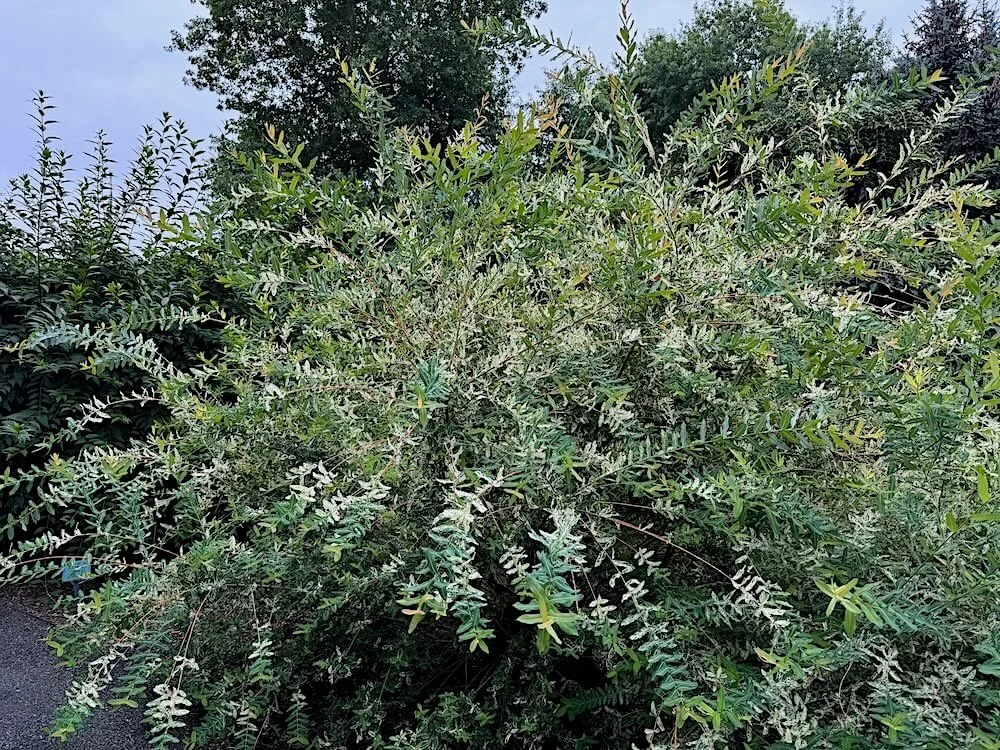
Salix integra 'Hakuro Nishiki' is a deciduous shrub native to East Asia, including Japan, China, and Korea. Renowned for its variegated foliage, it features delicate, narrow leaves that emerge in spring with shades of pink, white, and green. As the growing season progresses, the foliage transitions to a soft green with white highlights, creating a dynamic and evolving visual appeal. In autumn, the leaves develop a golden hue before falling, revealing red-tinted stems that add winter interest.
Though its blooms are inconspicuous yellowish catkins that appear in spring, the plant is grown primarily for its foliage rather than flowers. Its adaptability and fast growth make it a versatile choice for hedges, specimen plantings, or as an accent near water features. The graceful arching branches and colorful leaves provide an elegant texture, enhancing gardens of various styles, including Japanese and cottage landscapes.
Works well in
Sun Gardens · Hedging & Privacy · Specimen Plants · Foundation Plantings
Companion plants
Poppies · Milkweed · Bee balm · Feather reed grass · Rock cress · Alpine mint bush
Design tip
Give ‘Hakuro Nishiki’ room to spread near a water feature, where its arching branches can echo the movement of the water without requiring a formal waterside planting. The pink-and-white spring foliage also creates a particularly effective contrast against the darker surface of a pond or stream.
Where to see it
This plant can be seen in the Oregon Display Garden at Monrovia.