Northwest Blooms · Shrubs
Santolina chamaecyparissus 'Pretty Carroll'
Pretty Carroll Lavender Cotton
- Family
- Asteraceae
- Height
- Up to 16 inches
- Width
- Up to 16 inches
- Flower color
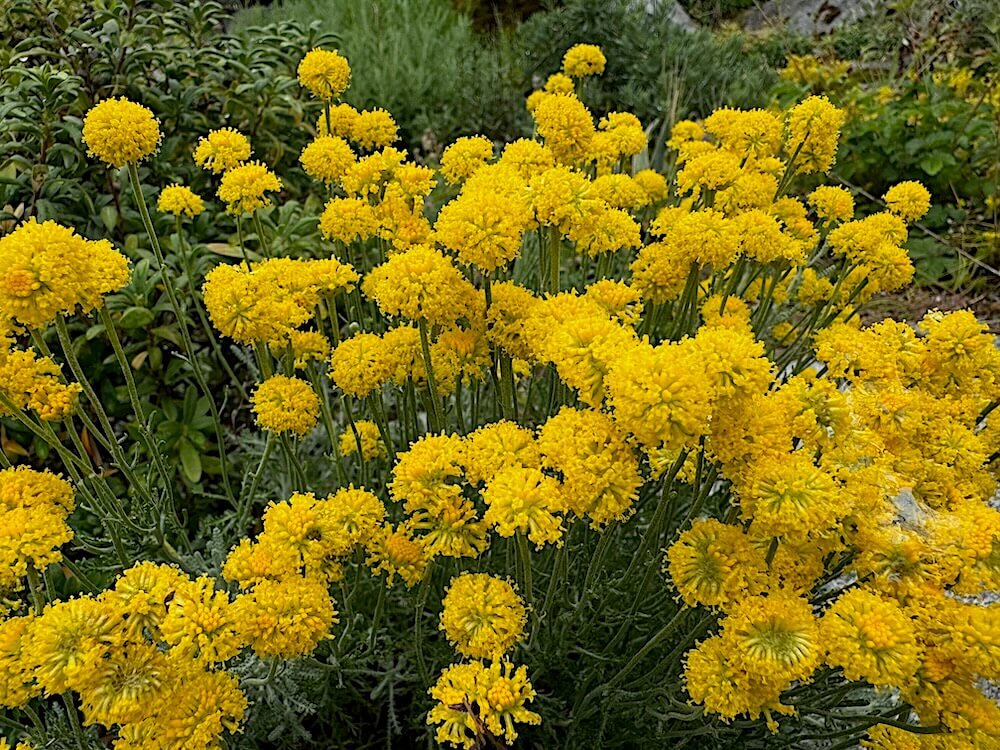
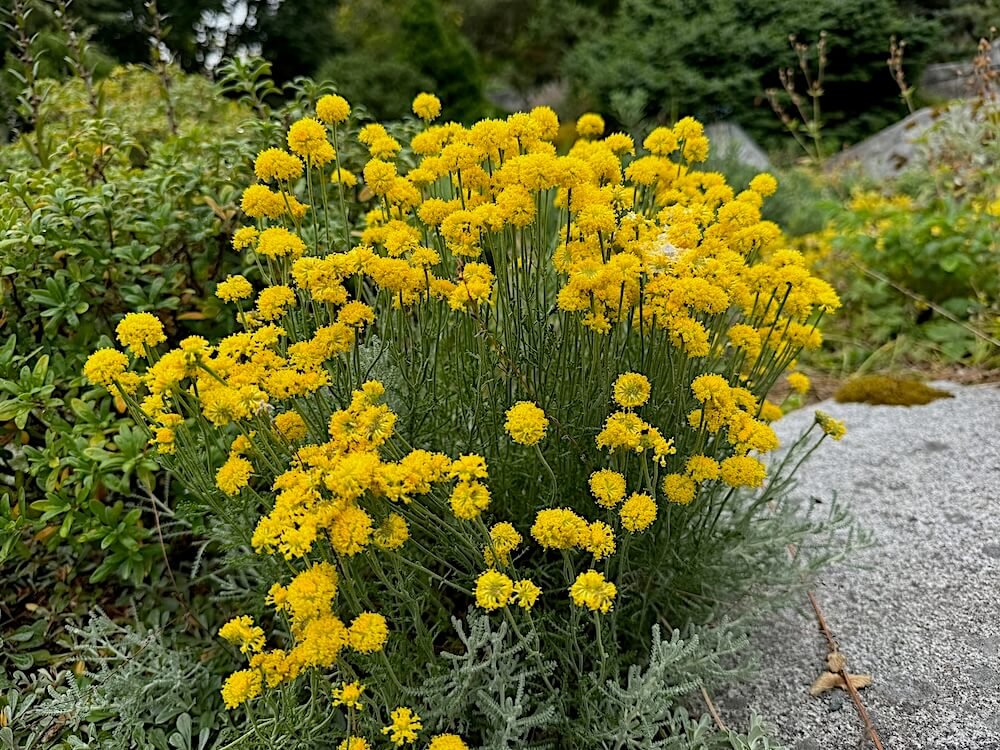
- Bright yellow, button-like clusters
- Foliage color
- Silvery-gray, finely dissected leaves with a feathery appearance
- Bloom time
- Mid to late summer
- Light
- Full sun
- Water
- Drought-tolerant once established
- Maintenance
- Low; prune in spring to maintain shape and remove dead flowers
- Growing zone
- USDA zones 5 to 9
- Wildlife
- Attracts bees and butterflies; generally avoided by deer and rabbits due to aromatic foliage
About this plant
Santolina chamaecyparissus 'Pretty Carroll' is a compact, evergreen shrub known for its aromatic, finely textured silver-gray foliage that resembles the scales of a cypress tree. In mid to late summer, this cultivar produces small, bright yellow flowers that are borne in clusters, offering a cheerful contrast to its silvery leaves. The plant's dense, mounded habit makes it a great addition to borders or rock gardens.
Native to the Mediterranean region, Santolina chamaecyparissus 'Pretty Carroll' thrives in dry, well-drained soils and is highly drought-tolerant once established. This variety is particularly valued for its low-maintenance nature and its ability to provide both visual interest and a pleasant fragrance. It's an excellent choice for coastal or sun-drenched gardens where water conservation is important.
Works well in
Sun Gardens · Mediterranean Gardens · Pathways & Walkways · Rock Gardens
Companion plants
Phlox · Pittosporum · Hardy mums · Feather reed grass · Cranesbill · Butterfly bush
Design tip
Plant ‘Pretty Carroll’ into gaps between larger rocks or along the edge of gravel paths, where its compact silver mounds can soften the surrounding stone. The bright yellow summer flowers add small bursts of color without overwhelming the restrained, drought-tolerant planting.
Where to see it
This plant can be seen at the Bellevue Botanical Garden.