Northwest Blooms · Shrubs
Spiraea betulifolia 'Tor Gold'
Tor Gold Birchleaf Spirea
- Family
- Rosaceae
- Height
- 2 ft to 3 ft
- Width
- 2 ft to 3 ft
- Flower color
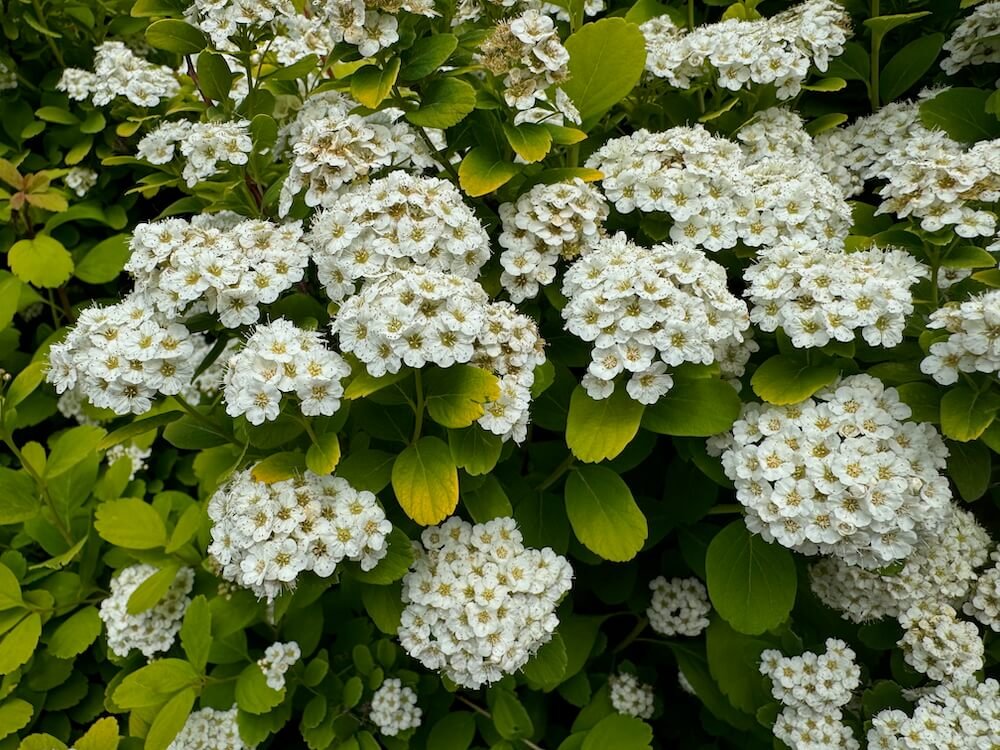
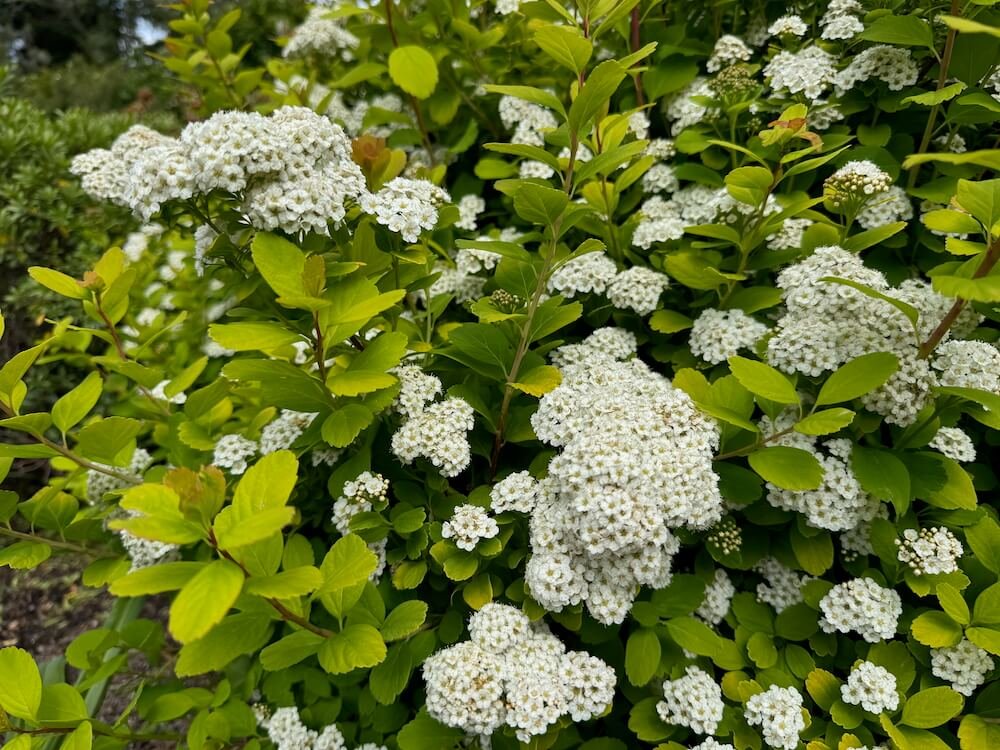
- Dense clusters of small white flowers forming rounded flat-topped heads
- Foliage color
- Bright golden yellow leaves aging to soft yellow green with fine serration
- Bloom time
- Late spring to early summer
- Light
- Full sun to light shade
- Water
- Moderate; prefers well drained soil and tolerates some dryness once established
- Maintenance
- Low; prune after flowering to maintain compact shape and encourage fresh growth
- Growing zone
- USDA zones 3 to 8
- Wildlife
- Pollinators attracted to nectar rich flowers and occasional bird interest
About this plant
Spiraea betulifolia 'Tor Gold' produces dense, flat-topped clusters of small white flowers in late spring to early summer, creating a soft, cloud-like display across the plant. Rounded, birch-like leaves emerge bright golden-yellow, gradually softening to a warm chartreuse while maintaining a clean, finely textured appearance. The foliage forms a compact, layered framework that highlights the abundant flower clusters, which sit just above the leaves and draw pollinators during the bloom period.
Originating from a species native to northern Asia and parts of North America, this cultivar reflects selection for luminous foliage color and tidy growth. It is well suited to borders, mass plantings, and low hedging, where its seasonal color shifts and spring flowering provide structure and visual continuity.
Works well in
Sun Gardens · Cottage Gardens · Borders · Pollinator Gardens
Companion plants
Peonies · Alpine mint bush · Wallflower · Pampas grass · Stonecrop · Manzanita
Design tip
Carry ‘Tor Gold’ through a planting as a repeating ribbon of golden foliage, using its color to visually connect shrubs and perennials that bloom at different times. Even after its white flowers fade, the warm chartreuse leaves maintain that continuity through the growing season.
Where to see it
This plant can be seen at the Bellevue Botanical Garden.