Northwest Blooms · Shrubs
Syringa vulgaris
Common Purple Lilac
- Family
- Oleaceae
- Height
- 12 to 20 ft
- Width
- 8 to 15 ft
- Flower color
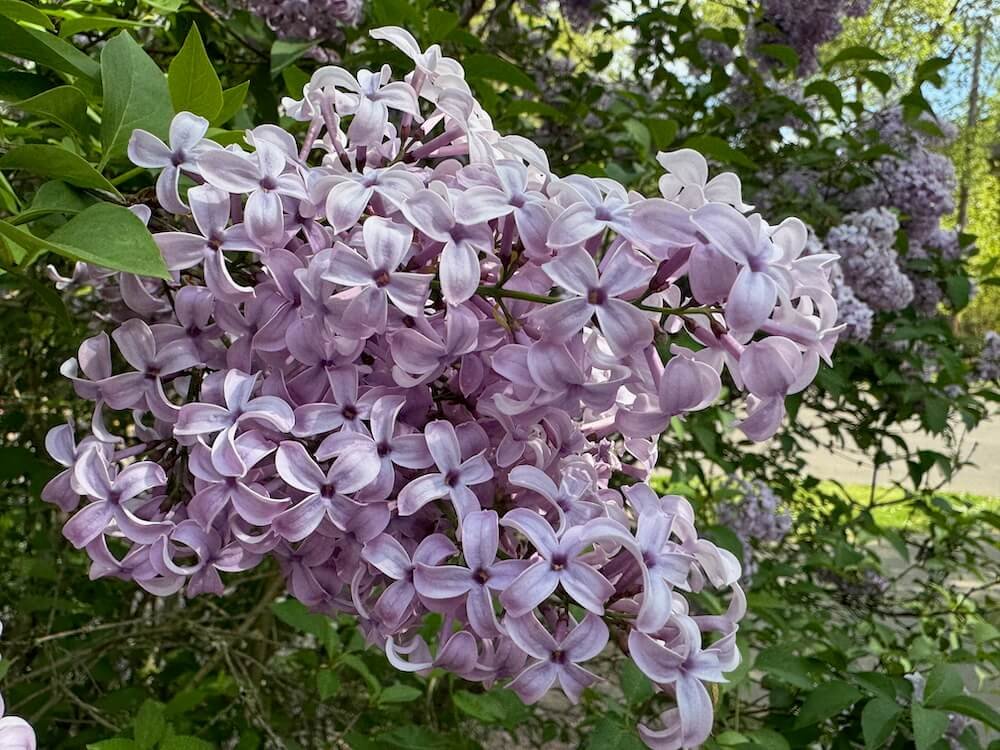
- Purple, lavender, pink, white, and bi-colored forms, typically fragrant
- Foliage color
- Medium green, heart-shaped leaves
- Bloom time
- Mid to late spring
- Light
- Full sun
- Water
- Moderate
- Maintenance
- Low to moderate; prune immediately after flowering to shape and remove spent clusters
- Growing zone
- USDA zones 3 to 7
- Wildlife
- Fragrant blooms attract bees, butterflies, and other pollinators
About this plant
Syringa vulgaris, commonly called common lilac, is a deciduous shrub native to the rocky hills of the Balkan Peninsula in southeastern Europe. It forms a framework of gray-brown stems with opposite, heart-shaped leaves that create a full summer canopy and open, airy branching in winter. It has been grown in temperate gardens for centuries.
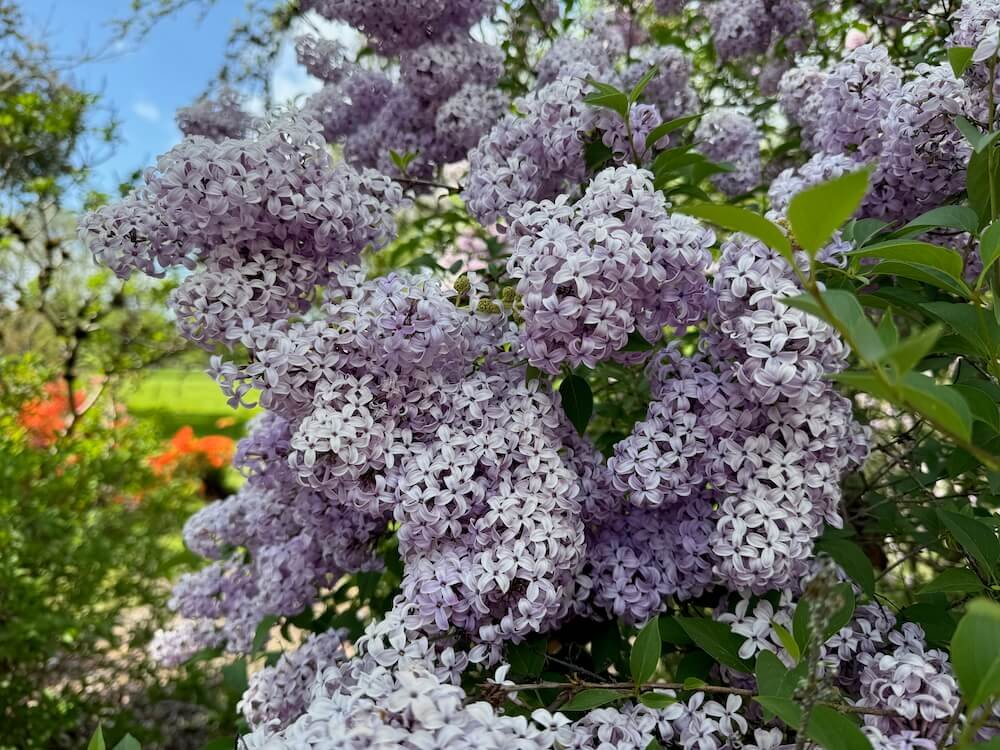
In mid to late spring, dense terminal panicles open into dozens of small, four-lobed, intensely fragrant flowers, usually in lilac-purple tones but also appearing in white, pink, and deeper purples in garden selections. After flowering, dry seed capsules follow and the plant's perfume and classic form make it a traditional choice for borders, screens, and cutting gardens.
Works well in
Sun Gardens · Hedging & Privacy · Fragrant Gardens · Pollinator Gardens
Companion plants
Poppies · Milkweed · Bee balm · Feather reed grass · Rock cress · Alpine mint bush
Design tip
Frame a garden view with common lilac rather than treating it only as a background shrub. Its substantial height and classic spring flowers can define the side of a lawn, path, or sitting area, while leaving the center of the view open and drawing the eye deeper into the garden.