Northwest Blooms · Shrubs
Syringa vulgaris 'Sensation'
Sensation Lilac
- Family
- Oleaceae
- Height
- 8 to 15 ft
- Width
- 6 to 12 ft
- Flower color
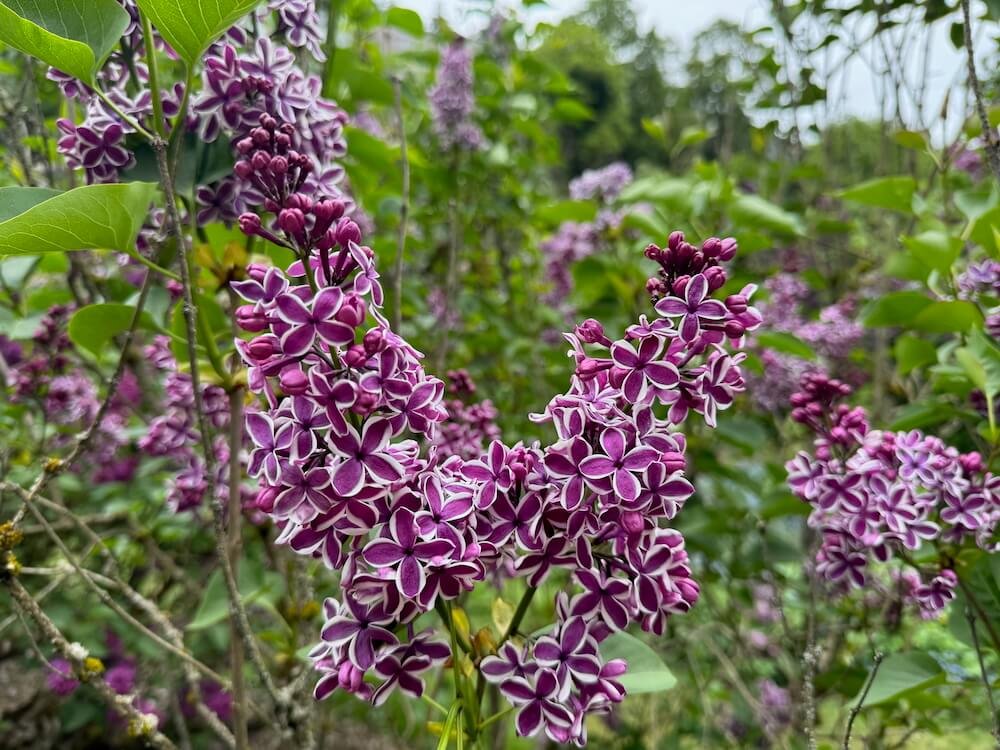
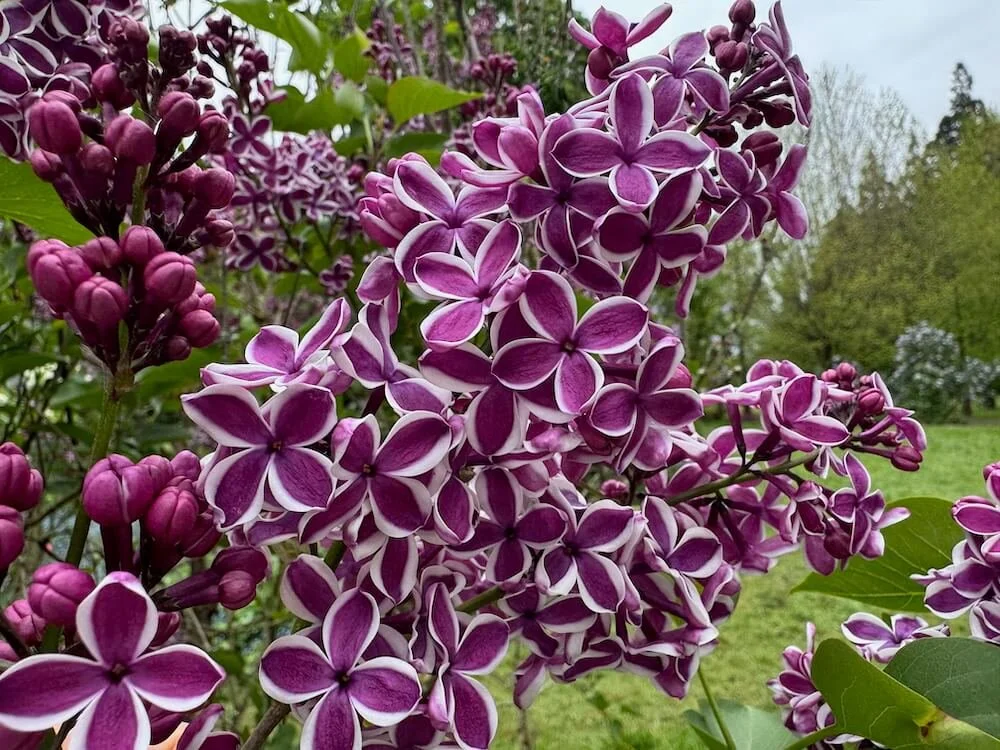
- Purple to violet-purple florets with white-edged petals, fragrant flower clusters
- Foliage color
- Deciduous medium green leaves
- Bloom time
- Mid to late spring
- Light
- Full sun
- Water
- Moderate
- Maintenance
- Moderate; prune immediately after flowering to shape and remove spent clusters
- Growing zone
- USDA zones 3 to 7
- Wildlife
- Fragrant blooms attract bees, butterflies, and other pollinators
About this plant
Syringa vulgaris 'Sensation' blooms in mid to late spring with large, conical trusses of sweetly fragrant florets. Buds open to deep purple-red, and each petal is cleanly edged in white, creating a crisp two-tone effect throughout the panicle. Heart-shaped green leaves emerge as flowers peak, keeping the shrub looking full and fresh after bloom.
Introduced in 1938 in the Netherlands by Dirk EveleensMaarse, 'Sensation' became famous as an early bicolor common lilac. The flower clusters are excellent for cutting, and the distinctive white margins remain visible even in warm weather. Plant it where spring fragrance can be enjoyed along paths, near patios, or in mixed shrub borders.
Works well in
Sun Gardens · Foundation Plantings · Fragrant Gardens · Pollinator Gardens
Companion plants
Camas · Mexican orange blossom · Bee balm · Maiden grass · Sea thrift · Flowering quince
Design tip
Allow ‘Sensation’s’ distinctive bicolor flowers to provide the pattern in a spring planting, keeping nearby blooms relatively simple. Solid white, purple, or green companions reinforce its palette without competing with the crisp white edging that makes each floret so distinctive.