Northwest Blooms · Shrubs
Tasmannia lanceolata
Mountain Pepper
- Family
- Winteraceae
- Height
- 10 ft to 15 ft
- Width
- 6 ft to 10 ft
- Flower color
- Small creamy white to pale yellow flowers with a soft clustered appearance
- Foliage color
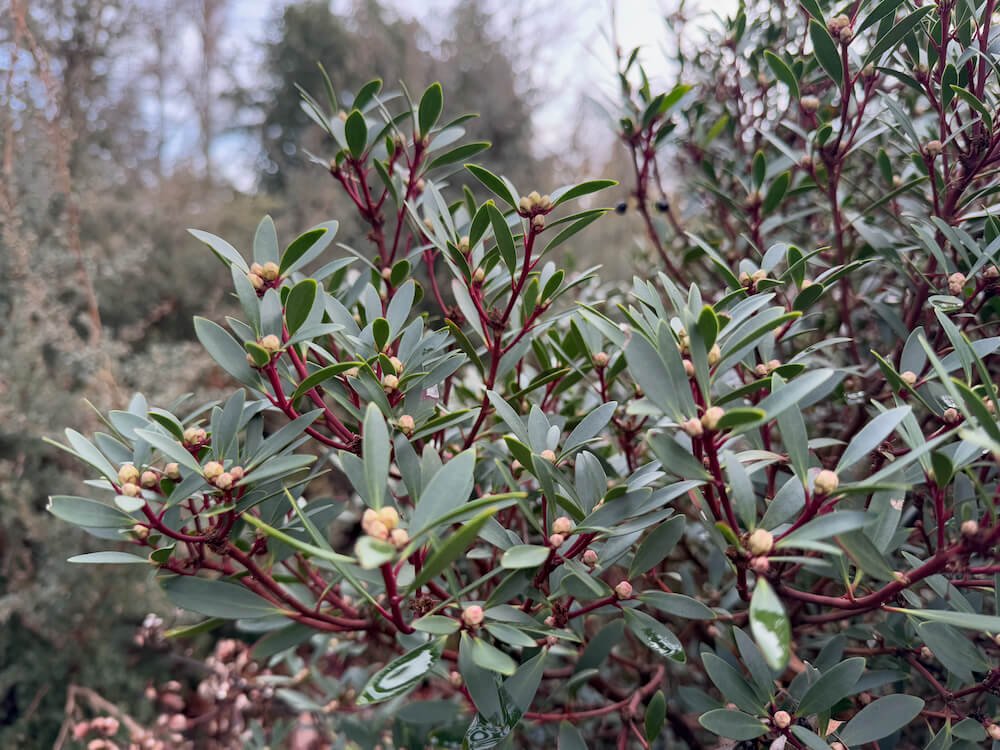
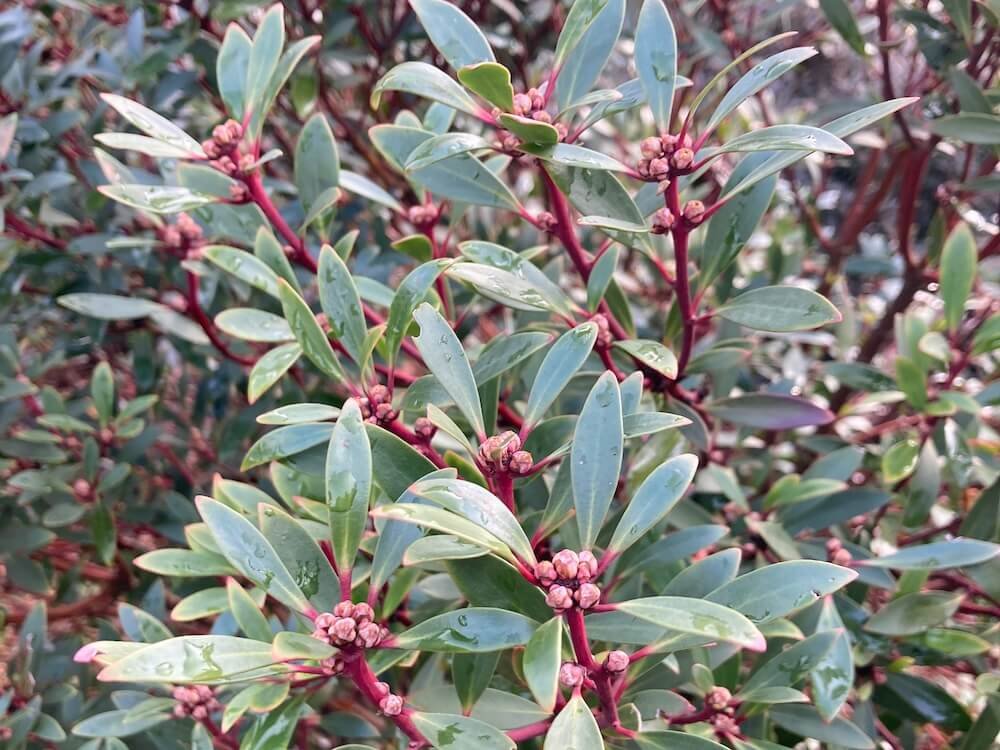
- Glossy deep green leaves with reddish stems and aromatic peppery fragrance
- Bloom time
- Late spring to early summer
- Light
- Partial shade to full sun in cooler climates
- Water
- Moderate
- Maintenance
- Low; prune lightly to shape and remove any dead or damaged wood
- Growing zone
- USDA zones 7 to 10
- Wildlife
- Pollinators attracted to flowers and birds attracted to dark berries
About this plant
Tasmannia lanceolata produces small, creamy white flowers in late spring to early summer, appearing in clusters along the stems and followed by glossy dark berries. Lance-shaped leaves are deep green with a smooth, leathery texture, often flushed with reddish tones on new growth and along the stems. When crushed, the foliage releases a distinctive peppery aroma, and the plant develops a dense, upright structure that carries both flowers and fruit through the season.
Native to southeastern Australia and Tasmania, this species has long been valued for its aromatic foliage and culinary use. It is well suited to sheltered borders, woodland gardens, and mixed plantings, where its evergreen presence and ornamental berries provide year-round interest.
Companion plants
Hydrangea · Viburnum · Pulmonaria · Japanese forest grass · Wood sorrel · Epimedium
Design tip
Draw attention to Mountain Pepper’s year-round foliage by using it as an evergreen anchor in a layered planting. Its narrow, deep green leaves and reddish stems add fine texture and subtle color even when flowers and berries are absent.
Where to see it
This plant can be seen at the Washington Park Arboretum.