Northwest Blooms · Shrubs
Viburnum tinus
Laurustinus
- Family
- Adoxaceae
- Height
- 6 to 12 feet
- Width
- 6 to 10 feet
- Flower color
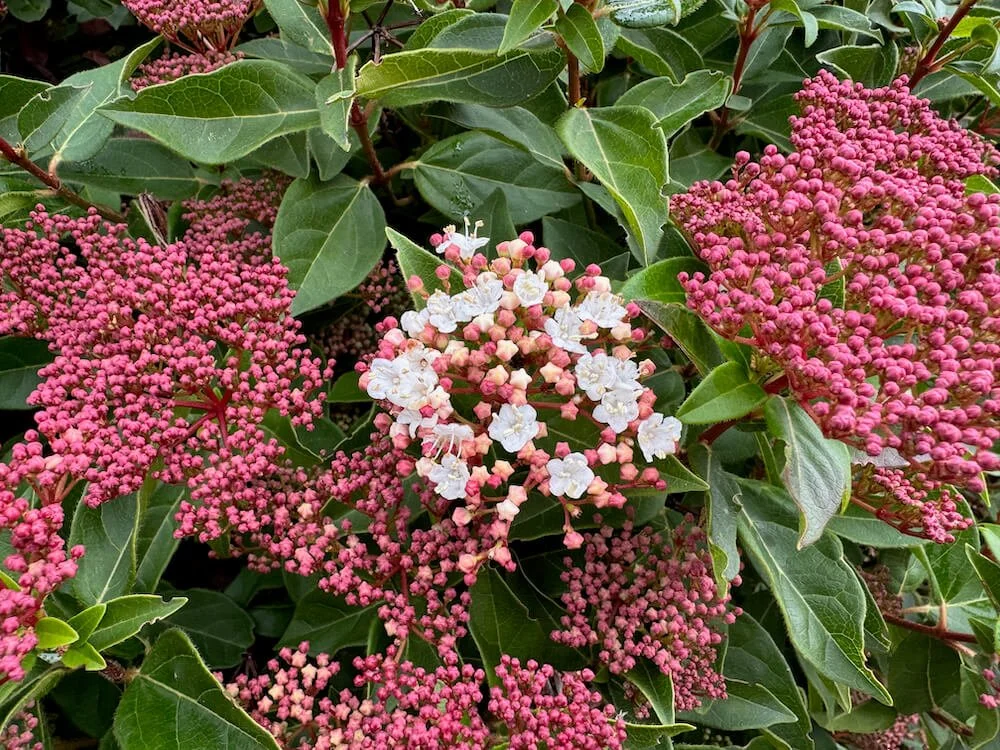
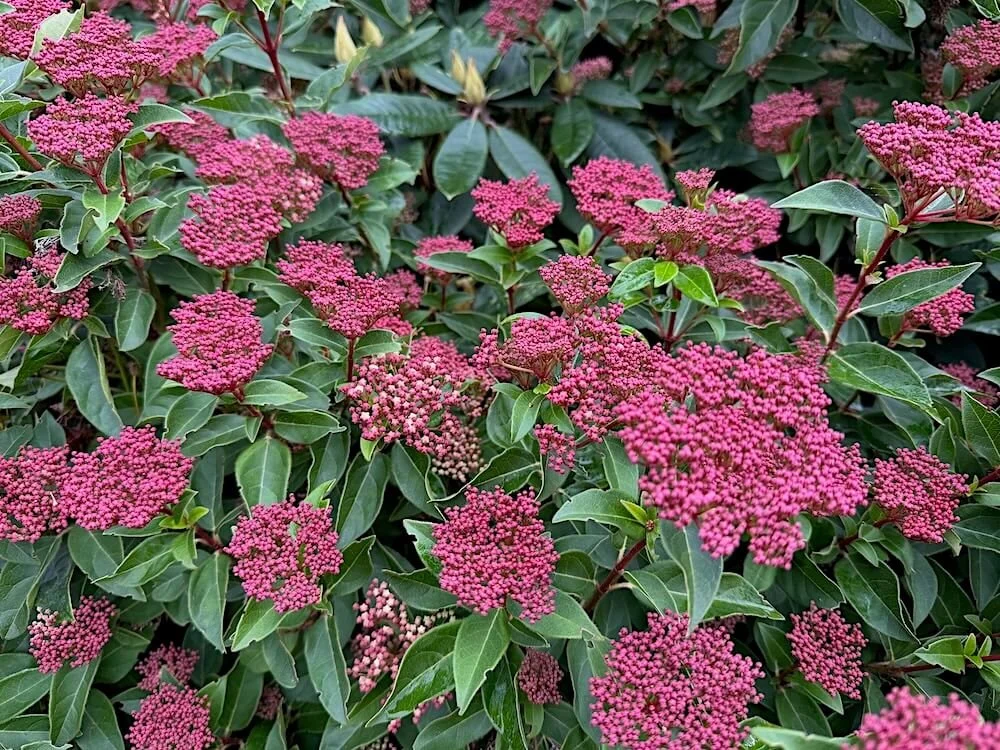
- Pink buds opening to white flowers
- Foliage color
- Glossy dark green
- Bloom time
- Late autumn to early spring
- Light
- Full sun to partial shade
- Water
- Average
- Maintenance
- Low; prune lightly in early summer to maintain shape
- Growing zone
- USDA zones 7 to 9
- Wildlife
- Attracts bees and butterflies; berries may appeal to birds
About this plant
Viburnum tinus is an evergreen shrub celebrated for its year-round appeal and adaptability. It produces dense clusters of tiny, star-shaped flowers that are pink in bud and open to delicate white blooms, usually from late autumn through early spring. This extended blooming period makes it a valuable plant for adding color to the garden during the cooler months. The flowers are lightly scented, adding a subtle fragrance to the winter garden.
Following the flowering period, Viburnum tinus develops metallic blue-black berries, which persist well into the warmer months and provide a food source for wildlife. Originating from the Mediterranean region, this versatile plant thrives in a variety of settings and has been cultivated for its ornamental qualities and reliable performance in gardens around the world.
Companion plants
Hebe · Flowering quince · Crocus · Matilija poppy · Mallow · Sweet William
Design tip
Build Laurustinus into areas that lose momentum after autumn, using its long flowering season to carry interest through winter. Pink buds, white flowers, and later metallic berries create a succession of details against evergreen foliage when much of the garden is dormant.