Northwest Blooms · Shrubs
Viburnum tinus ‘Spring Bouquet’
Spring Bouquet Laurustinus
- Family
- Adoxaceae
- Height
- 4 to 6 feet
- Width
- 4 to 6 feet
- Flower color
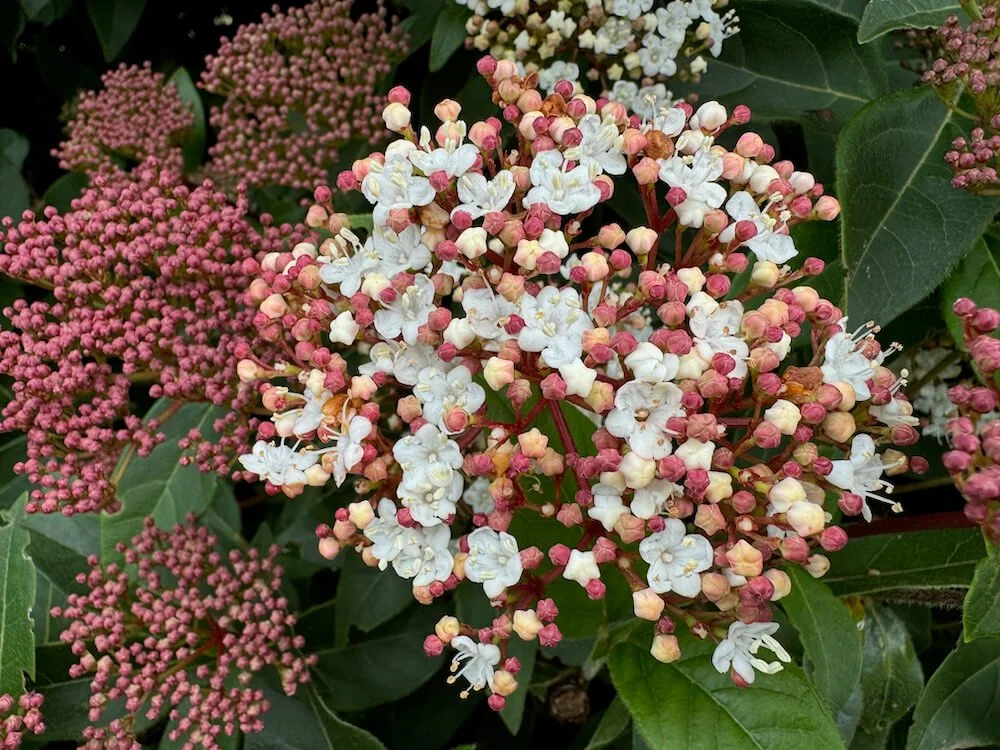
- Pinkish-white flowers that are often fragrant
- Foliage color
- Dark green, glossy leaves
- Bloom time
- Late winter
- Light
- Full sun to partial shade
- Water
- Moderate
- Maintenance
- Low; prune lightly after flowering if needed
- Growing zone
- USDA Hardiness zones 7 to 10
- Wildlife
- Flowers may attract pollinators, and berries can be a food source for birds
About this plant
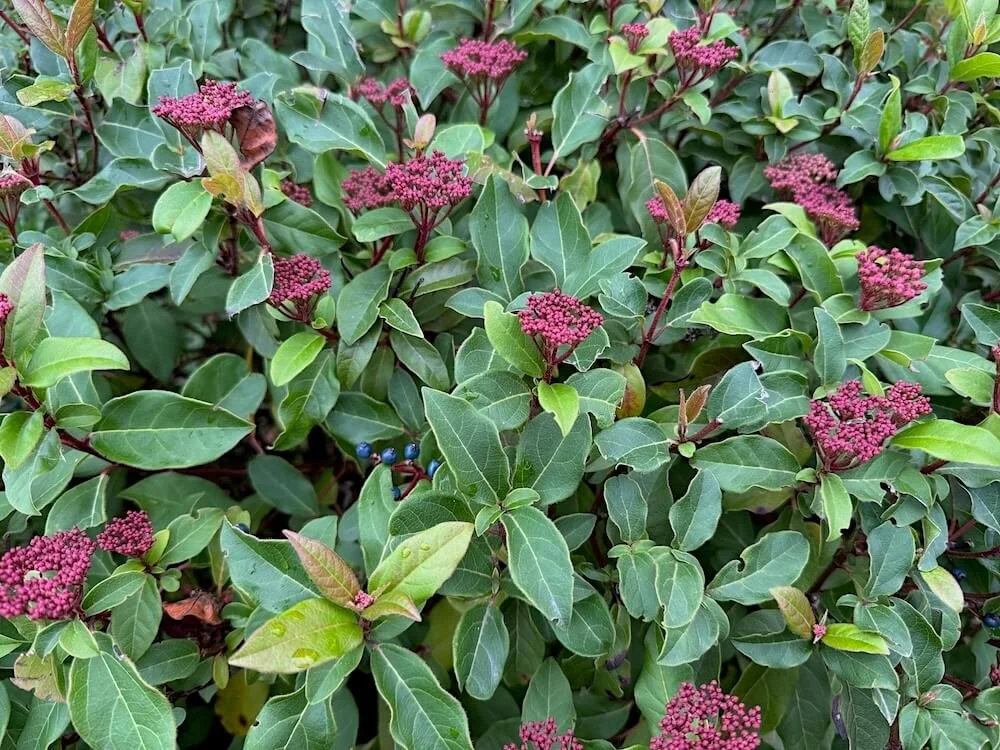
Viburnum tinus 'Spring Bouquet' produces broad clusters of lightly fragrant white flowers from deep rosy-red buds in late winter to early spring, followed by metallic steel-blue berries that gradually darken. Glossy, oval dark green leaves densely cover the branches, creating handsome evergreen foliage throughout the year. Reddish stems complement the colorful flower buds, while the compact, rounded branching gives the shrub a full, substantial appearance even outside its flowering season.
Selected by James W. Hines Jr. in San Gabriel, California, in 1957 from a chance seedling of Viburnum tinus, 'Spring Bouquet' was named in 1965. Its dense evergreen habit makes it especially useful for foundation plantings, hedges, mixed shrub borders, screens, and specimen plantings, providing structure, flowers, and ornamental fruit across several seasons.
Companion plants
Oleaster · Mexican orange blossom · Sneezeweed · Black-eyed Susan · Sea thrift · Common sage
Design tip
Make ‘Spring Bouquet’ part of the garden’s winter framework rather than relying on it only for bloom. Its rounded evergreen form provides structure year-round, then abundant pink buds and fragrant white flowers create a welcome focal point during the quieter winter season.