Northwest Blooms · Vines
Akebia quinata 'Rosea'
Pink Chocolate Vine
- Family
- Lardizabalaceae
- Height
- 20 to 40 feet tall when supported (as a vine)
- Width
- 6 to 10 feet wide
- Flower color
- Pinkish-lavender
- Foliage color
- Green
- Bloom time
- Spring
- Light
- Full sun to part shade
- Water
- Medium; prefers well-drained soil
- Maintenance
- Low; can be pruned to control size and shape after flowering
- Growing zone
- USDA zones 4 to 9
- Wildlife
- The flowers attract bees and butterflies. The fruit may attract birds.
About this plant
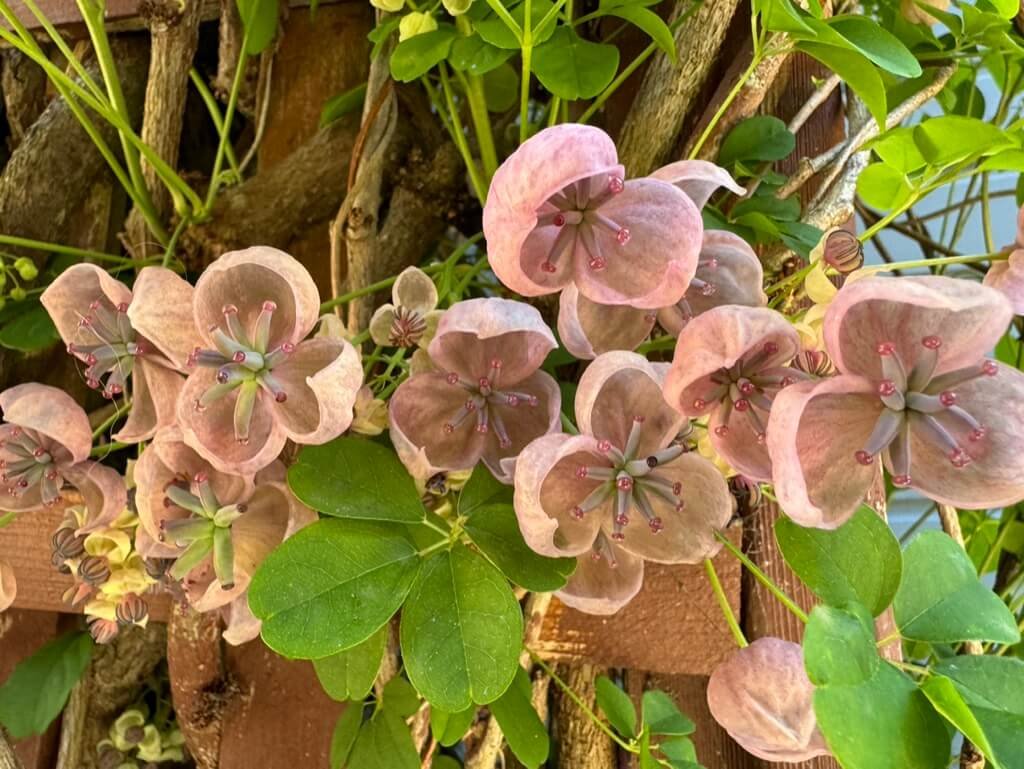
Akebia quinata 'Rosea' is a stunning and versatile climber that offers multi-season interest with its pale pink to rose-colored flowers, lush green foliage, and ornamental fruit. Its vigorous growth habit and low maintenance requirements make it a popular choice among gardeners and landscape designers seeking to add vertical interest and natural beauty to their outdoor spaces.
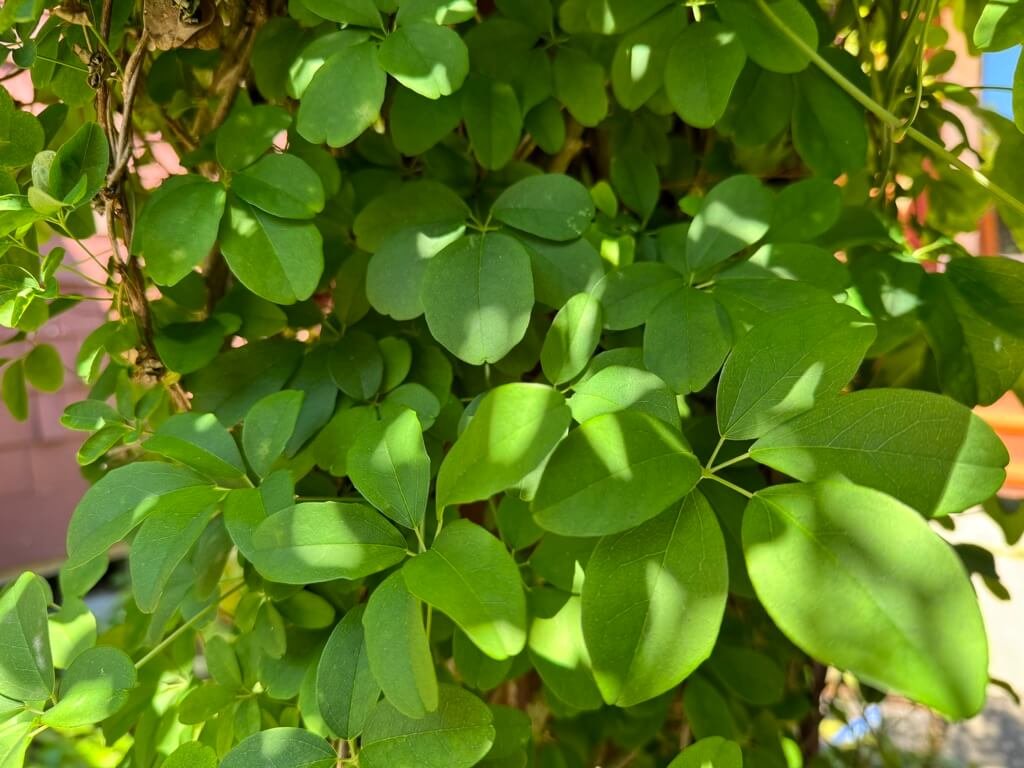
In spring, 'Rosea' produces clusters of small, fragrant flowers that are pale pink to rose-colored. The flowers are typically three-petaled and appear in axillary racemes. The female flowers are slightly larger than the male flowers and can develop into ornamental fruit if pollinated. The leaves of Akebia quinata 'Rosea' are composed of five elliptic to obovate leaflets, giving them a palmately compound appearance. The leaflets are deep green, providing a lush backdrop for the flowers. In mild climates, the foliage can remain semi-evergreen. The fruit of Akebia quinata 'Rosea' is an elongated, sausage-shaped pod that splits open to reveal a soft, pulpy interior filled with black seeds. The fruit is edible and has a mildly sweet taste, but it is primarily valued for its ornamental appeal.
'Rosea' is a versatile plant that can be used in a variety of garden settings. Its rapid growth and attractive foliage make it an excellent choice for covering unsightly structures or creating living screens. It also works well in woodland gardens, mixed borders, and as a ground cover in larger landscapes. The fragrant flowers and ornamental fruit add seasonal interest and attract pollinators, enhancing biodiversity in the garden.
Works well in
Arbors & Trellises · Fences & Walls · Cottage Gardens · Pollinator Gardens · Bird Gardens
Companion plants
Hydrangeas · Astilbes · Foxgloves · Bergenias · Sedums · Clematis
Design tip
Spring bloom is its headline moment, and it reads best in a group rather than as a single plant. Give it something sturdy to climb and keep the base planted with lower perennials, which shades the roots and hides bare stems.