Northwest Blooms · Vines
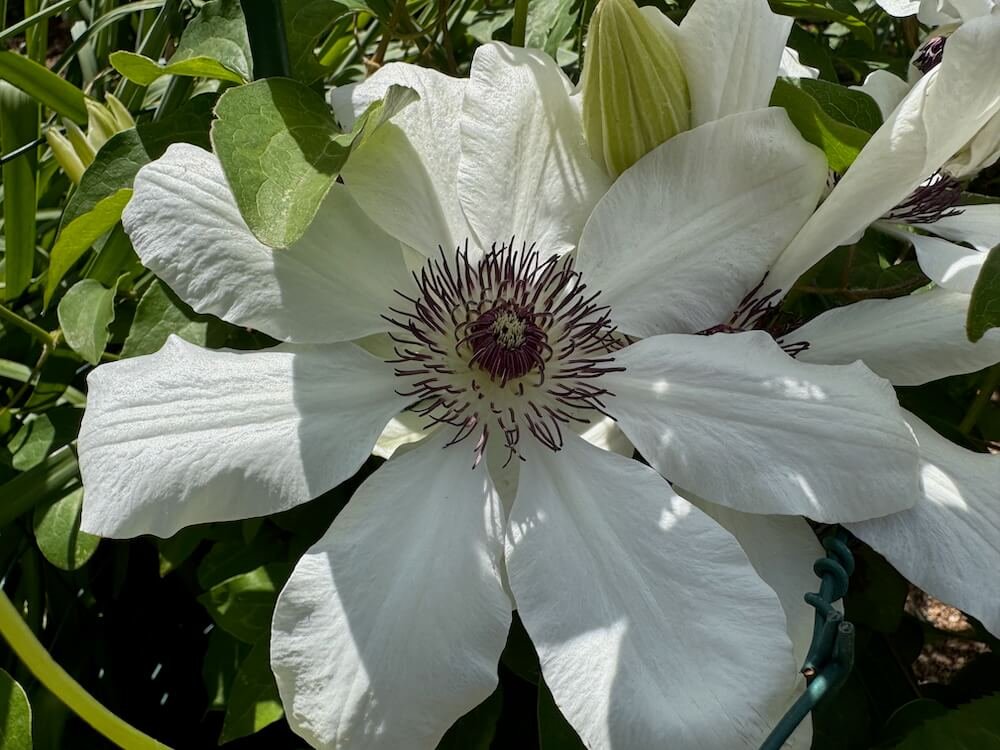
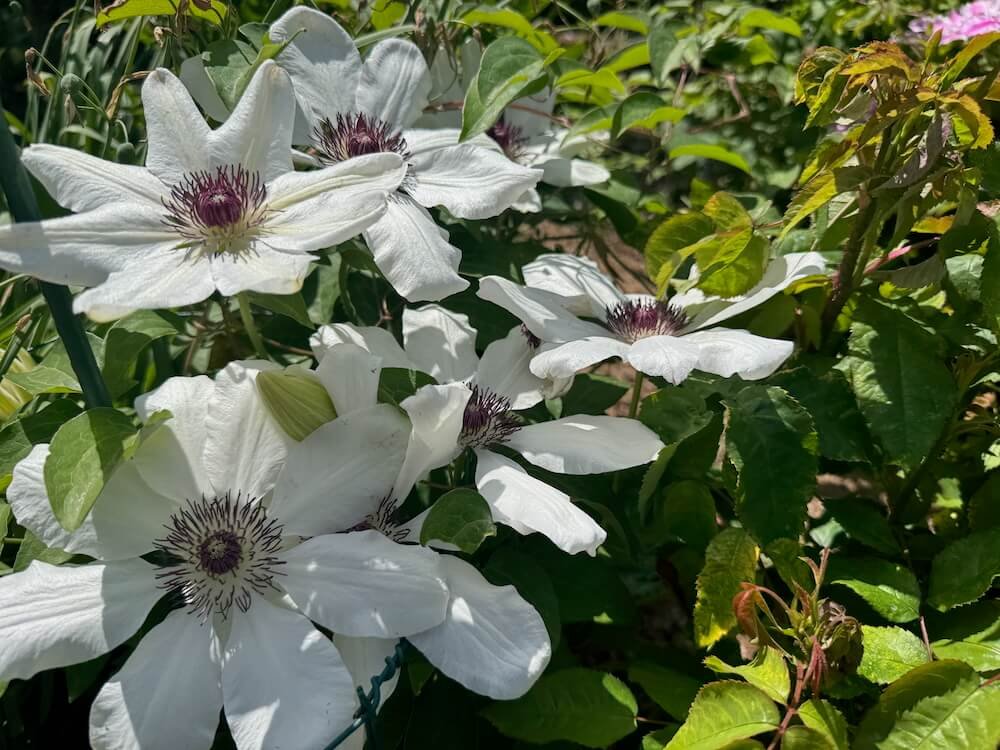
Clematis 'Miss Bateman'
Miss Bateman Clematis
- Family
- Ranunculaceae
- Height
- 6–8 ft
- Width
- 3–4 ft
- Flower color
- Satin white with burgundy-red or dark purple anthers
- Foliage color
- Green, deciduous
- Bloom time
- Late spring to early summer with a second flush in late summer to early fall
- Light
- Full sun to partial shade
- Water
- Average
- Maintenance
- Low; prune lightly as a Group 2 clematis and deadhead to encourage rebloom
- Growing zone
- USDA zones 4–9
- Wildlife
- Butterflies, hummingbirds, and other pollinators
About this plant
Clematis 'Miss Bateman' produces large, creamy white flowers centered by deep maroon stamens that open in late spring and often return with a lighter flush in early autumn. Introduced in England during the nineteenth century, it reflects the refined breeding of early large-flowered clematis selections while bringing a calm, luminous presence to trellises, arches, and garden walls.
Strong yet graceful stems carry the blooms clearly through surrounding foliage, allowing their pale tones and rich centers to remain visible across the season. Reliable flowering and composed growth make it well suited to formal plantings, cottage borders, and sheltered urban gardens alike in many settings.
Works well in
Arbors & Trellises · Fences & Walls · Cottage Gardens · Pollinator Gardens · Hummingbird Gardens
Companion plants
Sedums · Japanese anemones · Bleeding hearts · Catmint · Boxwood · Hardy geraniums
Design tip
Fall bloom is its strength, and it earns a place near a path or seating area used late in the year. Train the main stems early on a trellis or fence so the growth spreads sideways rather than bunching at the top.
Where to see it
This plant can be seen at the Rogerson Clematis Garden.