Northwest Blooms · Vines
Clematis virginiana
Virgin's Bower
- Family
- Ranunculaceae
- Height
- 12 to 20 feet
- Width
- Varies with support structure
- Flower color
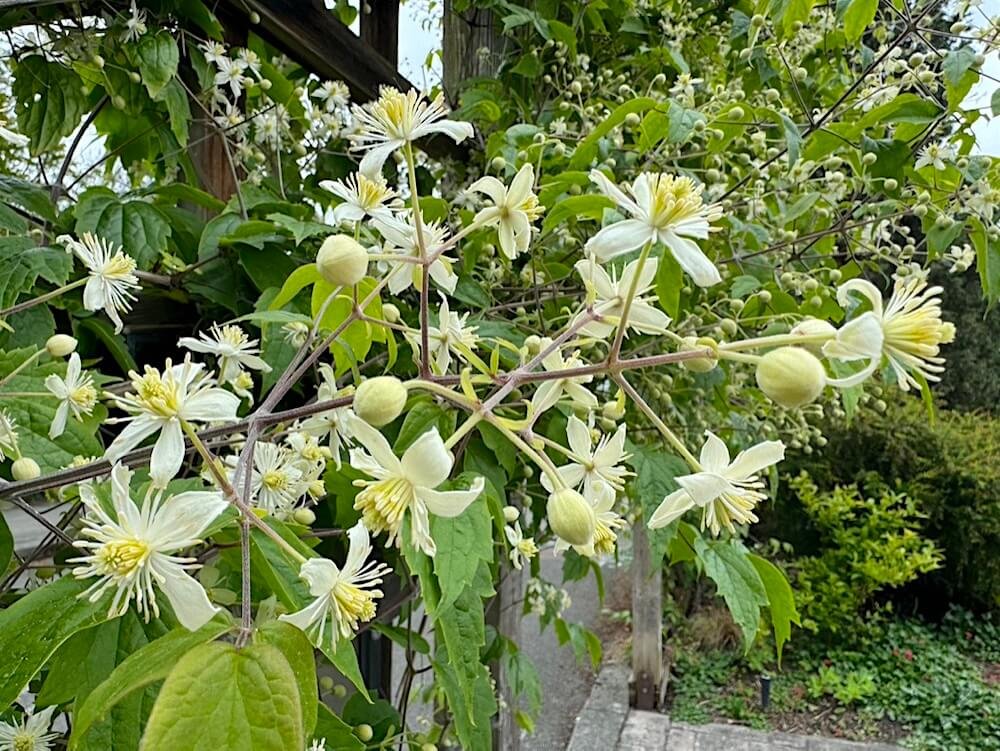
- White, small, star-like
- Foliage color
- Green leaves with toothed edges
- Bloom time
- Late spring to early summer
- Light
- Full sun to partial shade
- Water
- Moderate
- Maintenance
- Low; prune to control growth
- Growing zone
- USDA zones 3 to 8
- Wildlife
- Attracts butterflies, bees, and other pollinators
About this plant
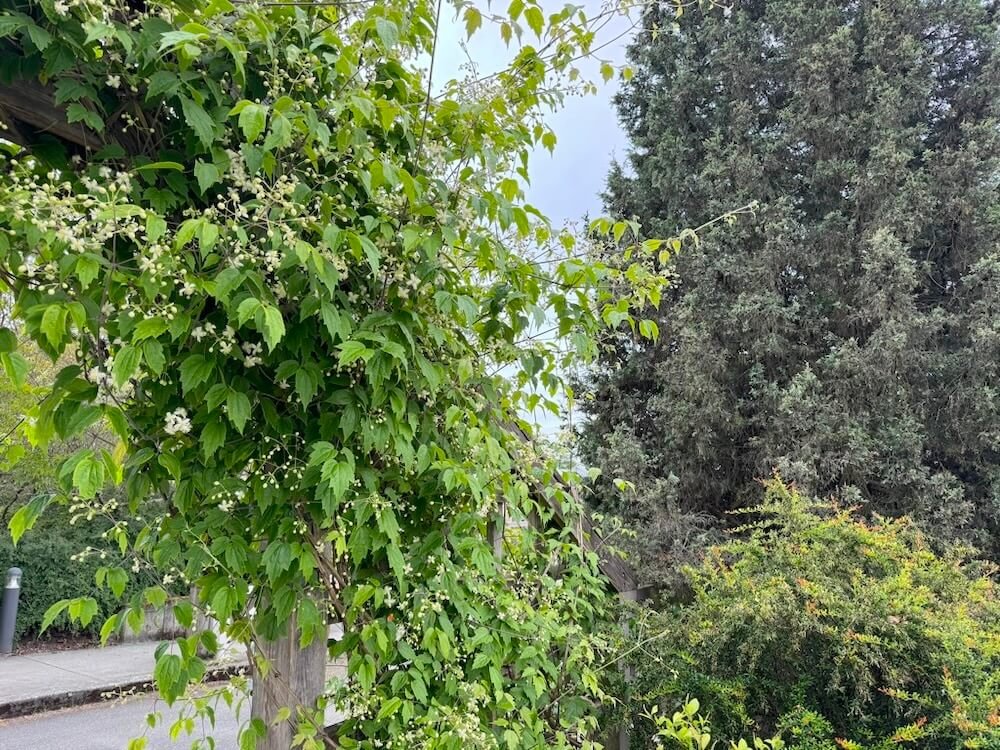
Clematis virginiana, commonly known as Virgin's Bower, is a vigorous, deciduous vine that produces a profusion of small, fragrant white flowers. Blooming from late spring into early summer, the star-shaped flowers appear in clusters, creating a delicate, airy display. The blooms are often followed by attractive, fluffy seed heads that add ornamental interest as they persist into the cooler months.
Native to North America, Clematis virginiana is commonly found in woodlands, along stream banks, and in hedgerows. Its rapid growth and ability to climb make it ideal for covering trellises, fences, or natural landscapes. This vine is valued for its ability to attract pollinators, especially bees and butterflies, adding to its appeal in naturalistic and wildlife-friendly gardens.
Works well in
Arbors & Trellises · Fences & Walls · Vertical Screening · Cottage Gardens · Pollinator Gardens
Companion plants
Astilbes · Foxgloves · Bergenias · Sedums · Japanese anemones · Bleeding hearts
Design tip
Summer flowers carry the middle of the season, so place it where the bed needs color once spring bulbs fade. Train the main stems early on a trellis or fence so the growth spreads sideways rather than bunching at the top.
Where to see it
This plant can be seen at the Center for Urban Horticulture.