Northwest Blooms · Vines
Hydrangea petiolaris
Climbing Hydrangea
- Family
- Hydrangeaceae
- Height
- 30-50 feet
- Width
- 5-6 feet
- Flower color
- White
- Foliage color
- Dark green
- Bloom time
- Late spring to early summer
- Light
- Partial shade to full shade
- Water
- Moderate, prefers consistently moist, well-drained soil
- Maintenance
- Low to moderate
- Wildlife
- Bees, butterflies
About this plant
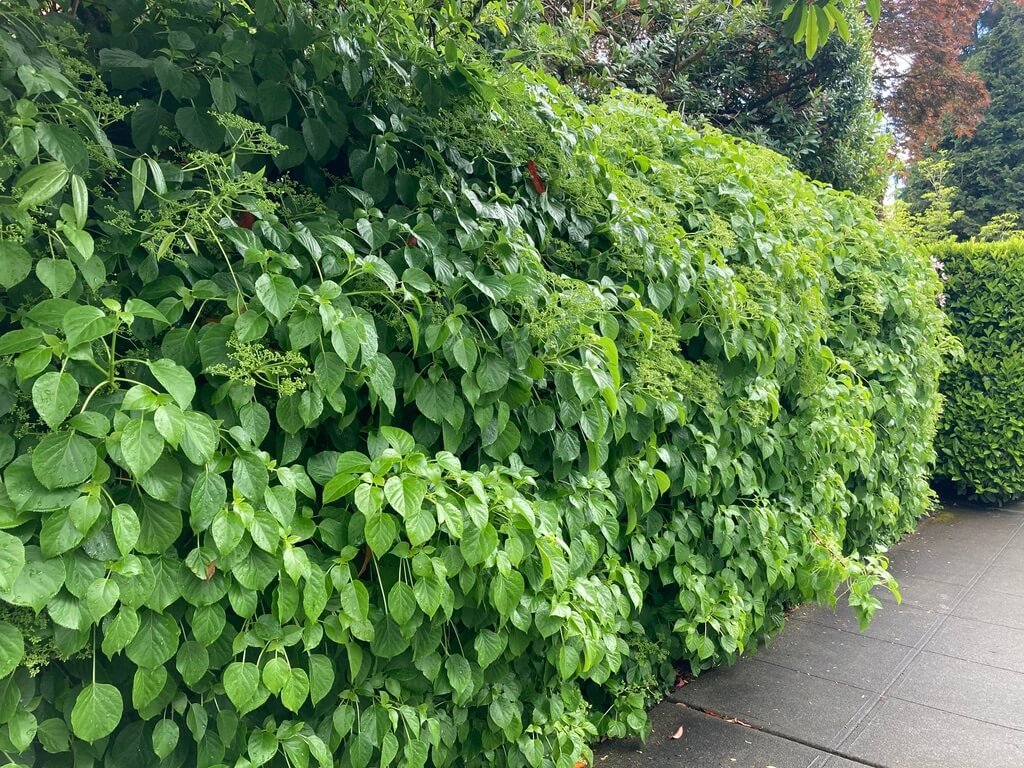
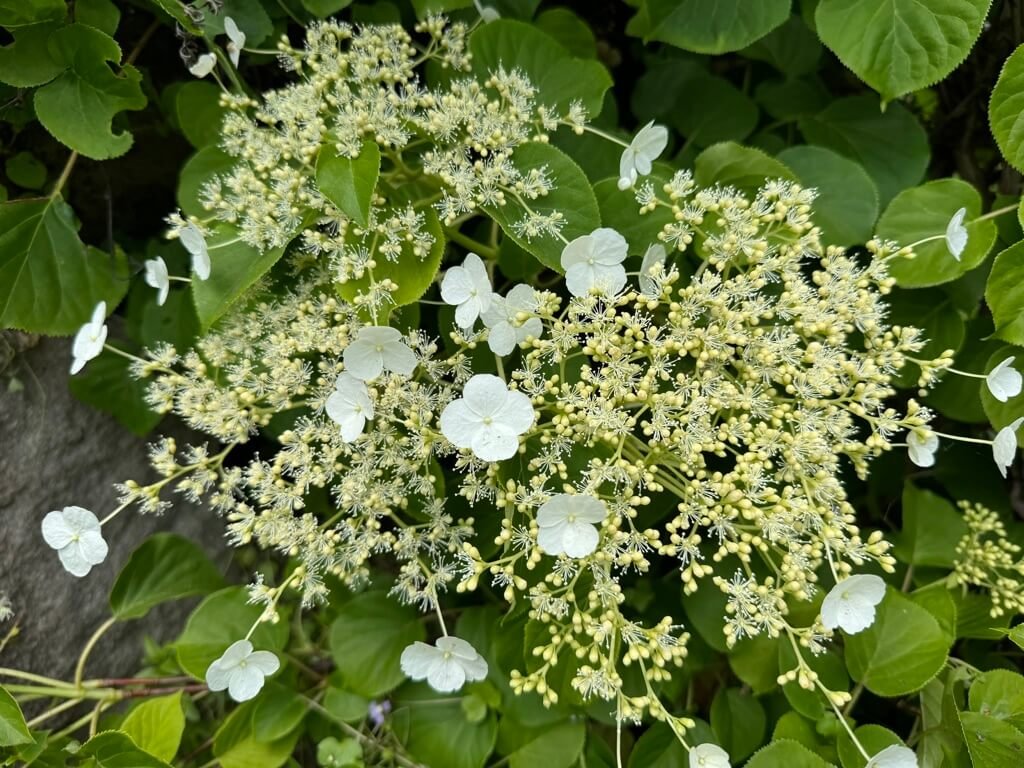
Hydrangea petiolaris, commonly known as Climbing Hydrangea, is a vigorous, deciduous climber prized for its attractive foliage, fragrant flowers, and versatile growth habit. Native to the woodlands of Japan, Korea, and Sakhalin Island, it thrives in temperate gardens, creating stunning displays on walls, trellises, and other structures. In late spring to early summer, it produces large, flat-topped clusters of creamy white flowers, each cluster measuring 8-10 inches across. The blooms, which are mildly fragrant and attract bees and butterflies, consist of showy sterile florets around the edges and smaller fertile florets in the center. Its dark green, ovate leaves with serrated edges, each about 2-4 inches long, provide a lush backdrop to the blossoms, turning a soft yellow in the fall for added seasonal interest.
Climbing Hydrangea thrives in partial to full shade, preferring rich, consistently moist, well-drained soil, and while it can tolerate full shade, it flowers best with some morning or dappled sunlight. This versatile plant is ideal for covering walls, fences, arbors, and trellises, and can also be used as ground cover in shaded areas where it will spread horizontally if not given vertical support, making it a valuable addition to woodland gardens, shaded borders, and large containers.
Works well in
Arbors & Trellises · Fences & Walls · Shade Gardens · Woodland Gardens · Pollinator Gardens
Companion plants
Lavender · Hellebores · Japanese forest grass · Astilbes
Design tip
Summer flowers carry the middle of the season, so place it where the bed needs color once spring bulbs fade. Train the main stems early on a trellis or fence so the growth spreads sideways rather than bunching at the top.