Northwest Blooms · Vines
Wisteria floribunda 'Multijuga'
Japanese Wysteria
- Family
- Fabaceae
- Height
- 20 to 30 feet
- Width
- Varies with support structure
- Flower color
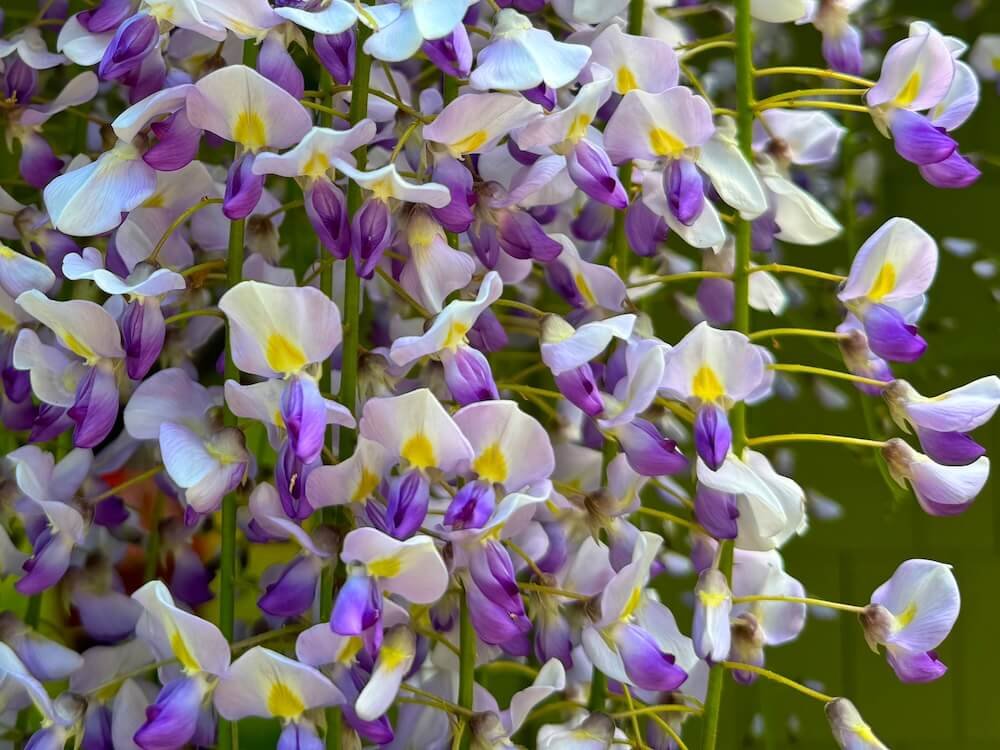
- Lavender to violet, long, cascading racemes
- Foliage color
- Green, pinnately compound leaves
- Bloom time
- Late spring to early summer
- Light
- Full sun
- Water
- Moderate
- Maintenance
- High; requires regular pruning to control growth and encourage flowering
- Growing zone
- USDA zones 5 to 9
- Wildlife
- Attracts bees, butterflies, and hummingbirds
About this plant
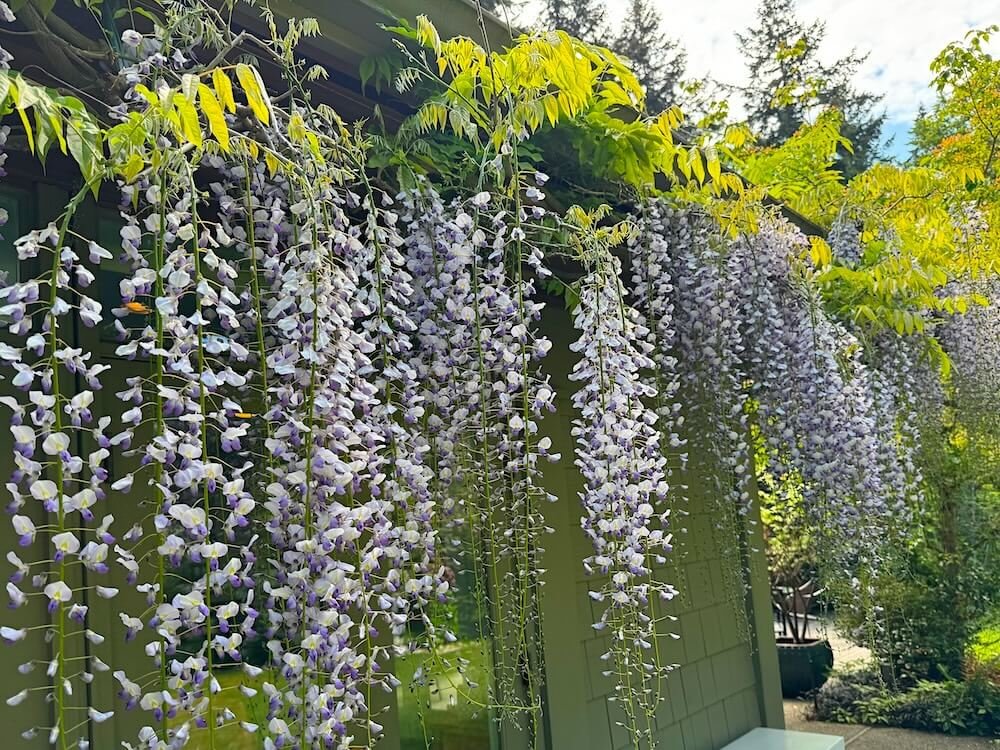
Wisteria floribunda 'Multijuga' is a breathtaking deciduous vine renowned for its exceptionally long, cascading flower clusters. These pendulous racemes can reach up to 3 feet in length, making them some of the longest of any wisteria variety. The flowers are a soft, lavender-violet color, creating a dramatic waterfall effect as they hang gracefully from the vine. Blooming in late spring to early summer, the racemes open gradually from the base to the tip, prolonging the bloom period and providing a stunning display for several weeks.
Native to Japan, 'Multijuga' is celebrated for its ornamental beauty and has been cultivated for centuries in traditional Japanese gardens. It is often trained to cover arbors, pergolas, or trellises, where its lengthy racemes can fully display their elegance. Beyond its floral spectacle, this wisteria also offers attractive pinnate foliage that emerges bronze before maturing to deep green, adding further texture and interest to the landscape throughout the growing season.
Works well in
Arbors & Trellises · Fences & Walls · Sun Gardens · Pollinator Gardens · Hummingbird Gardens
Companion plants
Hydrangeas · Coneflowers · Salvias · Shasta daisies · Asters · Boxwood
Design tip
The long summer show pairs well with plants that peak earlier, keeping one area interesting for months. Train the main stems early on a trellis or fence so the growth spreads sideways rather than bunching at the top.
Where to see it
This plant can be seen at Dunn Gardens.