 1 / 3
1 / 3Key characteristics
- Family
- Liliaceae
- Height
- 8–16 in
- Width
- 6–12 in
- Flower color
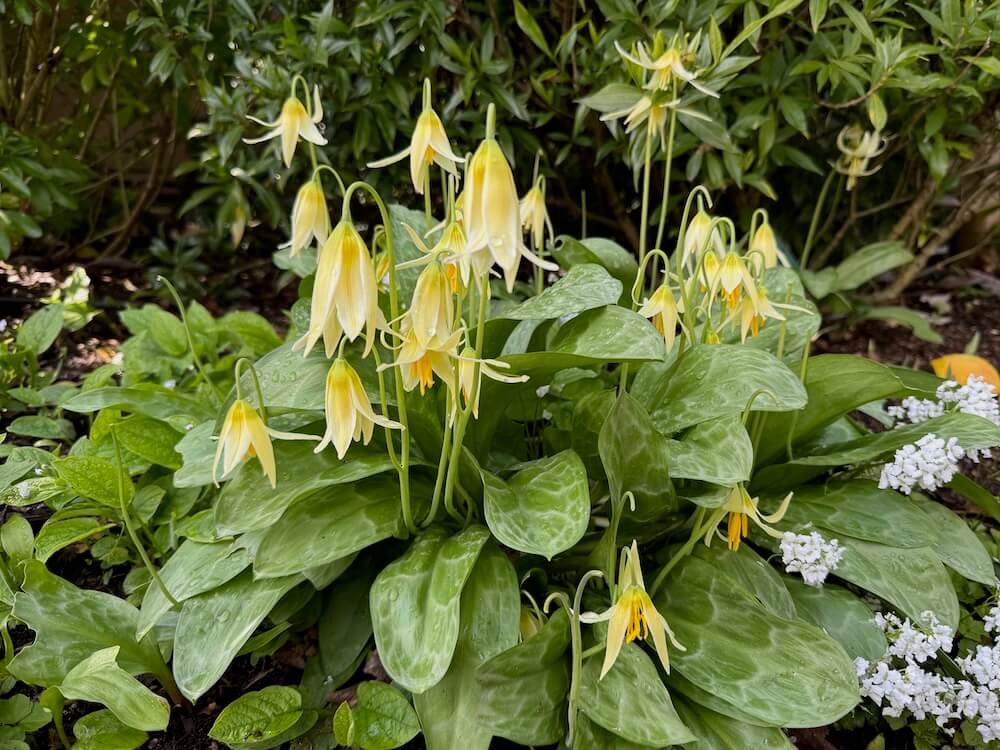
- Creamy white with a yellow center and reflexed petals
- Foliage color
- Green with brown or maroon mottling, deciduous
- Bloom time
- Early to mid-spring
- Light
- Partial shade to full shade
- Water
- Moist, well-drained soil that becomes drier during summer dormancy
- Maintenance
- Low; allow foliage to die back naturally and avoid disturbance while dormant
- Growing zone
- USDA zones 4–9
- Wildlife
- Bees and other early spring pollinators
Perennials
Erythronium oregonum
Oregon Fawn Lily
Erythronium oregonum sends up nodding, creamy white flowers washed with soft yellow at the throat and faintly tinted on the reverse, opening in early to mid-spring above mottled green leaves marked with dusky marbling. Recurved petals and gently arching stems lend a quiet woodland presence that endures through the brief flowering season, while subtle tonal shifts appear as blooms mature.
Native to moist forests and open meadows of the Pacific Northwest of North America, it follows the seasonal rhythm of coastal and inland woodlands, retreating to underground bulbs after spring growth and returning with the next cool, bright season.
Works well in
- Borders
- Shade Gardens
- Woodland Gardens
- Pollinator Gardens
- Rain Gardens
Companion plants
Siberian bugloss · Sweet woodruff · Foamflowers · Epimediums · Hostas · Bleeding hearts
Design tip
The early flowers arrive when the garden is still waking up, so give it a spot you pass often in spring. Cooler light suits it, so tuck it on the north side of a shrub or wall where the soil stays even.
More perennials
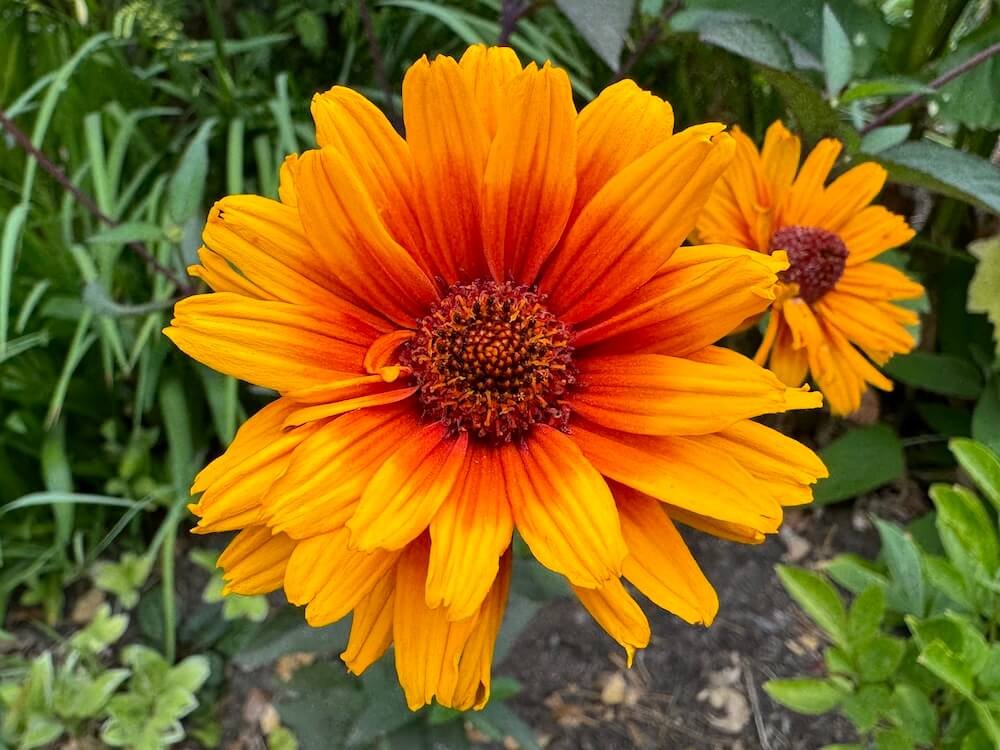
Heliopsis helianthoides 'Summer Eclipse'
Summer Eclipse False Sunflower
Blooms dark orange and yellow bicolor
Full sun
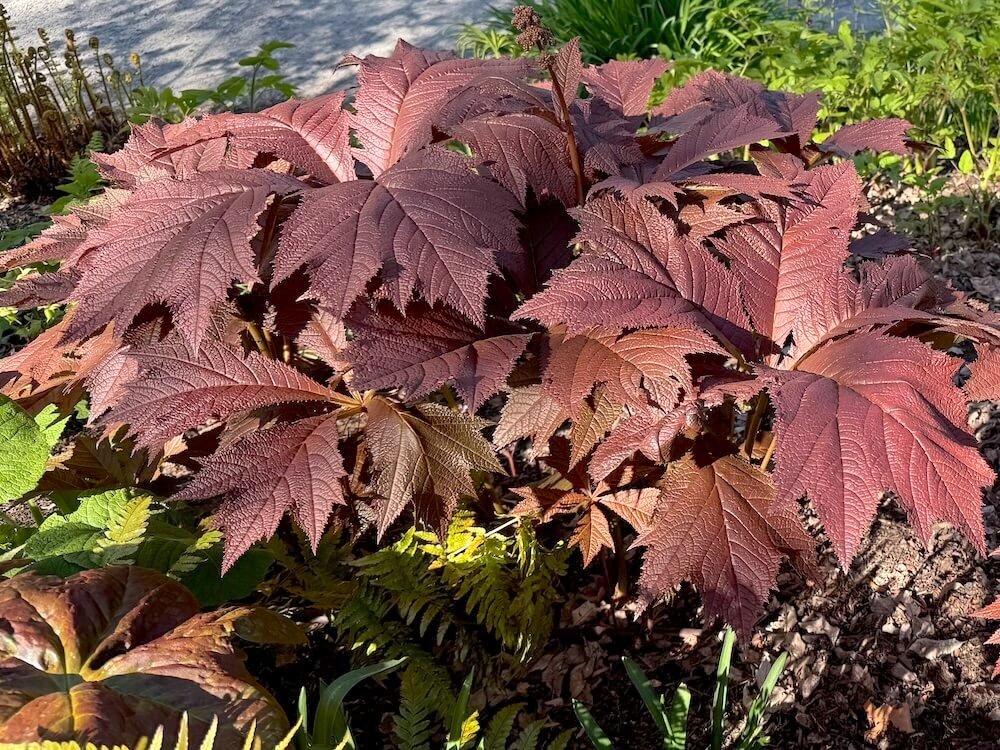
Rodgersia podophylla 'Tien Tsin Red'
Tien Tsin Red Rodger's Flower
Blooms soft pink to creamy white plumes rising above the foliage
Partial shade to full shade
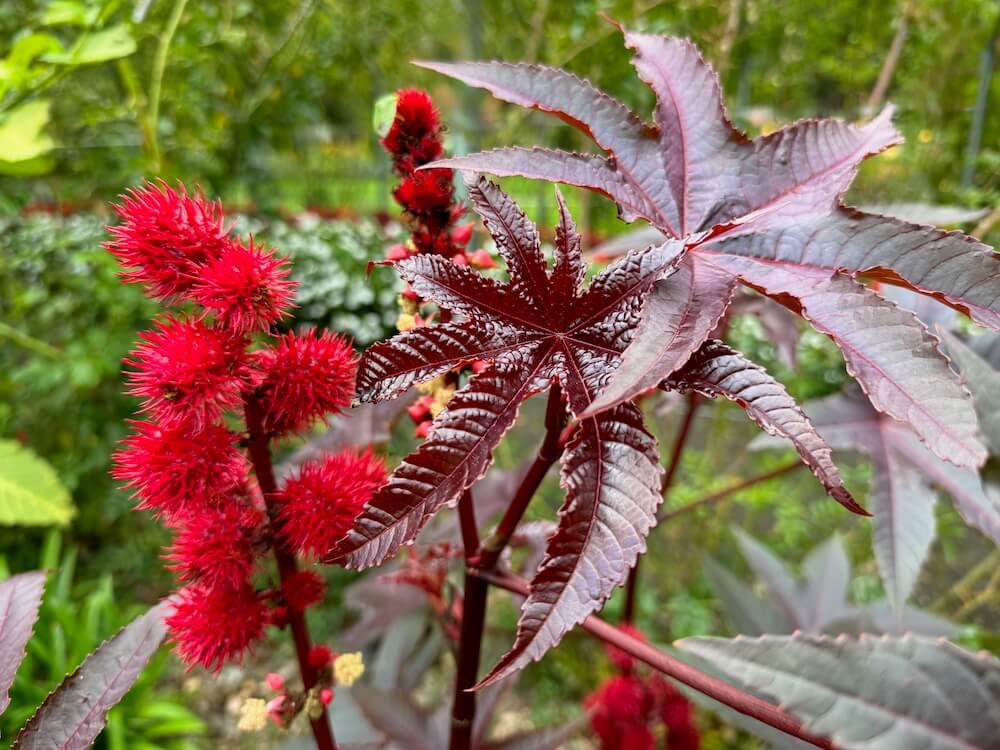
Ricinus communis 'Carmencita'
Carmencita Castor Oil Plant
Blooms bright red female flower spikes above smaller yellow male flowers
Full sun
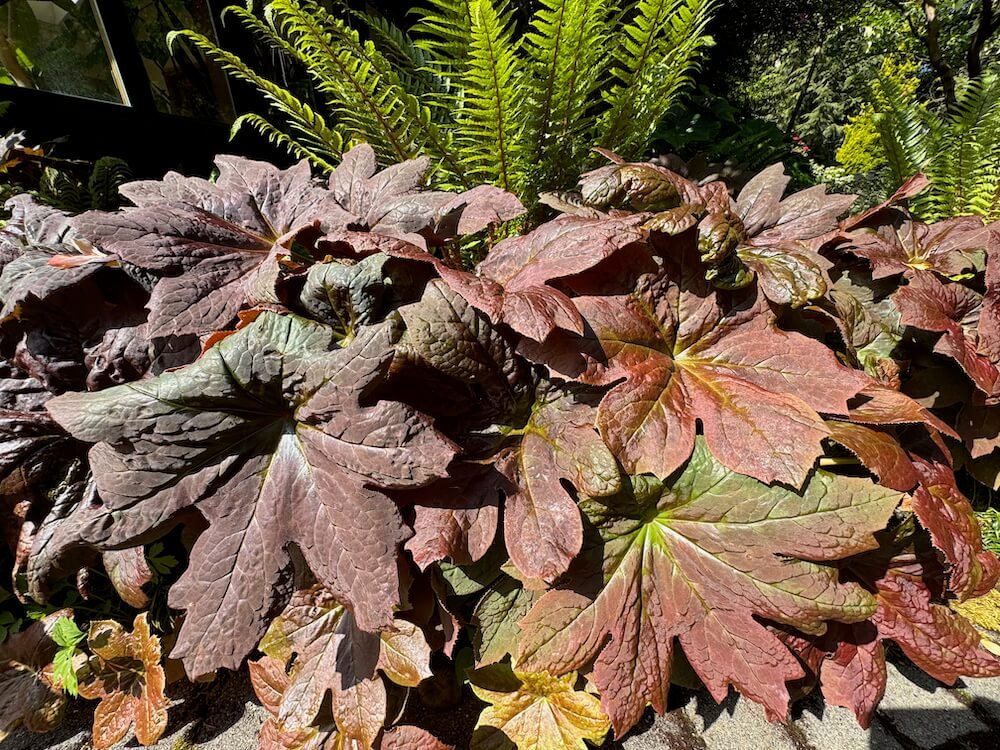
Podophyllum x 'Red Panda'
Red Panda Mayapple
Blooms deep crimson red nodding flowers displayed beneath the foliage
Partial shade to full shade