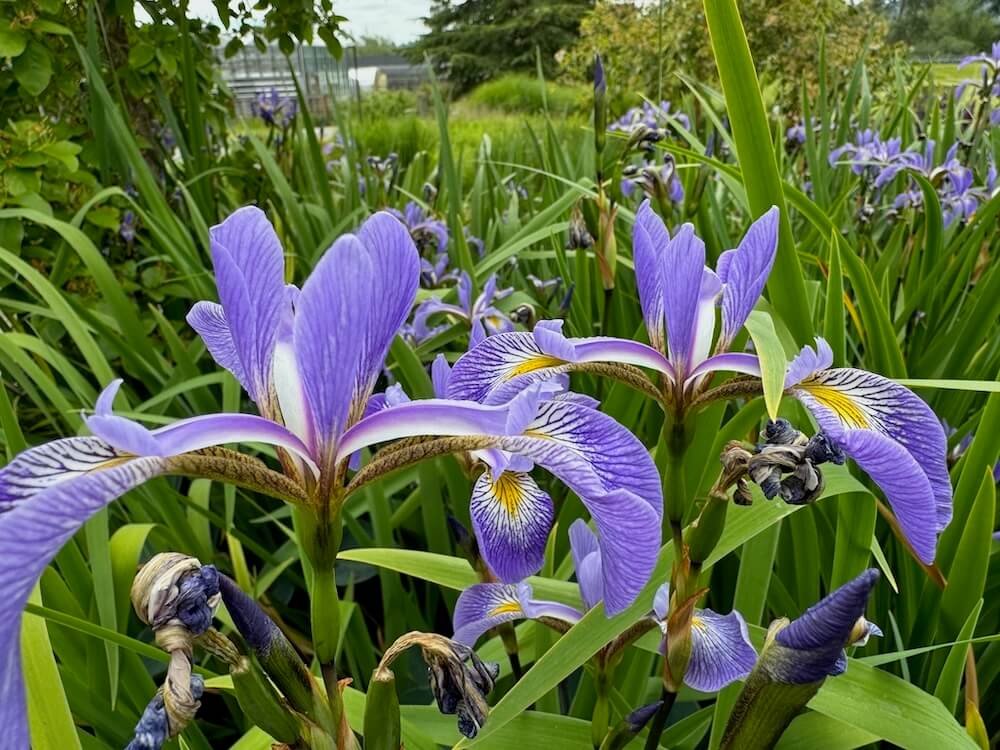
 1 / 3
1 / 3Key characteristics
- Family
- Iridaceae
- Height
- 24 to 36 inches
- Width
- 24 to 36 inches
- Flower color
- Blue to purple with yellow and white markings
- Foliage color
- Bluish-green, sword-shaped leaves
- Bloom time
- Late spring to early summer
- Light
- Full sun to partial shade
- Water
- Moist to wet soil; tolerates shallow standing water
- Maintenance
- Low; remove faded flowers to encourage continuous blooming
- Growing zone
- USDA zones 3 to 9
- Wildlife
- Attracts bees and hummingbirds
Perennials
Iris versicolor
Northern Blue Flag Iris
Iris versicolor features beautiful blue to purple flowers with intricate yellow and white markings. Blooming in late spring to early summer, this native iris adds color to moist, wetland areas, rain gardens, and naturalized settings. Its elegant blossoms are complemented by upright, sword-like foliage, which maintains its visual appeal after the flowers fade.
Originating from northeastern and north-central United States, Iris versicolor thrives in moist, well-drained soils, often found along streams, ponds, and marshes.
Works well in
- Borders
- Cottage Gardens
- Pollinator Gardens
- Hummingbird Gardens
- Rain Gardens
Companion plants
Ferns · Astilbes · Foxgloves · Bergenias · Sedums · Columbines
Design tip
Summer flowers carry the middle of the season, so place it where the bed needs color once spring bulbs fade. It takes sun or light shade, which makes it useful along the changing light of a bed edge or a partly shaded border.
Where to see it
This plant can be seen at the Center for Urban Horticulture.
More perennials
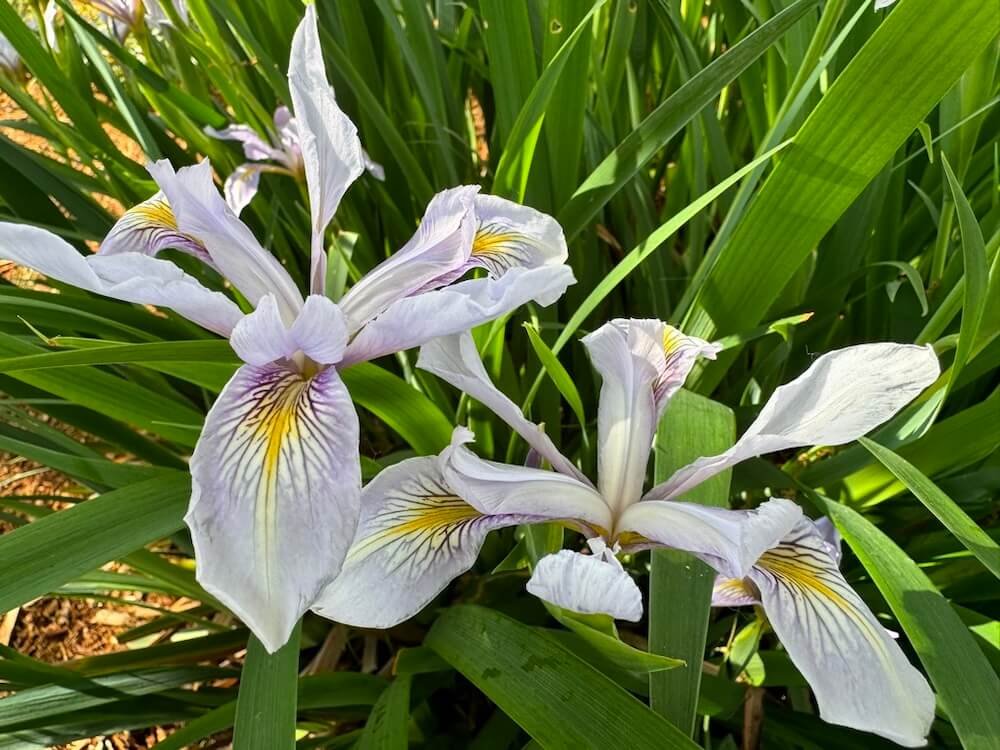
Iris douglasiana
Douglas Iris
Blooms variable shades including blue, purple, lavender, and white, often with darker veining and a yellow signal
Full sun to partial shade
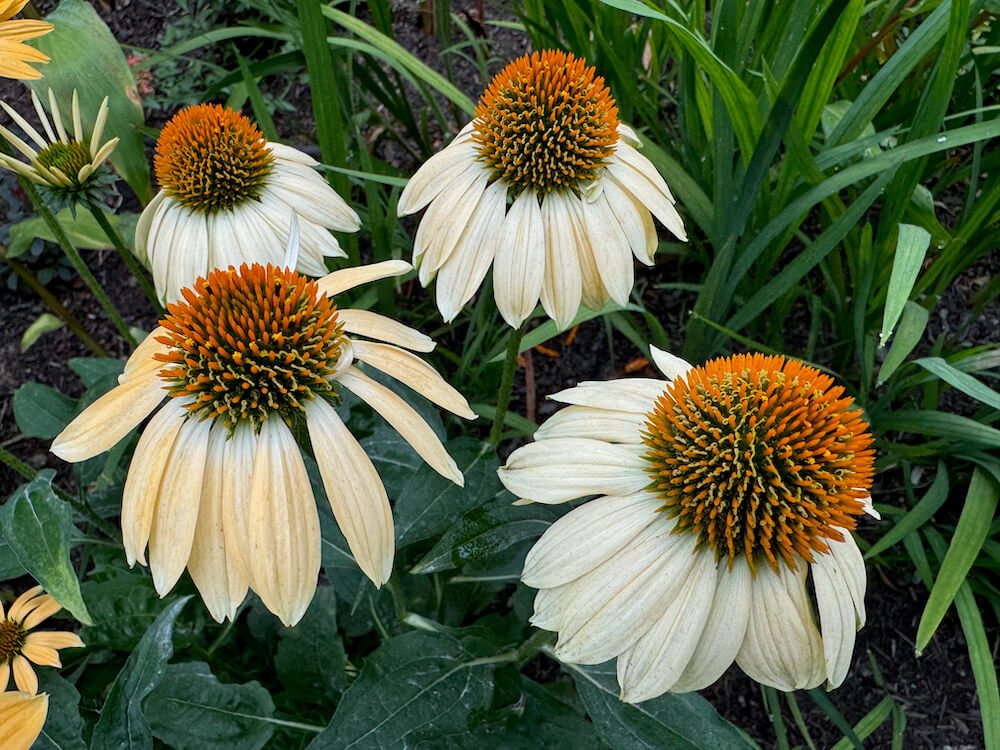
Echinacea 'Cheyenne Spirit'
Cheyenne Spirit Coneflower
Blooms mix of white, yellow, orange, red, pink, purple, and/or cream
Full sun
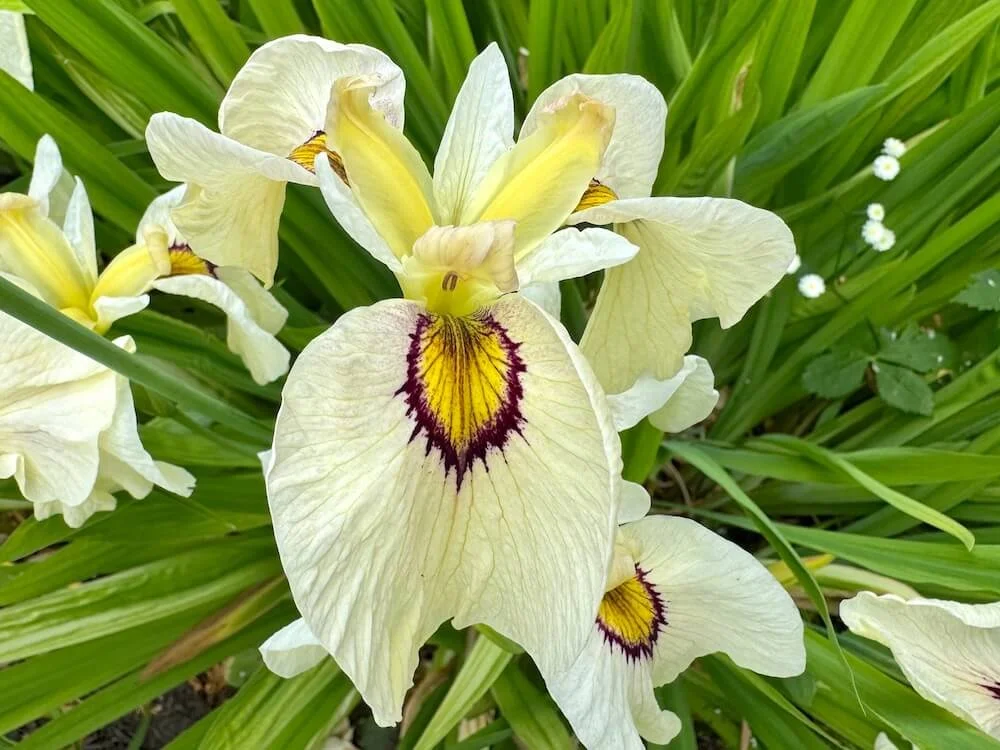
Iris x pseudata 'Okagami'
Big Mirror Iris
Blooms white petals with deep purple around yellow signals
Full sun to partial shade
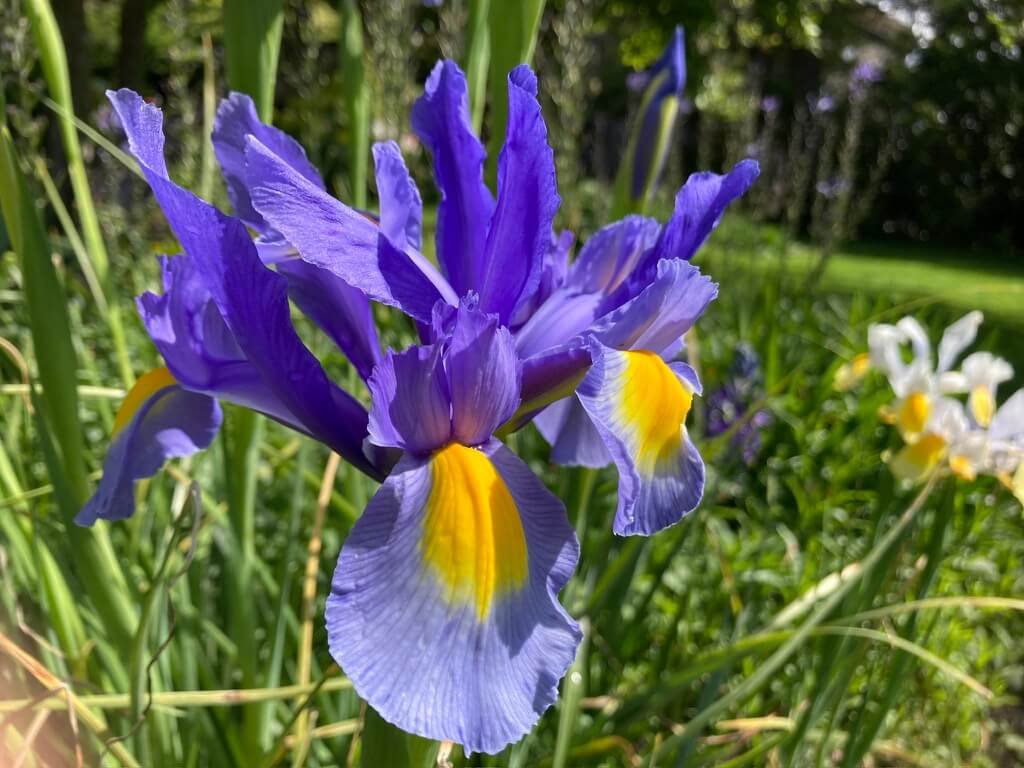
Iris hollandica ‘Blue Magic’
Blue Magic Dutch Iris
Blooms deep blue with yellow and white markings
Full sun to partial shade