 1 / 4
1 / 4Key characteristics
- Family
- Betulaceae
- Height
- 8 to 10 feet
- Width
- 8 to 10 feet
- Flower color
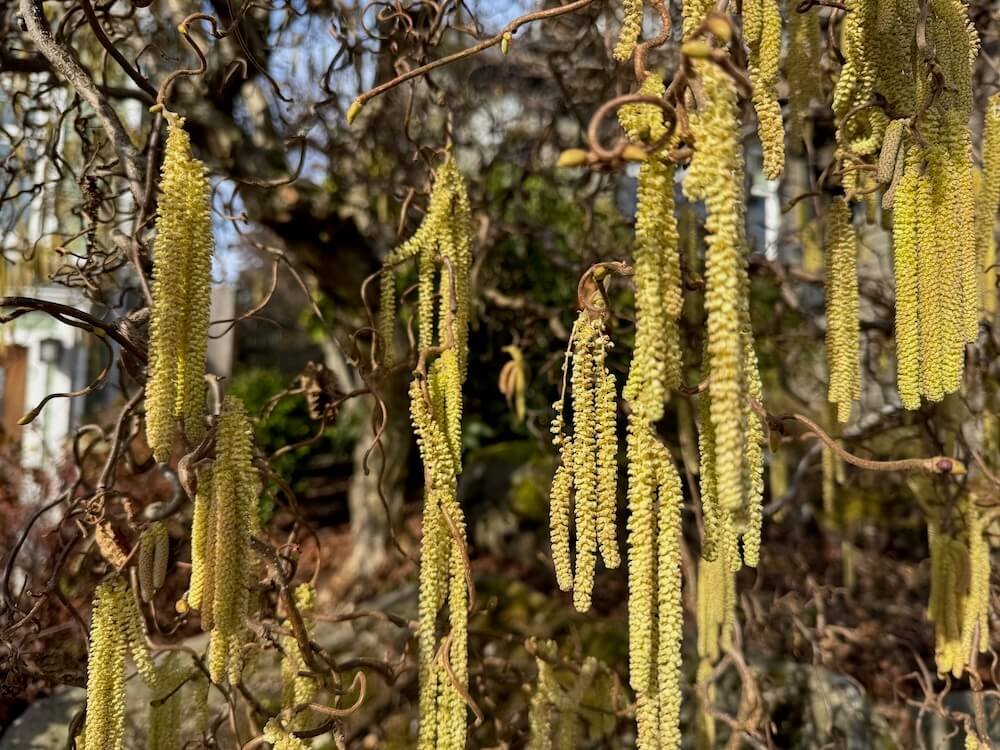
- Yellow brown drooping catkins on male plants with small red female flowers
- Foliage color
- Medium green broadly rounded leaves often turning yellow in fall
- Bloom time
- Late winter to early spring
- Light
- Full sun to partial shade
- Water
- Average
- Maintenance
- Moderate; remove straight suckering shoots from the base to maintain the contorted branching structure and prune lightly in late winter if shaping is needed
- Growing zone
- USDA zones 4 to 8
- Wildlife
- Bees that collect pollen from catkins and birds and small mammals that feed on the nuts
Shrubs
Corylus avellana 'Contorta'
Harry Lauder's Walking Stick
Corylus avellana 'Contorta' produces long, pendulous yellow catkins in late winter to early spring, hanging prominently from bare branches before the foliage emerges. Broad, heart-shaped green leaves have toothed margins and an irregularly curled, crumpled appearance, turning yellow in autumn before falling. Twisted stems and spiraling branches create an intricate sculptural framework that becomes especially prominent during winter, providing exceptional interest throughout the dormant season.
Works well in
- Sun Gardens
- Specimen Plants
- Winter Interest
- Wildlife Gardens
Companion plants
Hebe · Flowering quince · Crocus · Matilija poppy · Mallow · Sweet William
Design tip
Twisting branches give this shrub its strongest visual character once the leaves have fallen, transforming the bare framework into winter sculpture. An open position near a path or patio allows the intricate branching and dangling catkins to be appreciated up close during the quieter months.
More shrubs
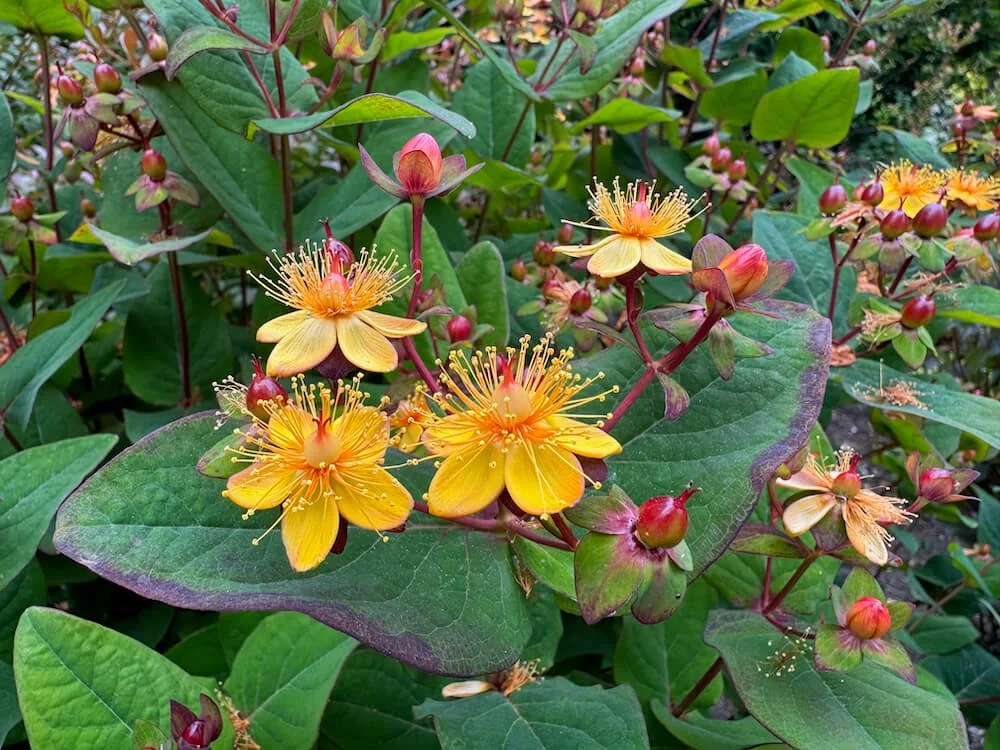
Hypericum x inodorum 'Kolsan'
FloralBerry Sangria St. John's Wort
Blooms bright yellow with prominent stamens, followed by dark red ornamental berries
Full sun to partial shade
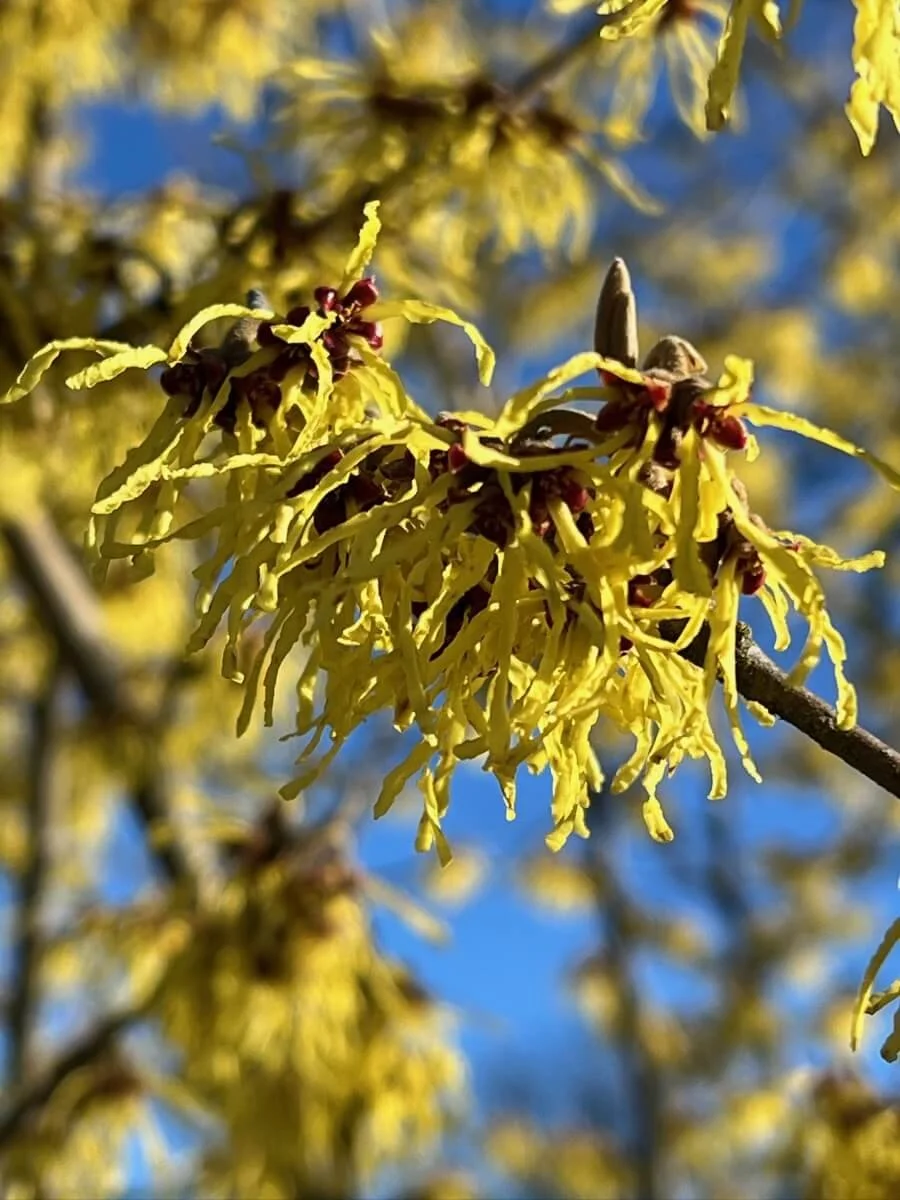
Hamamelis x intermedia 'Arnold Promise'
Arnold Promise Witch Hazel
Blooms golden yellow, often tinged with red
Full sun to partial shade
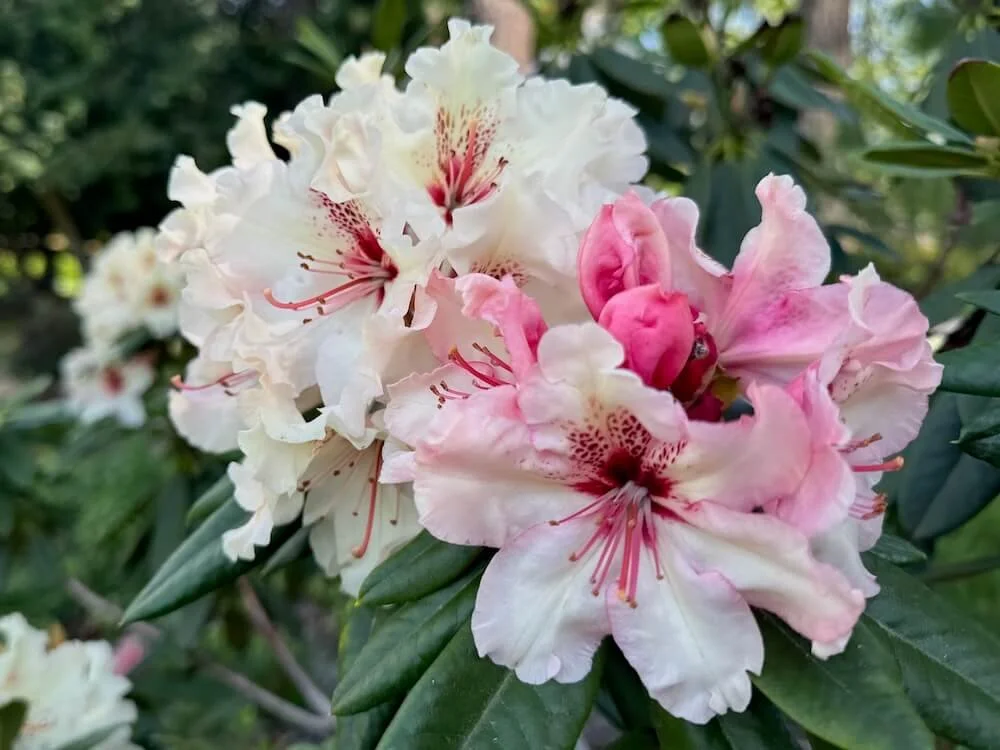
Rhododendron 'Ice Music'
Ice Music Rhododendron
Blooms pink buds open to creamy white blossoms with yellow flares and red speckles/nectaries in the throat
Part shade to dappled shade
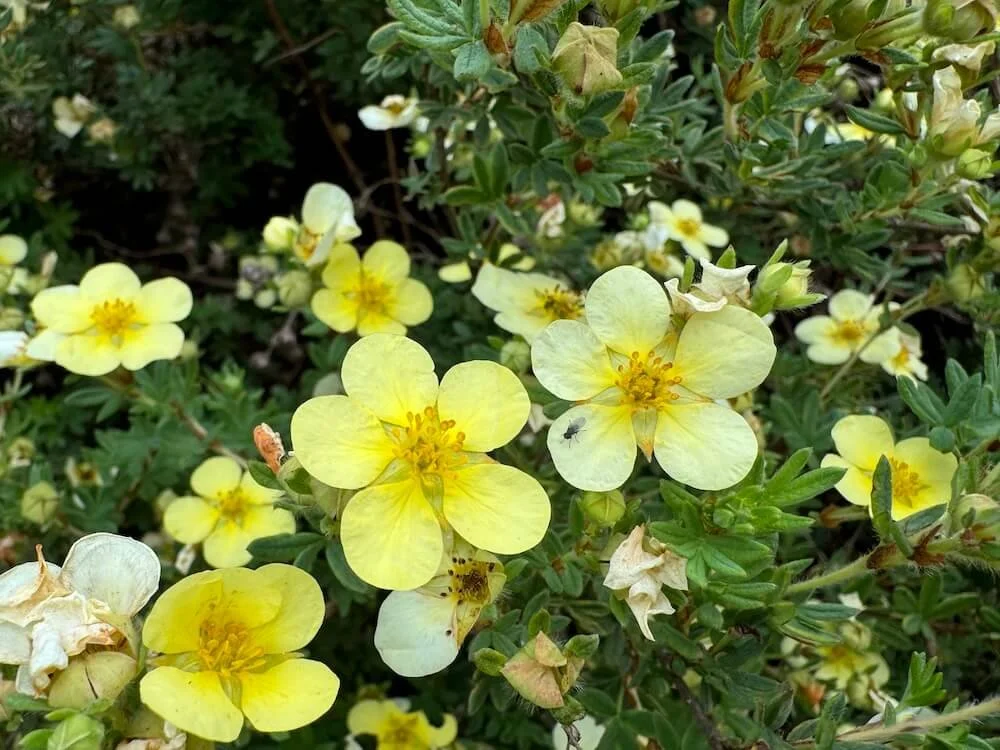
Potentilla fruticosa
Shrubby Cinquefoil
Blooms yellow, though some cultivars may have white, orange, or red flowers
Full sun